A remote-work guide to Da Nang: the laptop scorecard, nomad neighborhoods, cafés worth working from, coworking day passes and café etiquette.

Da Nang is one of the easiest cities in Southeast Asia for remote work, pairing a cheap beach lifestyle with fast home wifi and a massive café culture. You can land, drop your bags, and be online and productive within a single day. The only real trade-offs are occasional power cuts and a rainy season from roughly September to December, but both are easy to plan around.
By the Go Da Nang local team · Last updated June 2026
This is a practical workflow guide. If you just want a quick list of places with the best internet, check out our dedicated pick of the fastest-wifi cafés. Here, we cover how to actually set yourself up for success: where to live, how to spot a good work café, and when to pay for a real desk.
You can swim in the South China Sea before breakfast, work a full day from an air-conditioned café for the price of a coffee, and eat dinner for a few dollars. Home and apartment wifi is fast. Fibre is the norm here, and the An Thuong area has a massive digital nomad scene, so you are never the only person on a laptop. Coworking spaces, gyms, and Western-friendly food are all a short ride away.
The downsides are real but manageable:
Once you find your desk, check out our Da Nang coffee guide to figure out what to order.
Before you commit to a café as your office for the day, run it through a quick checklist. Da Nang cafés look great on Instagram, but the things that make or break a work session are entirely practical.
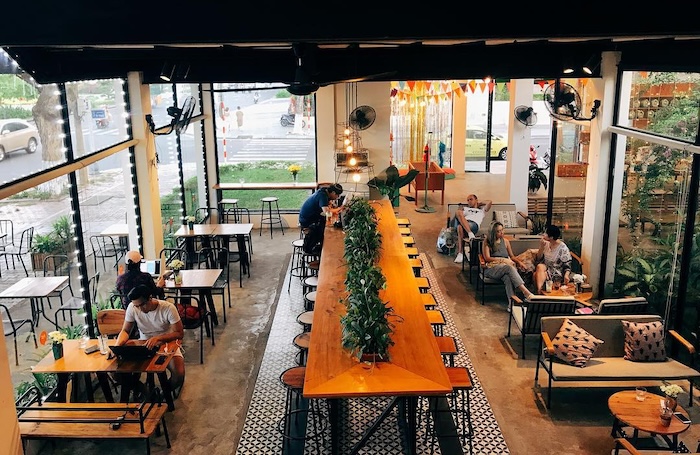 A bright, open-air Da Nang café with a long communal table and ceiling fans where people work on laptops
Where you sleep decides your daily commute, your café options, and your budget. Three broad zones cover almost every remote worker in Da Nang.
This is the default for most remote workers. The An Thuong grid behind My Khe Beach has the highest concentration of laptop-friendly cafés, Western and Vietnamese food, gyms, bars, and short-term apartments in the city. The beach is a five-minute walk away. The catch is that it is the most touristy and noisy area, and prices run a notch higher than the city center. If it is your first stint in Da Nang, base here anyway. The convenience is worth it.
West across the Han River, Hai Chau is where locals actually live and work. Rents and meals are cheaper. The cafés skew toward quiet, business-style spots rather than beach aesthetics, and you are central for errands. The trade-offs are no beach on your doorstep and more traffic. This area is good for a longer, heads-down stay where you care more about cost and focus than sand.
The quieter fringes up toward the Son Tra peninsula or south near the Marble Mountains (Ngu Hanh Son) and Non Nuoc Beach trade convenience for calm. You get more space, fewer tourists, and easy access to nature. However, there are far fewer cafés and you will need a motorbike to get anywhere. This is best for repeat visitors who already know the city and want a slower base.
| Area | Vibe | Café density | Beach? | Best for |
|---|---|---|---|---|
| An Thuong / My An & My Khe | Touristy, lively, nomad-heavy | High | Yes (5 min) | First-timers; want everything walkable |
| Hai Chau (center) | Local, business-like, cheaper | Medium–high | No | Longer, budget-focused, heads-down stays |
| Son Tra / Ngu Hanh Son edges | Quiet, nature-close | Low | Yes (Non Nuoc) | Repeat visitors with a motorbike |
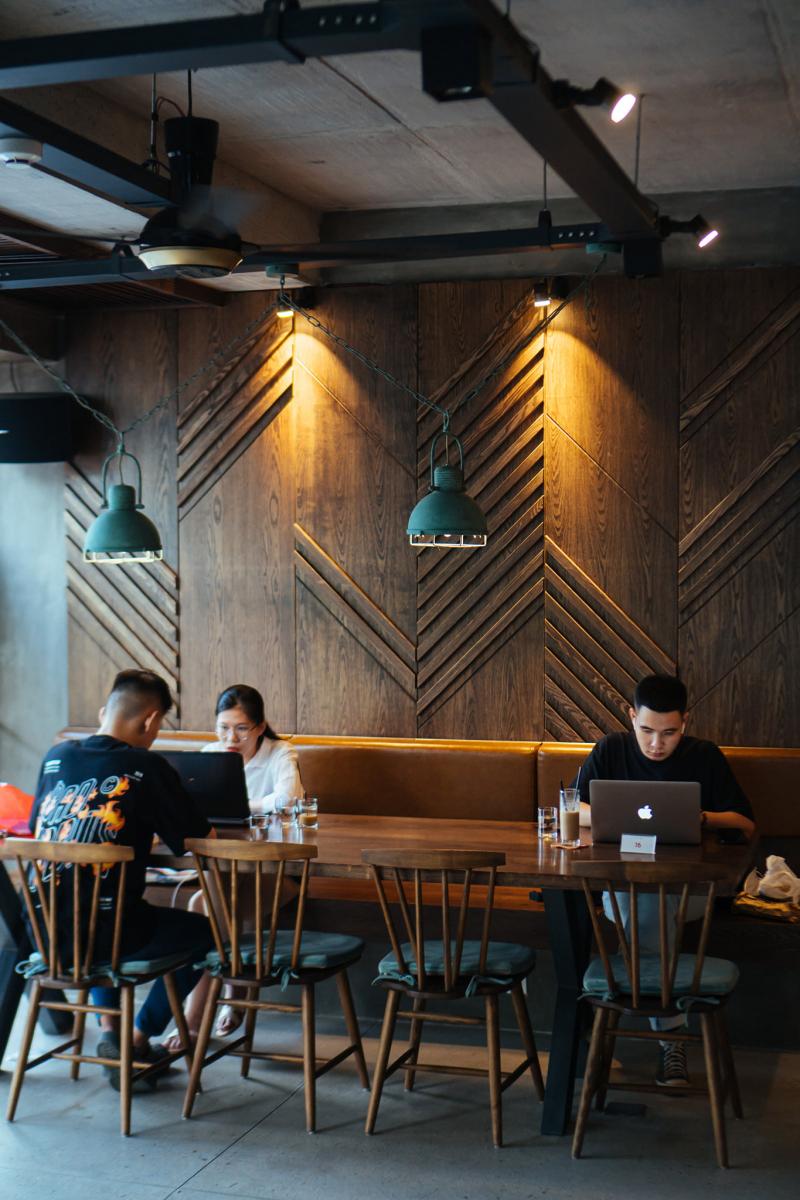 Remote workers on laptops at a wood-panelled specialty café in Da Nang
These spots are currently popular with the remote-work crowd. We grouped them by area and framed each by the kind of work it suits best, plus the honest catch. For a pure speed test and the city's 24/7 option, check our dedicated fast-wifi café guide. We deliberately skip the big international chains here. Everything below is independent or a local mini-chain.
We left out a few names that already appear on our fast-wifi list, like The Local Beans and Golem. For the head-to-head wifi shortlist, read the 2025 guide instead of reading the same picks twice.
Café-hopping is great until you have back-to-back calls, need a guaranteed desk, or want an actual office chair for an eight-hour day. The rule is simple:
If your day involves video meetings, a guaranteed seat, an ergonomic chair, or all-day focus, a coworking space beats café-hopping. It often costs less than the coffees you would buy to rent a café table all day.
Here are the established options. Treat every price below as a starting point to reconfirm.
At a dedicated coworking space, expect a day pass of roughly 70,000–150,000đ (about US$3 to $6); café-model spots like The Nest work out cheaper because you only pay for drinks. A monthly hot-desk plan usually starts around 1,800,000đ (very roughly US$70 to $150 per month). Always check the venue's own page for current rates.
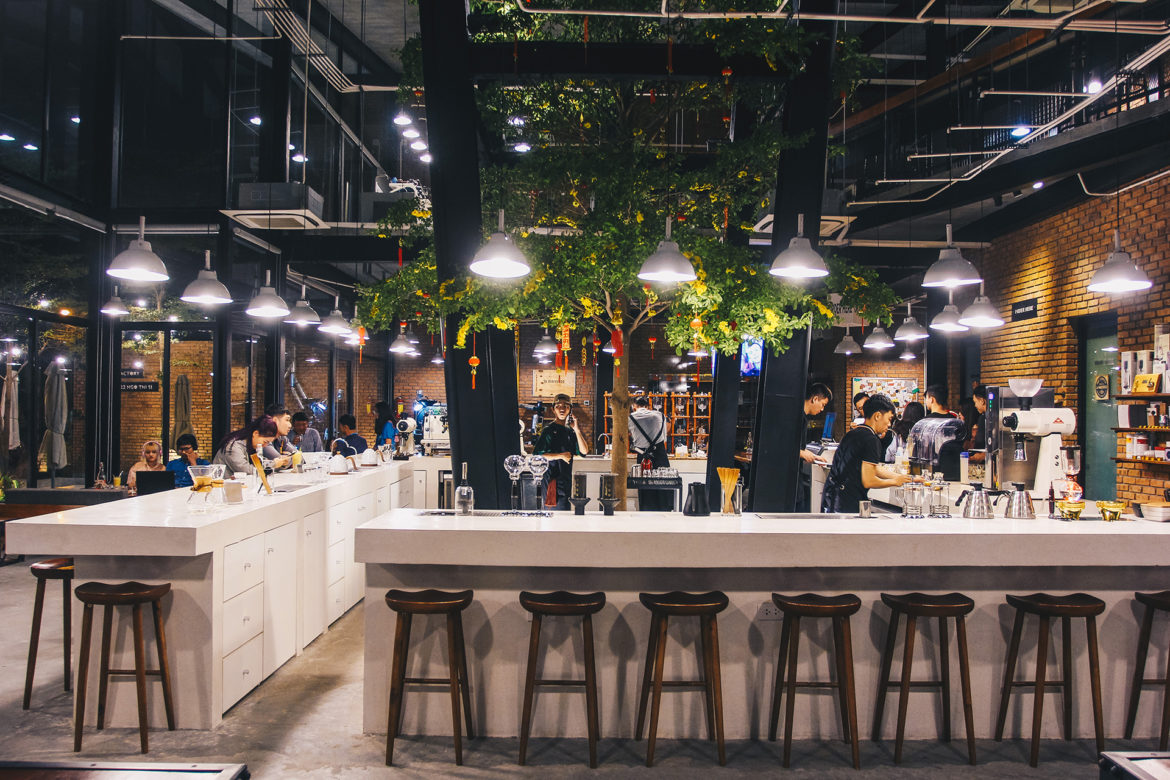 A spacious, high-ceilinged Da Nang café-roastery with a long coffee bar, bar stools, and a tree growing through the room
Café and apartment wifi in Da Nang is generally fine for video calls. This is a wired-fibre city, and most spots handle Zoom or Google Meet without drama. The weak point is power. When the electricity drops, so does the router.
The cheapest insurance is a local 4G/5G SIM or eSIM kept topped up with data. When a café loses power or you cannot find a free outlet, tether your laptop to your phone's hotspot and keep working. Mobile data here is inexpensive, and coverage in the city is strong. Buy a tourist SIM at the airport or a phone shop, or load an eSIM before you arrive. Having a backup connection turns a power cut from a lost afternoon into a five-minute hiccup.
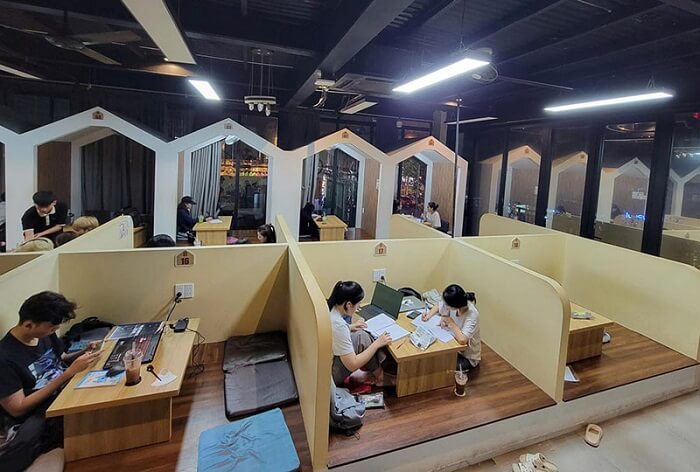 Private wooden study booths at a Da Nang work café, with people typing on laptops over iced coffees
Da Nang cafés are welcoming to remote workers. A little courtesy keeps it that way:
Is café wifi fast enough for video calls? Generally yes. Da Nang runs on wired fibre, and most cafés handle Zoom or Google Meet fine. The weak point is power cuts, not bandwidth. Carry a topped-up 4G/5G eSIM so you can hotspot through an outage.
How much is a coworking day pass in Da Nang? At a dedicated coworking space, expect roughly 70,000–150,000đ (about US$3 to $6) for a day pass, with monthly hot-desk plans from around 1,800,000đ (US$70 and up). Café-coworking hybrids are cheaper, since you only pay for your drinks. Check the specific space for its current rate.
Which neighborhood is best for digital nomads? An Thuong and My An, right behind My Khe Beach. This area has the densest mix of work cafés, food, gyms, and short-term apartments, with the beach five minutes away. Choose Hai Chau if you want a cheaper and quieter area, at the cost of the beach.
Are there any 24/7 cafés for late-night work? Yes. There is a round-the-clock option in the city. See the 24/7 pick in our fast-wifi café guide.
Do cafés mind all-day laptop use? Most do not, as long as you keep ordering. Figure one drink per couple of hours and re-order if you stay. Free up big tables at lunch and keep calls out of the quiet zones, and you will stay welcome.
What's the best time of year to base in Da Nang for work? Any month works for working. If you want beach time around your desk, avoid the wettest stretch from roughly September to December, when October and November see the heaviest rain. The dry months are sunnier and easier for mixing work with the coast.
Da Nang rewards a bit of setup. Base yourself in An Thuong if it is your first stay, run any café through the checklist before you settle in, and pay for a coworking desk the moment your days fill with calls. Keep a topped-up eSIM for power cuts and remember to re-order your coffee. For a pure café shortlist, read our fast-wifi café guide. For what to actually order, our Da Nang coffee guide has you covered.

One local roundup a month — new guides, festival dates and where to eat. No spam.