Da Nang's trio of steamed rice cakes — bánh bèo, bánh bột lọc and bánh ướt. What each one is, how they differ, the sauce, and where to eat them.
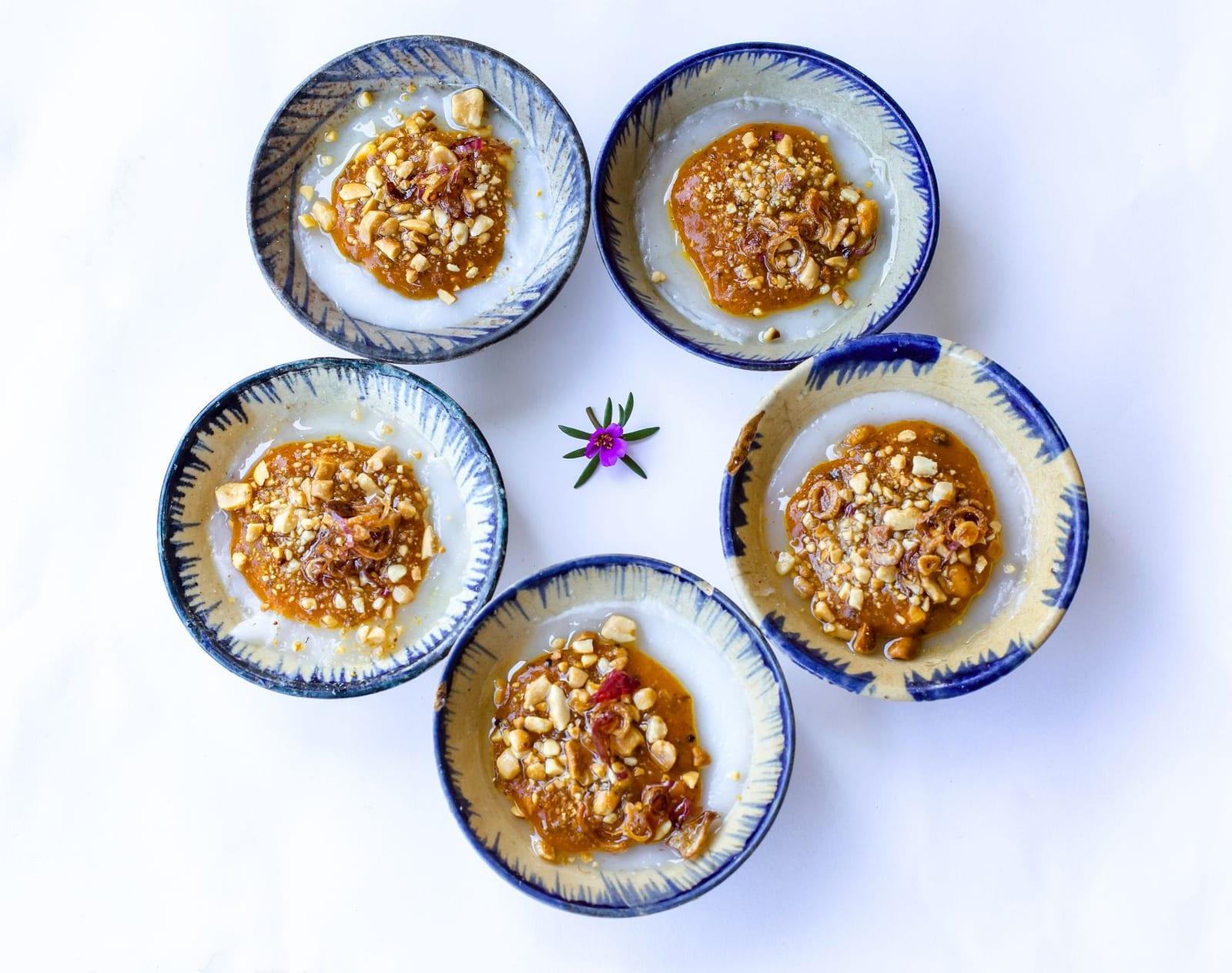
Bánh bèo, bánh bột lọc, and bánh ướt are three bite-sized steamed snacks that make the perfect afternoon graze in central Vietnam. Soft, savory, and completely approachable, these cheap rice and tapioca bites are the easiest local dishes to try when you first land in Da Nang.
By the Go Da Nang local team · Last updated June 2026
These three snacks share the same basic DNA of rice or tapioca flour, a quick steam, and a sweet-savory fish sauce dip. You eat them off small plates or out of tiny cups while sitting on a low plastic stool in the late afternoon. Locals rarely order just one. The normal move is a mixed plate to get a bit of each texture. Here is exactly what you get.
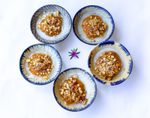
Bánh bèo (pronounced "bahn bay-oh") is a soft, white steamed rice cake about the size of a coin. It has a tiny dimple in the middle to hold a pinch of tôm chấy (fluffy dried shrimp floss), a sprinkle of crispy pork skin, and a spoonful of warm scallion oil. Some stalls add a crunchy fried crouton.
You will notice a regional difference in how it arrives at your table. Da Nang stalls serve several cakes spread on a single plate, or in small individual cups (bánh bèo chén) that you eat with a small spoon. Huế is the spiritual home of these snacks and is famous for the chén style, where you scrape out dozens of tiny cups one by one.
Bánh bột lọc (pronounced "bahn boht lock") is the chewy one. It uses tapioca flour instead of rice, turning clear and glassy when cooked. Each dumpling is a small translucent pouch wrapped around a single shrimp and sometimes a bit of pork fat. You can easily see the pink shrimp right through the bouncy, stretchy skin.
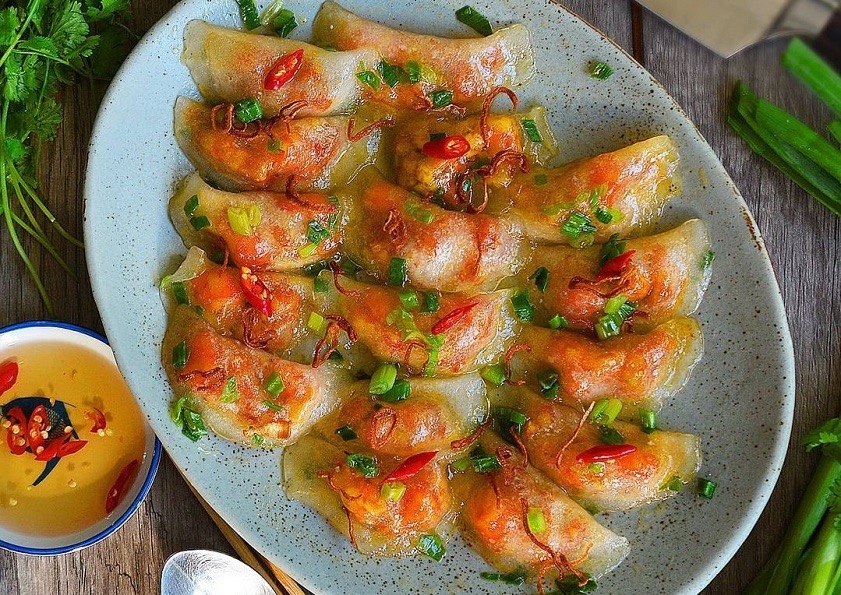 Translucent bánh bột lọc trần dumplings topped with scallion oil and chili, the no-leaf Da Nang style
You will see two versions. Bánh bột lọc trần ("naked") is boiled and served bare, slippery, and soft. Bánh bột lọc lá is wrapped in a banana leaf and steamed, making it firmer with a subtle smoky flavor. You peel back the leaf yourself before eating. Everyday Da Nang stalls most often serve the trần (no-leaf) version. The banana-leaf-wrapped lá version is the signature Huế style, though you will find both around town.
Bánh ướt (pronounced "bahn oot") translates to "wet cake." You get thin, soft, and silky sheets of steamed rice batter folded on a plate and dressed with fish sauce, fresh herbs, and crispy shallots. Some stalls roll the sheets around Vietnamese pork sausage (chả) or serve it on the side.
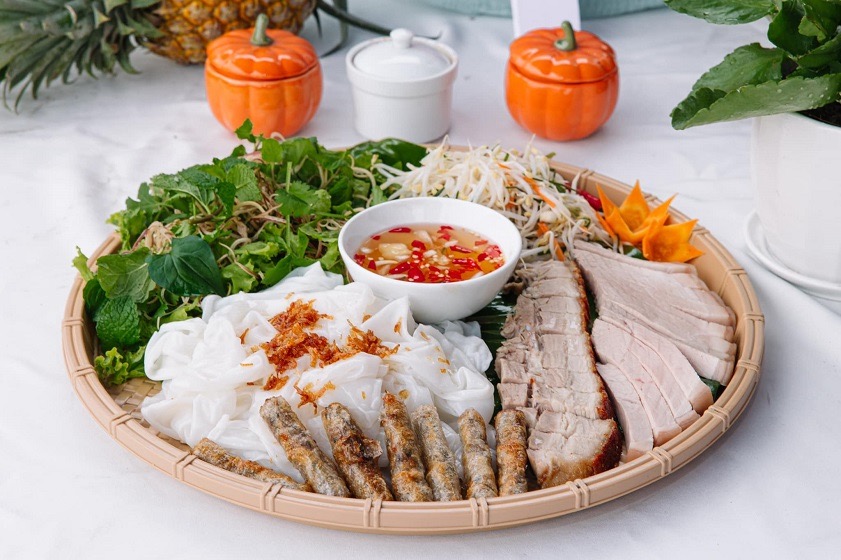 Soft bánh ướt rice sheets served with sliced pork, fresh herbs and a bowl of dipping sauce
If this sounds like bánh cuốn, you are on the right track. Bánh cuốn is the Northern (miền Bắc) dish associated with Hanoi, where rice sheets are rolled around minced pork and wood-ear mushroom. Bánh ướt is the Central Vietnam (miền Trung) version you meet in Da Nang. The sheets are usually served plain, soft, and "wet," dressed with fish sauce and herbs, with chả on the side. The batter and steaming method are nearly identical, but the region and filling set them apart. Think of bánh ướt as the simpler, snack-sized cousin.
If you only remember one thing: bèo is soft, lọc is chewy, and ướt is silky. The table below breaks down the details.
| Dish | Main flour | Texture | What's inside / on top | How it's served | How you eat it |
|---|---|---|---|---|---|
| Bánh bèo | Rice | Soft, spongy | Dried shrimp floss, crispy pork, scallion oil | Small cakes on a plate (or tiny cups, Huế style) | With a small spoon |
| Bánh bột lọc | Tapioca | Chewy, bouncy, translucent | One whole shrimp (+ pork fat) inside | A pile of dumplings, naked or in banana leaf | Fingers or chopsticks; peel the leaf off the "lá" version |
| Bánh ướt | Rice | Silky, soft, "wet" | Plain, or rolled with chả; herbs + crispy shallot | Folded sheets on a plate | Chopsticks; spoon sauce over |
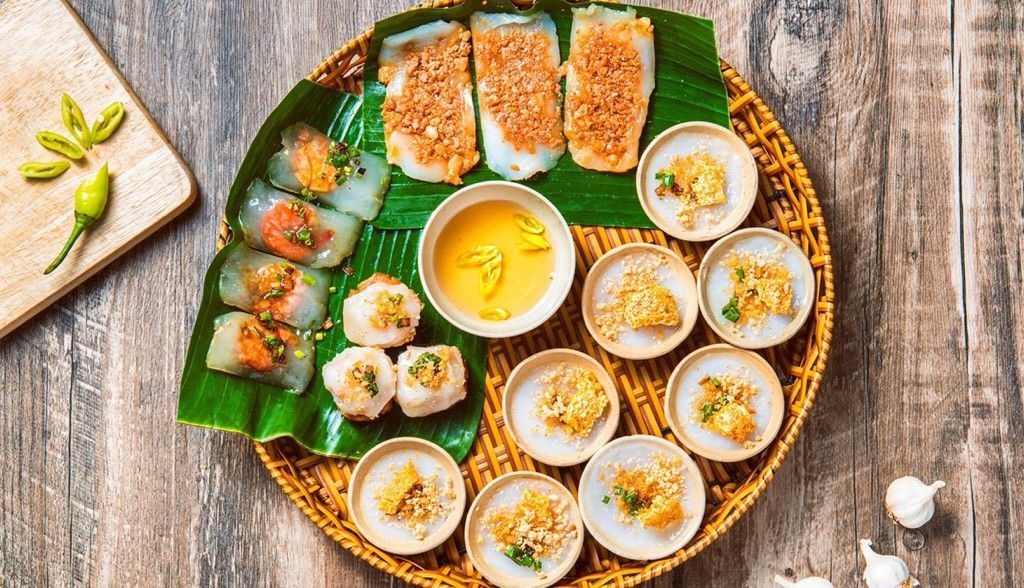 A mixed central-Vietnam snack plate with bánh bèo, bánh bột lọc and bánh ướt served together
All three are central Vietnam snacks. Huế is their spiritual home, where the royal city built a whole culture around tiny, delicate rice cakes. You do not need to go to Huế to eat them. They are everywhere in Da Nang and Quảng Nam, sold at markets, on street corners, and from small afternoon stalls.
A few Da Nang differences are worth knowing:
In Da Nang, these are approachable, everyday street snacks instead of a formal sit-down meal.
The sauce is the whole game. The standard dip is nước mắm chấm. This is fish sauce loosened with water and balanced with sugar, lime, chili, and garlic. It is thin, light, and sweet-savory. You pour it over the cakes instead of using it as a dip. Get the sauce right and these snacks come alive. Skip it and they taste like plain rice.
A few stalls lean toward a thicker, funkier mắm nêm (fermented anchovy sauce). This is the same bold sauce you meet in our guide to bún mắm nêm. If you are sensitive to strong fishy flavors, ask which sauce a stall uses before you sit down.
The eating mechanics are simple once you know them:
Do not over-order. These are snack-sized and cheap. The smart move is one mixed plate to start. You can always order more. They are built for grazing, not for filling you up like a bowl of mì Quảng.
These are among the mildest, most approachable central-Vietnam dishes you can pick. There is no organ meat, no bones, and no strong funk by default unless the stall uses mắm nêm. The spice level is low because cooks add the chili on top instead of mixing it into the batter. The textures are soft and easy. If you are nervous about street food, this is a gentle place to start right alongside bún chả cá.
Two honest heads-ups. First, the dried shrimp floss and crispy pork on bánh bèo give it a real savory, slightly fishy hit. It is tasty, but it is definitely not bland. Second, bánh bột lọc is very chewy and stretchy. If you do not like bouncy textures, stick to the bèo and ướt.
These are usually not vegetarian. The toppings use dried shrimp and pork, and the dip is fish sauce. A plain rice cake might look meat-free, but the sauce rarely is. You can ask "có chay không?" ("is there a vegetarian version?"), but do not count on it.
These are some of the cheapest snacks in town. Expect roughly 10,000–35,000 VND per plate (about $0.40–1.40), depending on the dish and toppings. A generous mixed combo plate lands at the higher end. A whole snack stop here rarely costs more than a coffee. Bring small VND notes because almost none of these stalls take cards. Prices change, so treat this as a rough guide.
These make a great late-morning or afternoon snack. Some well-known shops stay open into the evening, but many smaller carts are afternoon-focused and wind down once the day's batch sells out. It is safest not to leave it too late. If a place looks like it just started steaming a fresh batch, that is the moment to order.
These cakes are best from small, dedicated stalls. Most sell the whole bèo–nậm–lọc family together. Here are five spots that locals and food writers point to again and again. Prices, hours, and addresses change, so always confirm before you go. Just ask for a "thập cẩm" (assorted) plate to try everything at once.
A long-running Hải Châu favorite that turns out the full set of bánh bèo, nậm, and lọc to a steady stream of locals. It is central, easy to find, and a reliable first stop.
A familiar name to Da Nang locals, known for hot bánh bèo chén with a rich, well-balanced fish sauce. It runs on an afternoon-into-evening schedule, making it a good late-day stop.
A central, long-established stop for bánh bèo, nậm, lọc, and ram ít. Everything is served hot with a punchy fish sauce. This is a great choice if you want the whole spread in one sitting near the city center.
A Hải Châu institution with more than 20 years of practice. Locals praise the neatly made cakes and a generous shrimp-and-pork bánh bèo. Wide opening hours make it an easy fit for most schedules.
Out in Liên Chiểu, this 30-year-old spot is one of the most beloved bánh bèo names in the city. It sits away from the tourist center, so the crowd is entirely local. It is worth the detour if you are in the area.
Prefer to wander? The food stalls inside Chợ Cồn (Con Market, 318 Ông Ích Khiêm, Hải Châu) and Chợ Hàn also serve these cakes cheaply through the afternoon. Look for a cart with stacks of small plates and a steamer going, and point at what the person in front of you is eating.
Order a mixed plate to try all three textures at once, add chili to your liking, and enjoy a classic Da Nang snack. For more local food, browse our other guides including bánh tráng cuốn thịt heo.
One local roundup a month — new guides, festival dates and where to eat. No spam.