Banh trang cuon thit heo is Da Nang's DIY pork-and-herb roll. What it is, how to eat it, what it costs, and where locals actually go.

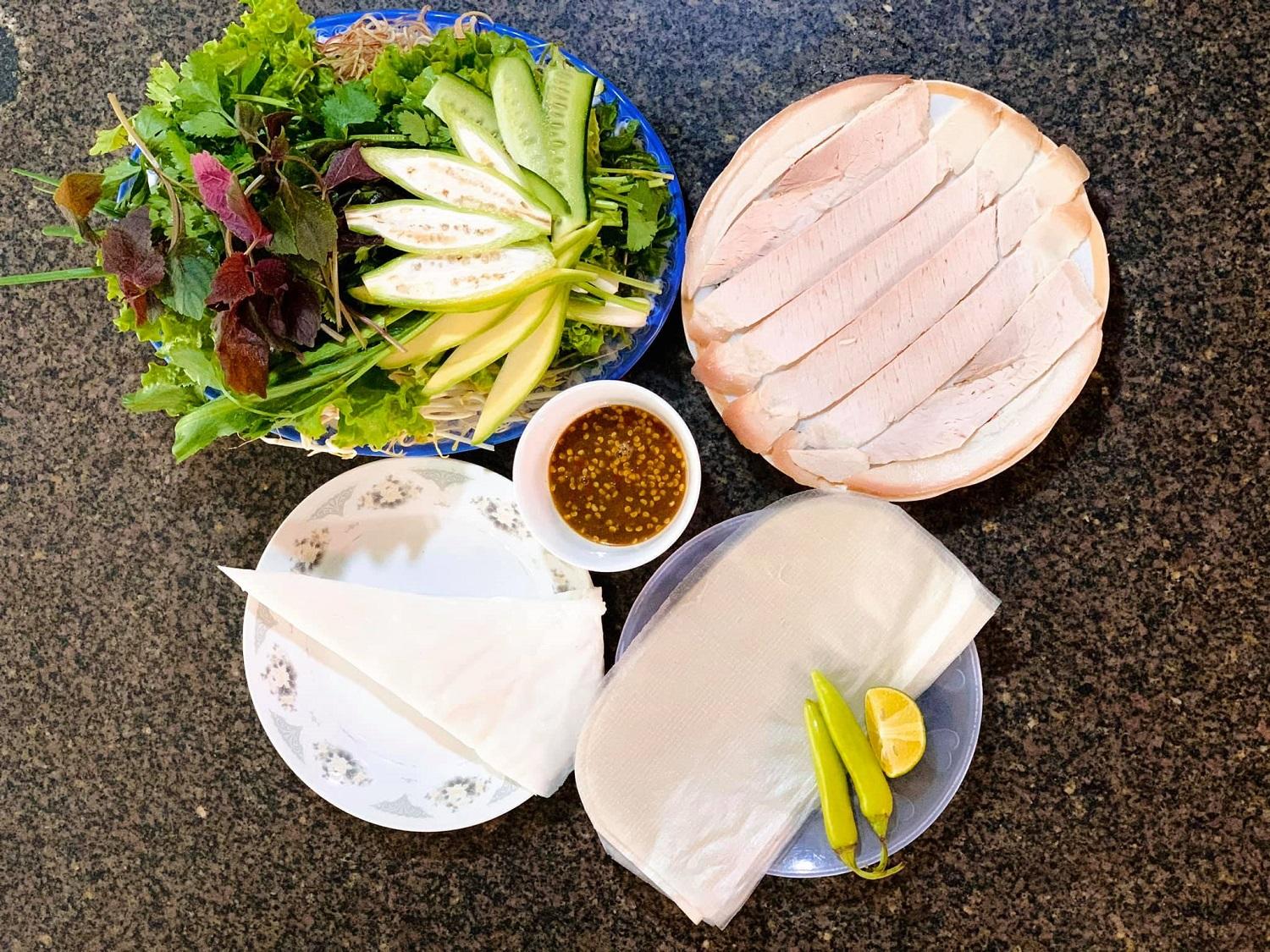
Bánh tráng cuốn thịt heo (pronounced "bun chang kwun tit heh-oo") is Da Nang's signature build-your-own pork and herb roll. You get a platter of thinly sliced pork, a mountain of fresh greens, and soft rice paper to wrap it all up before dunking it in a rich fermented anchovy sauce. It is a hands-on, communal meal that local families love to share over a long lunch.
By the Go Da Nang local team · Last updated June 2026
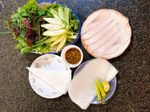
The name translates to "rice-paper rolls with pork." The star ingredient is the meat. Proper Da Nang spots serve thịt heo 2 đầu da (two-skin pork). This cut from the belly or shoulder is sliced so each piece has a thin rim of skin on both edges, with lean meat and a little fat in between. The pork is boiled or steamed, keeping the flavor clean and mild.
Alongside the pork comes a massive plate of greens. Expect lettuce, perilla, fish-leaf (diếp cá), mint, Vietnamese coriander, young mango or green banana slices, cucumber batons, and sometimes pineapple. You also get two types of wrappers. Bánh tráng is the soft, pliable rice paper you use to hold everything together. Bánh tráng nướng is a crisp grilled rice cracker. You snap off a piece and tuck it inside the soft wrapper for crunch. Finally, there is mắm nêm, a thick, salty fermented anchovy dipping sauce that brings the whole dish to life.
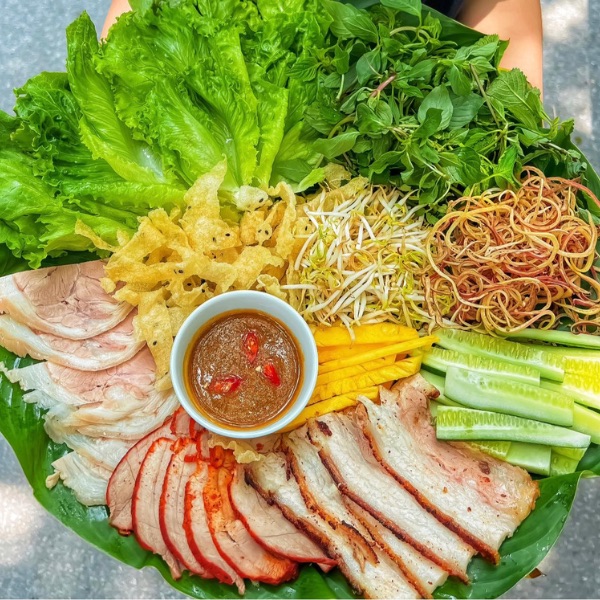 A Da Nang pork-and-herbs platter with sliced two-skin pork, lettuce, mint, perilla, green banana and cucumber arranged around soft rice paper
Like mì Quảng, this dish belongs to central Vietnam. The two-skin pork tradition started south in Quảng Nam province around Đại Lộc and Hội An. Da Nang adopted it as a hometown favorite. You can find pork and rice paper rolls across the country, but the central coast version stands out. It relies on mắm nêm instead of the sweeter, lighter fish sauce dips popular in the south.
That mắm nêm is the defining feature. It is stronger and funkier than the diluted nước mắm chua ngọt you find elsewhere. Locals will tell you a plate of pork without mắm nêm is barely worth eating.
Above all, this is a sharing meal. You rarely see a Da Nang local eat this alone. It is the go-to choice for family lunches, birthdays, and homecoming dinners. A big platter sits in the middle of the table while everyone rolls their own food, talks, and reaches for more herbs. That unhurried spirit makes the food taste even better.
Yes, and it actually beats many other street foods for nervous eaters. The pork is plainly boiled. There is no organ meat, no bones, and no hidden chili heat. The herbs are fresh, the rice paper is neutral, and you control exactly what goes into your roll. If you know how to make a lettuce wrap, you already know how to eat this.
The only real hurdle is the mắm nêm. Be ready for it. This fermented anchovy sauce has a sharp, salty, and distinctly fishy smell that hits you before the first bite. It tastes closer to anchovy paste than a mild fish sauce. Many visitors love the deeply savory flavor once they get past the aroma, especially since it is usually balanced with pineapple, garlic, chili, and lime.
If mắm nêm is too strong, you have an easy backup plan. Ask for nước mắm chua ngọt instead. This sweet and sour fish sauce dip is much gentler on foreign palates, and most places will happily swap it out. Say "ít cay" (pronounced "ee kai") if you want your dip without chili. Keep in mind that this is fundamentally a meat and seafood-based meal. Even if you skip the pork, the dips rely on fish, so it is not vegetarian.
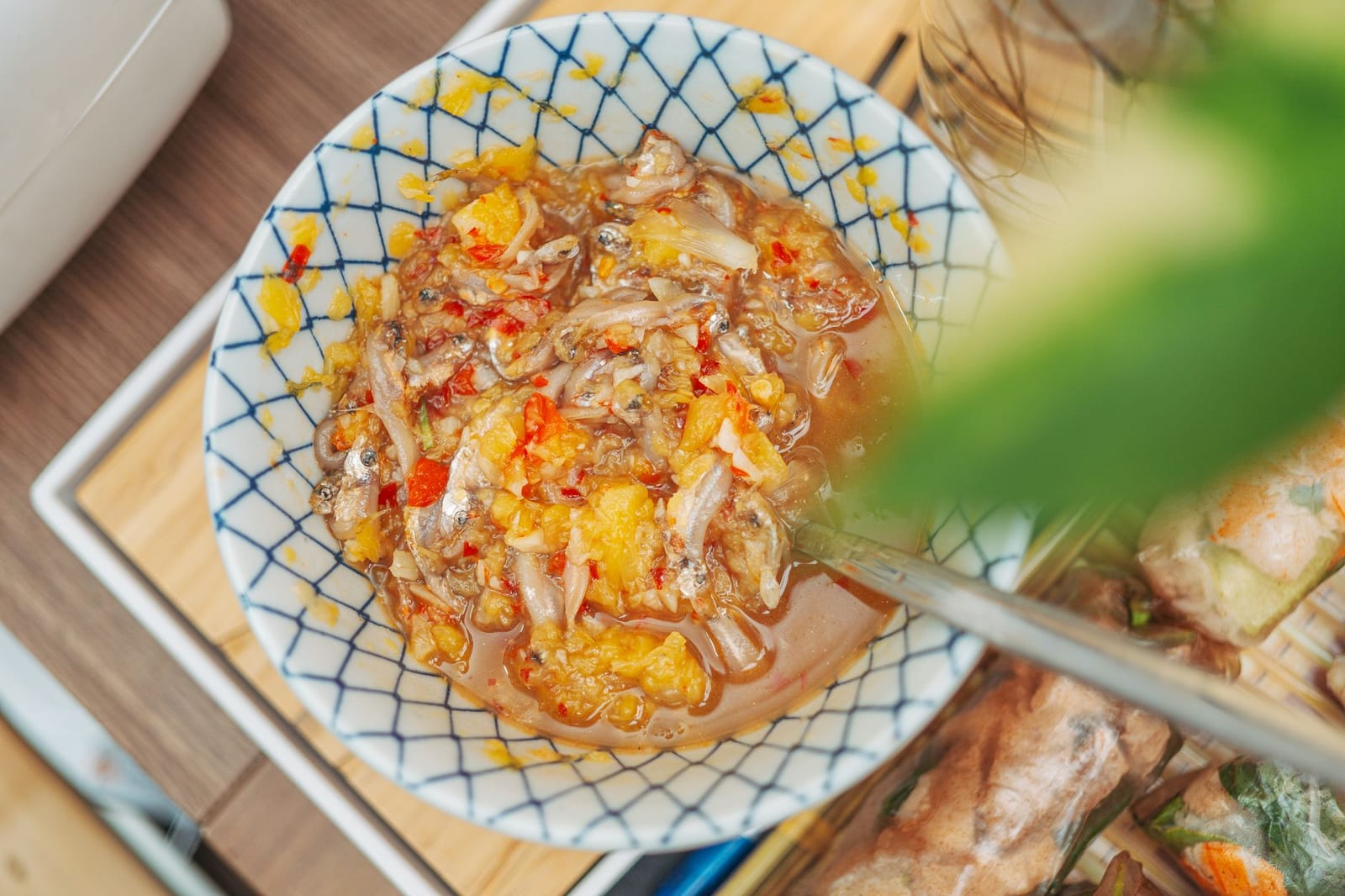 A small bowl of mắm nêm fermented-anchovy dipping sauce with chopped pineapple, garlic and red chilli
You pay for this sit-down meal by the platter rather than the bowl. At a typical local spot, a platter for two includes pork, herbs, both wrappers, and the dip. This usually runs around 70,000–165,000 VND (about $3–6.50).
Per person, that works out to roughly 35,000–80,000 VND. Your final bill depends on how much meat you order and whether you choose a polished restaurant or a neighborhood quán. Tourist-friendly flagship spots sit at the top of that price range, while market stalls and local đường 2/9 joints sit at the bottom. Most places sell extra pork and herbs by the plate so you can keep topping up. Bring cash in small notes since many of these spots do not take cards. Prices change, so treat these figures as a rough guide.
Unlike mì Quảng, which locals mostly eat in the morning, bánh tráng cuốn thịt heo is a lunch and dinner meal. The well-known restaurants keep long hours, usually operating from 9:00 to 21:00. You can show up for an early lunch or a late dinner without much planning.
If you want the best experience, aim for an early dinner around 5:00–6:00 pm. This is especially true at the famous addresses. The local family crowds start rolling in around 7:00 pm, bringing big tables, long waits, and a buzzing but slower dining room. Arrive before them to get seated fast and catch the ingredients at their freshest.
Half the fun is the ritual of building your own meal. Ordering is simple. Just tell the staff how many people are in your group, and they will bring a platter sized to match. The only vocabulary you really need is for the dip. Ask for "mắm nêm" if you want the traditional fermented anchovy sauce, or "nước mắm chua ngọt" for the milder sweet and sour version. Say "ít cay" to keep the chili level down, and "thêm rau" (pronounced "tem zow") when you want a refill on herbs.
Here is the local sequence for building your roll:
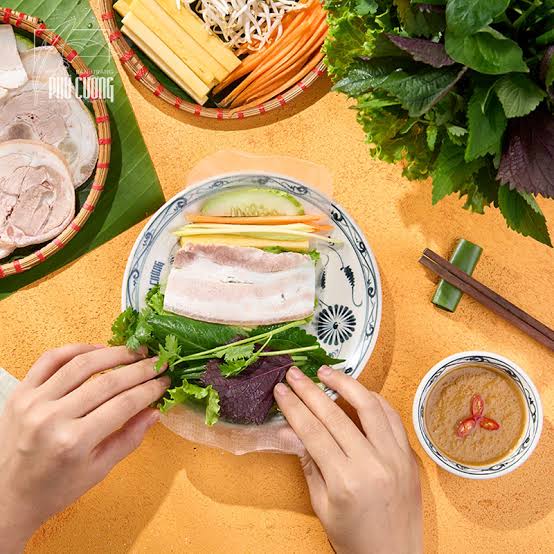 Hands rolling soft rice paper around sliced pork and fresh herbs at a Da Nang table, with a bowl of mắm nêm alongside
The biggest beginner mistake is overfilling the rice paper. It is tempting to cram every herb on the plate into a single roll, but a fat roll will split and leak. Use less filling than you think you need. You can always make another one. This meal fits perfectly into a relaxed evening. We include it as a dinner stop in our perfect 3-day Da Nang itinerary, and it pairs nicely with a riverside walk from our things to do in Da Nang guide.
You will find two main styles of this dish in Da Nang. The "Trần style" is the polished restaurant version most visitors encounter. The everyday version is what locals grab at a market or neighborhood quán.
| Trần-style platter | Everyday street roll | |
|---|---|---|
| Where to find it | Famous sit-down restaurants (the Trần brand and polished imitators) | Local quán, markets, and đường 2/9 neighborhood spots |
| The pork | Carefully cut thịt heo 2 đầu da, neatly plated | Good honest sliced pork; less focus on the strict two-skin cut |
| The dip | Signature house mắm nêm, often milder to suit a broad crowd | Punchier, more traditional mắm nêm |
| Vibe and price | Air-conditioned, tourist-friendly, top of the price range | Plastic stools, local crowds, cheapest end of the price range |
Neither style is objectively better. Go Trần-style for comfort, English-friendly service, and an easy introduction. Head to the street for a cheaper, funkier, and highly local experience once you know you enjoy the flavors.
These are the specific spots we recommend to visiting friends. The famous Trần restaurants are touristy but offer a highly consistent, comfortable starting point. If you want a budget-friendly or purely local meal, head to Chợ Cồn or a Đại Lộc-style joint. Prices, hours, and addresses change, so always confirm before you go.
This is the name that made the dish famous among visitors. It is touristy and sits at the top of the price range, but the quality is reliable. The pork is consistent, the dining room has air conditioning, and the staff are very used to foreign diners. It is the safest bet for your first try.
Locals point to this specialist when they want the proper thịt heo 2 đầu da. They slice the two-skin cut perfectly and serve it with a highly traditional mắm nêm. It is located out in Cẩm Lệ, away from the tourist center, so the crowd is local and the bill is cheaper than the flagship spots.
Named after the Quảng Nam district where this dish originated, this well-rated spot sticks close to tradition. You get excellent pork, generous plates of herbs, and an uncompromising mắm nêm, all for less money than the famous downtown restaurants.
The food stalls inside Chợ Cồn serve a cheap, no-frills version of the dish. There is no air conditioning and no English menu, but you get a genuine plate of pork, herbs, and rice paper for the lowest price on this list. Plus, you get to explore a bustling local market afterward.
For a wider look at Da Nang's food scene, this dish sits alongside mì Quảng and other city classics in our local's honest guide to what to eat in Da Nang.
Bánh tráng cuốn thịt heo is an incredibly friendly meal for newcomers. You get mild pork, fresh herbs, and complete control over what goes into your roll. Try the mắm nêm at least once, and if it is too strong, just swap to the sweet and sour fish sauce. Aim for an early dinner, keep your rolls modest, and start at a comfortable restaurant before graduating to the local market stalls.

One local roundup a month — new guides, festival dates and where to eat. No spam.