What to eat in Da Nang, from a local: the must-try dishes, real VND prices, how to order, and where to actually eat without the tourist markup.
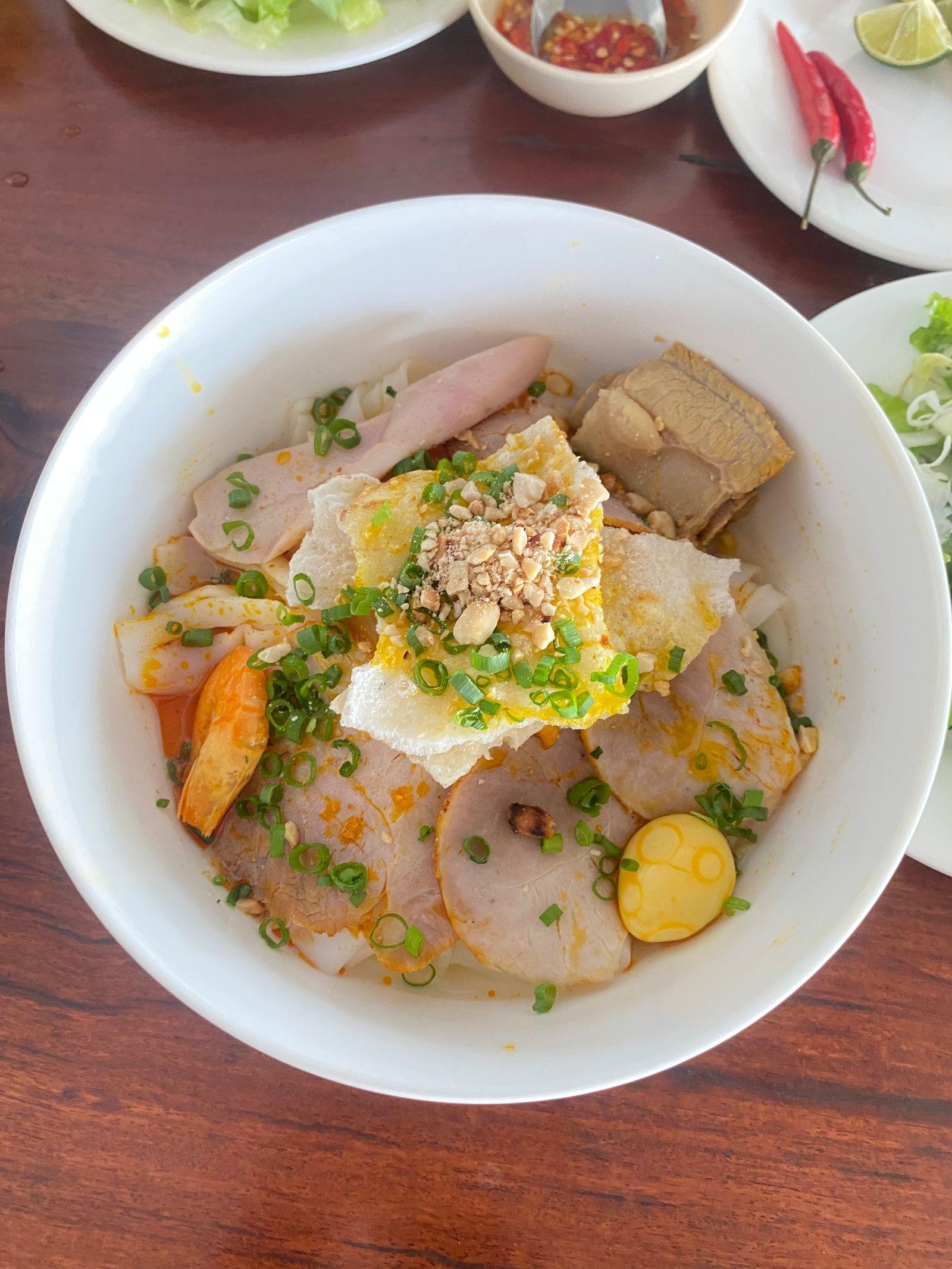
Da Nang food is central Vietnamese cooking at its most honest: bold, salty, a little spicy, and built around fresh seafood and turmeric-stained noodles. If you're wondering what to eat in Da Nang, the short answer is mì Quảng, bún chả cá, bánh tráng cuốn thịt heo, and a plate of fresh seafood — eaten on a plastic stool, not in a fancy dining room. The best meals here cost a few dollars and come with no English menu. This guide walks you through the dishes worth your time, what they should cost, how to order them like a local, and where to actually eat.
By the Go Da Nang local team · Last updated June 2026
Pin these numbers in your head before you sit down. Knowing the going rate is your best defense against the small tourist markup — if a stall quotes you double, you'll know to smile and walk on.
| What you're eating | Typical local price | Notes |
|---|---|---|
| Street-food bowl (mì Quảng, bún chả cá) | around 30,000–50,000đ | A full bowl, no drink |
| Bánh mì | around 15,000–30,000đ | Loaded sandwich |
| Bánh tráng cuốn thịt heo (set) | around 70,000–150,000đ | Shared, for two people |
| Bánh xèo / nem lụi platter | around 50,000–100,000đ | Enough for two |
| Kem bơ (avocado ice cream) | around 20,000–35,000đ | Da Nang's signature dessert |
| Chè (sầu / xoa xoa hạt lựu) | around 15,000–30,000đ | After-dinner treat |
| Salt coffee (cà phê muối) | around 25,000–40,000đ | Huế original, now everywhere |
| Seafood (per person) | around 150,000–300,000đ (varies a lot by weight) | Priced by weight — read the seafood section |
(Prices as of 2026 — they drift, so treat them as a guide, not a guarantee.)
These are local prices, paid at neighborhood stalls. Tourist-strip restaurants near the beach can run two to three times higher for the same food.
If you only have a few meals here, spend them on these three — what locals would actually feed a friend who flew in. Each gets a quick foreigner-friendliness read using three icons (more icons = more of that thing):
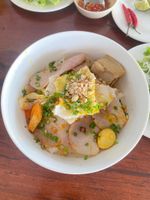
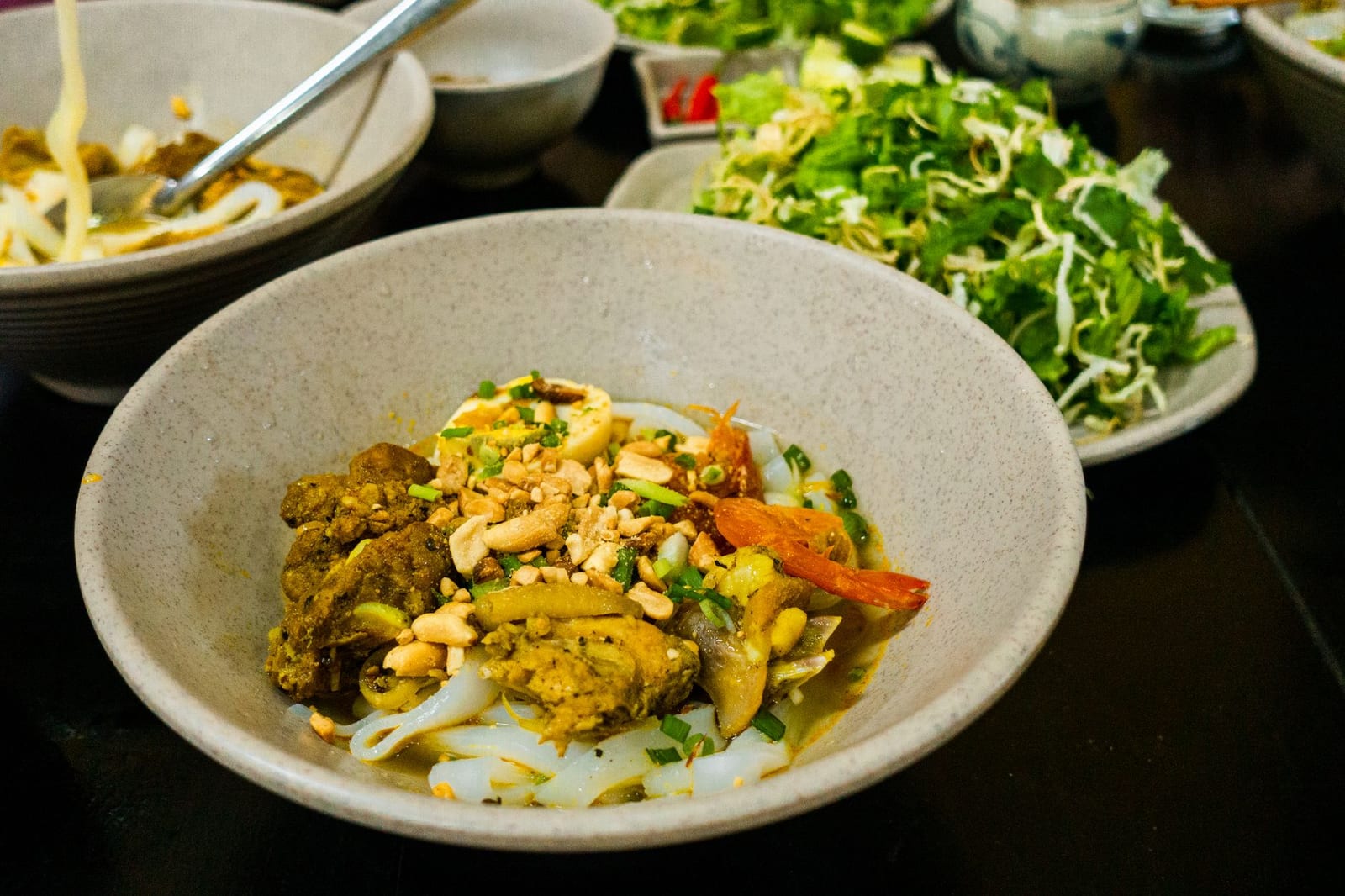 A bowl of mì Quảng with wide turmeric-yellow rice noodles, pork, shrimp, peanuts and herbs, with a side plate of greens
Mì Quảng is the signature noodle dish of central Vietnam — not phở. Wide, flat, turmeric-yellow rice noodles with only a splash of intense broth at the bottom (this is not a soup), topped with pork, shrimp or chicken, peanuts, fresh herbs, and a sesame rice cracker you snap over the top.
The local way to eat it: toss everything together first so the broth coats every noodle, crumble the cracker in for crunch, then bite the small green chili between mouthfuls. Squeeze the lime, add a spoon of chili. Done right, every strand is dressed.
Foreigner-friendliness: 🌶️ · 🥢🥢 · 👃 — Mild by default, the wide noodles can be a little slippery, and there's almost no funk. A very safe first dish.
Price: around 30,000–50,000đ a bowl (as of 2026; specialist spots can run higher).
Want the full breakdown — the types, the regional history, and ten honest places to eat it? Read our deep dive on where locals actually eat mì Quảng in Da Nang.
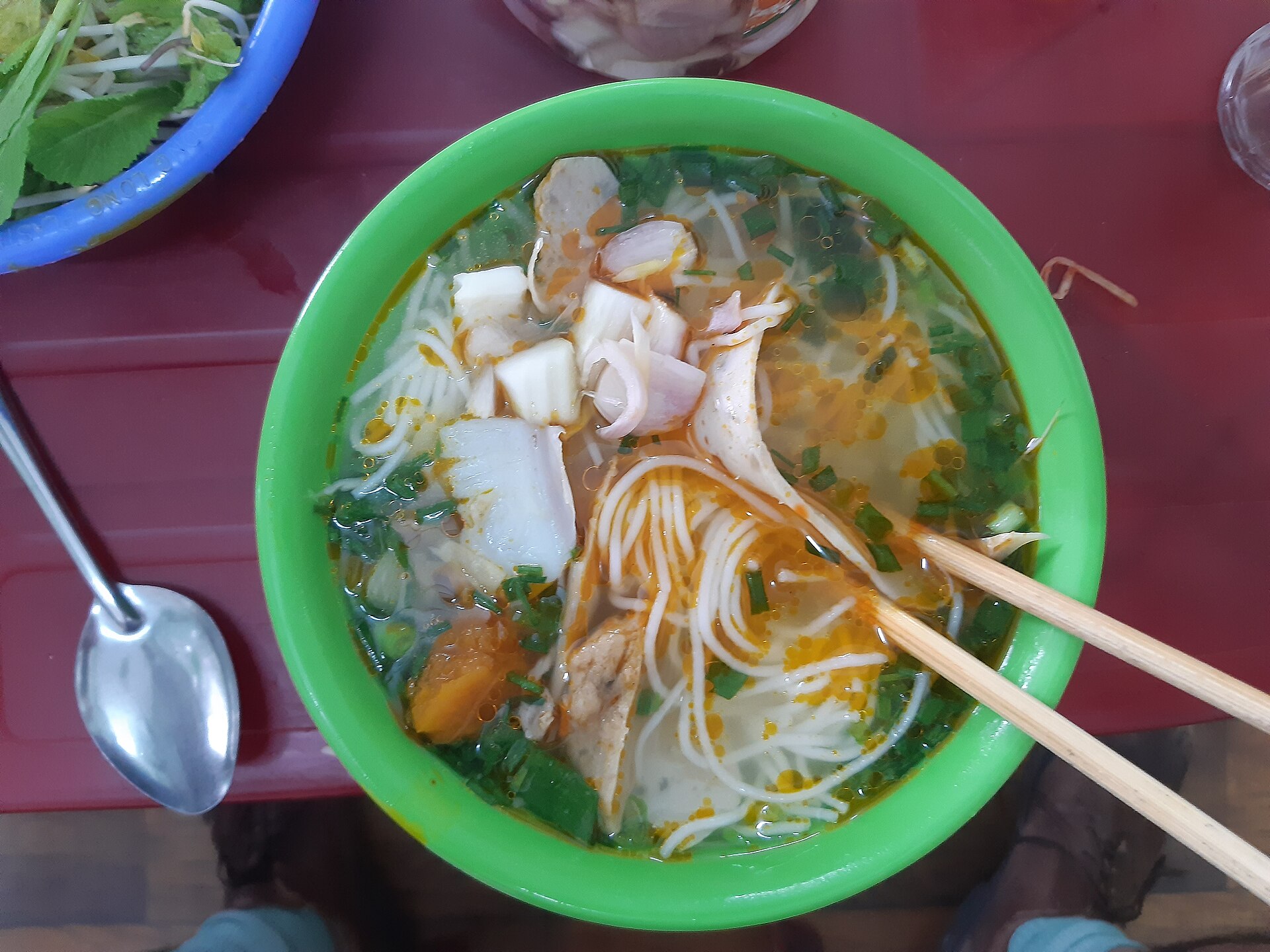 A bowl of Da Nang bún chả cá with clear broth, rice vermicelli and fried and steamed fish cake
Da Nang's breakfast in a bowl: soft rice vermicelli in a light, clear, slightly sweet-and-sour fish broth, topped with two kinds of fish cake — golden fried (chả chiên) and pale steamed (chả hấp). The tang comes from tomato and pineapple, not heavy spice.
The broth comes mild on purpose — you build the flavor with table condiments: a spoon of mắm ruốc (fermented shrimp paste) for depth, chili-garlic vinegar for heat, a squeeze of lime. Pile in the side greens as you go so they stay crisp.
Foreigner-friendliness: 🌶️ · 🥢 · 👃👃 — Easy and gentle, unless you add the mắm ruốc, which carries a strong fermented-shrimp smell. Skip it if funk isn't your thing; the soup is lovely without it.
Price: around 30,000–45,000đ a bowl (as of 2026).
For the difference between this and the Hanoi version, and where the locals queue, see our Da Nang bún chả cá guide.
Thick, chewy tapioca noodles — closer to udon than the thin bún or rice noodles in the other bowls — in a rich, slightly gravy-like broth. Da Nang serves it half a dozen ways: cheap scad-fish (cá nục) and squid bowls, the famous trackside bánh canh đường ray eaten on plastic stools, and pricier crab versions (ghẹ, cua) and mantis shrimp.
Foreigner-friendliness: 🌶️ · 🥢🥢 · 👃 — The fish and squid bowls are mild and easy; the crab versions are messy, hands-on shell work. It often comes chili-forward, so say "không cay" if you want it mild.
Price: around 20,000–45,000đ for fish/squid bowls, more for crab (as of 2026).
For the six types, the by-the-bowl crab pricing, and where locals eat each one, see our Da Nang bánh canh guide.
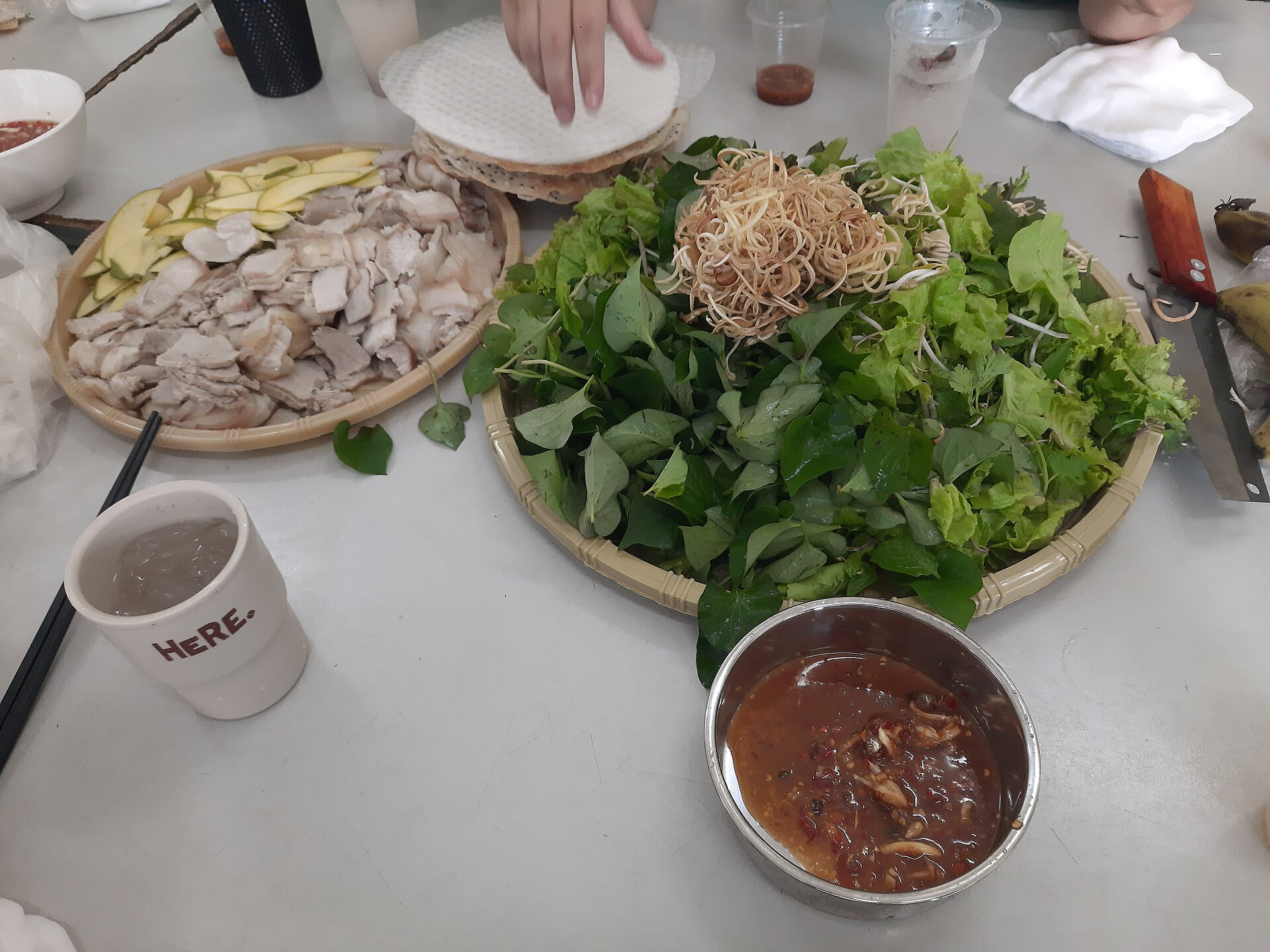 A platter of bánh tráng cuốn thịt heo — sliced boiled pork belly, fresh herbs, rice paper and a bowl of mắm nêm
A platter you assemble yourself: thin slices of boiled pork belly (often double-skinned, with a band of fat), a mountain of fresh herbs, sliced cucumber and green banana or starfruit, and soft rice paper to wrap it all in. The whole thing lives or dies on the dipping sauce: mắm nêm, a pungent fermented anchovy sauce.
Lay a sheet of rice paper down, add lettuce, herbs, cucumber, a slice of pork, roll it tight, then dunk deep into the mắm nêm. Don't be shy with the sauce — that's the whole point.
Foreigner-friendliness: 🌶️🌶️ · 🥢🥢 (it's hands, not chopsticks) · 👃👃👃 — The food is harmless, but mắm nêm is the most divisive sauce in this guide. If it's too strong, ask for nước mắm chua ngọt (sweet fish sauce) instead.
Price: around 70,000–150,000đ for a set for two (as of 2026; it varies with how much pork you order).
If you want a step-by-step on rolling it and which mắm nêm spots locals trust, read our bánh tráng cuốn thịt heo guide.
Bánh xèo and nem lụi often share a menu and locals order them together — both wrap-it-yourself, half the fun is building each bite. Bún mắm nêm is the bolder cousin, for when you're ready to commit to the sauce — and gỏi cá Nam Ô, a raw-fish salad, is the most adventurous plate of the lot.
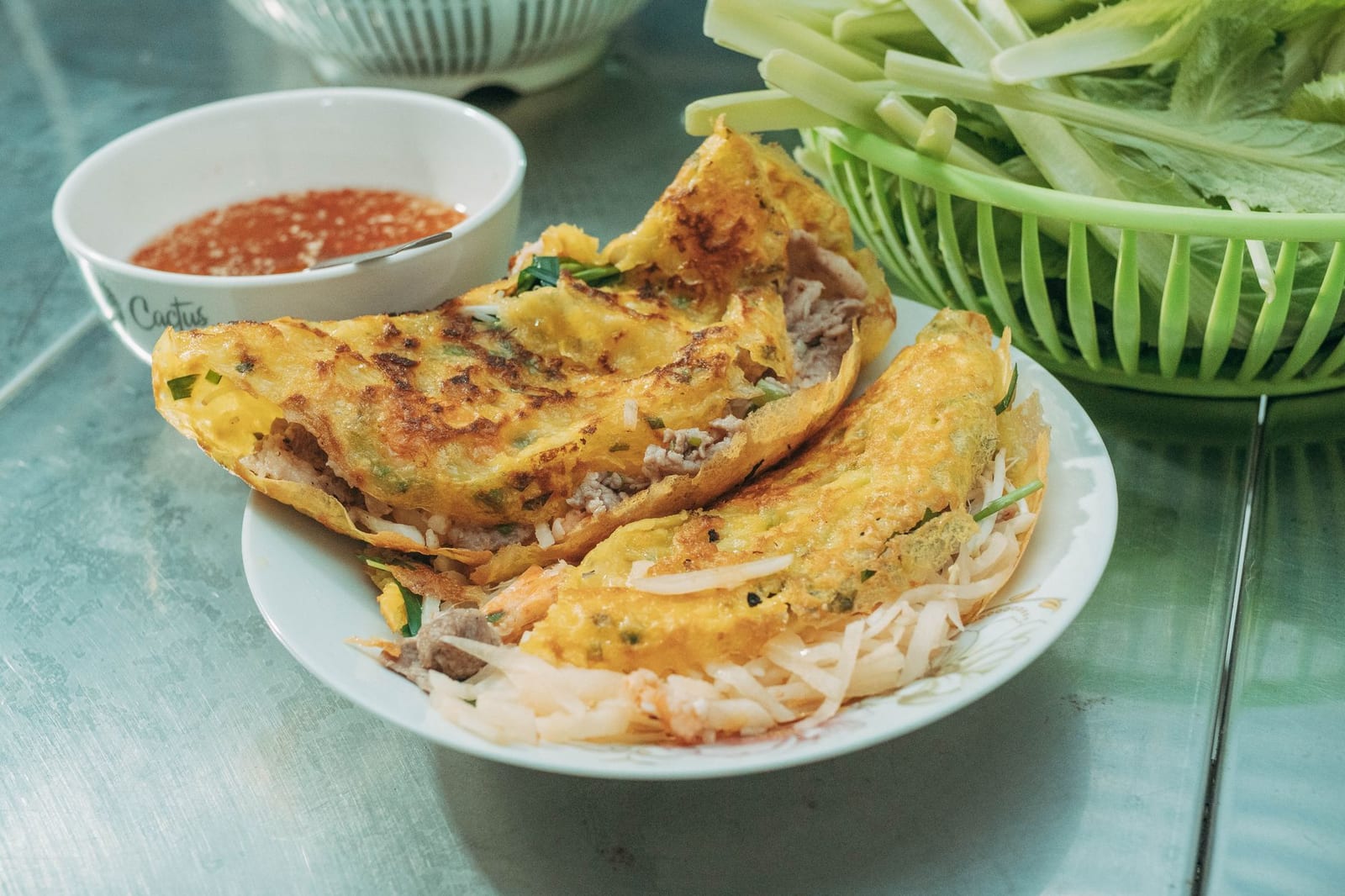 Crispy golden Vietnamese bánh xèo pancakes folded over bean sprouts, plated with fresh herbs and a bowl of dipping sauce
Bánh xèo means "sizzling cake," after the sound the batter makes hitting the hot pan. The Da Nang version is smaller and crispier than the giant southern one — a thin, golden, turmeric-tinted pancake folded over shrimp, pork, and bean sprouts. Tear off a piece, wrap it in rice paper with herbs, and dip in nước chấm or a thick peanut-soybean sauce.
Foreigner-friendliness: 🌶️ · 🥢🥢 · 👃 — Crisp, mild, low-funk. One of the safest plates on any menu. Tip: many spots are afternoon-and-evening only and sell out — go from late afternoon on.
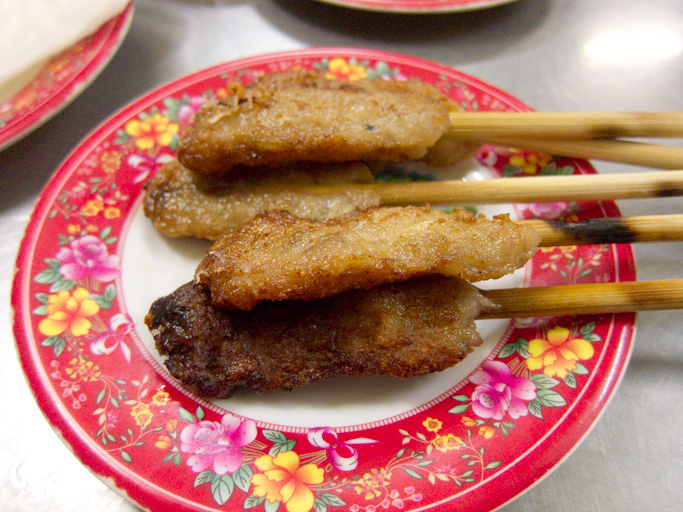 Grilled nem lụi minced-pork lemongrass skewers on bamboo sticks
Seasoned minced pork wrapped around a lemongrass stalk and grilled over charcoal, served with the same wrap-your-own kit and a rich peanut-soybean dipping sauce (tương đậu). Slide the pork onto the rice paper, add herbs, roll, and dunk generously — that thick sauce is the soul of the dish, and most stalls are quietly proud of their own.
Foreigner-friendliness: 🌶️ · 🥢🥢 · 👃 — Grilled, savory, kid-friendly. The peanut sauce wins almost everyone over.
For why these two share a table, how to build the perfect roll, and where locals eat them, see our Da Nang bánh xèo & nem lụi guide.
Cold rice vermicelli piled with herbs, green mango or papaya, grilled pork or sliced nem, a fried spring roll, peanuts and crispy shallots — then the whole bowl is dressed with mắm nêm, the same pungent fermented-anchovy sauce from the pork rolls. You toss it together yourself. It's the boldest, most divisive bowl in this guide and a fair litmus test for how far down the local rabbit hole you've gone.
Foreigner-friendliness: 🌶️🌶️ · 🥢 · 👃👃👃 — All about the mắm nêm. If you loved the pork rolls' sauce, this is your bowl; if not, sit this one out.
For the full build, the best bowls, and how to ease into the sauce, see our Da Nang bún mắm nêm guide.
Out in Nam Ô fishing village (Liên Chiểu), cooks cure thin slices of raw herring in lime, ginger and chili, then you wrap them in rice paper with fig and guava leaves and dip into a warm peanut-tapioca sauce. It comes dry (gỏi khô) or sitting in the sauce (gỏi ướt). This is genuinely raw fish — the most adventurous plate in this guide — so eat it fresh, at a busy spot.
Foreigner-friendliness: 🌶️🌶️ · 🥢🥢 · 👃👃 — Raw and tangy. If you like ceviche or sashimi you'll enjoy it; if raw fish isn't your thing, skip it. Tip: start with the dry gỏi khô rolled in rice paper.
For the two styles, where to eat it, and how to eat it safely, see our Da Nang gỏi cá Nam Ô guide.
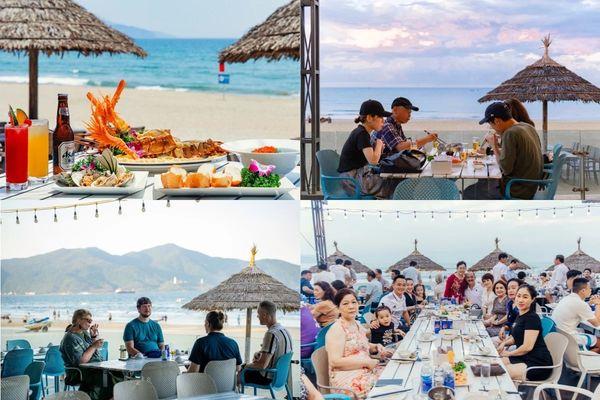
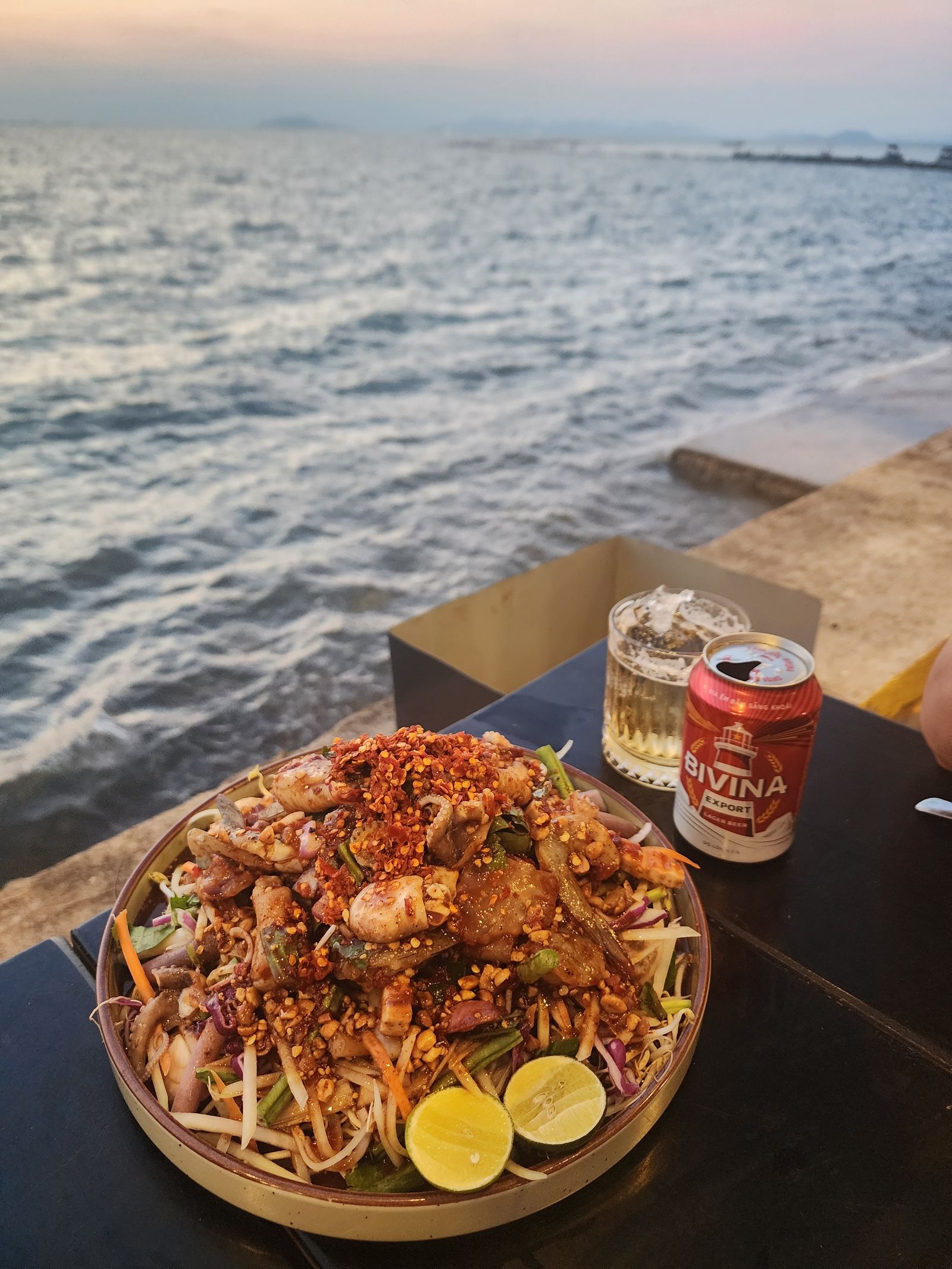 A plate of spicy Vietnamese seafood salad served seaside with a cold drink
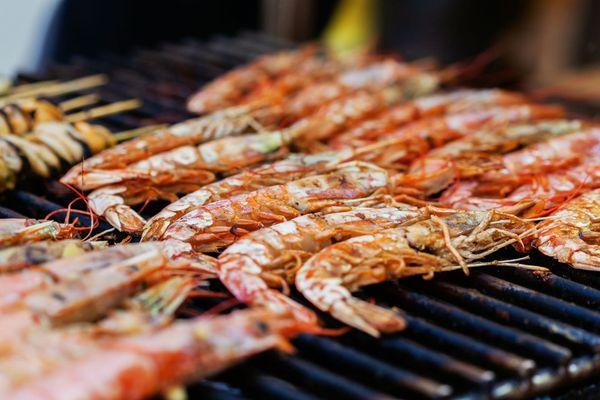
Da Nang is a fishing city, so the seafood is genuinely excellent — clams, mantis shrimp, scallops grilled with peanuts and scallion oil, snails, and whole fish. But seafood is also where most visitors get overcharged. A few simple rules keep you safe.
Always confirm the unit. Prices are by weight, and the classic trick is quoting "100,000đ" and letting you assume it's per kilo when it's per 100g — a 10x surprise on the bill. Ask plainly: "Giá này một ký hay một lạng?" ("Is this price per kilo or per 100g?"). Get a clear answer before you point at anything.
Watch it get weighed. Ask them to weigh your seafood in front of you, and check that the basket has drainage holes — wet baskets and ice add fake weight. A fair vendor won't mind you watching.
Skip the dim-lit tourist strip. The seafood restaurants with aggressive touts along the main beach road are not where locals go. Head instead to the Sơn Trà / Thọ Quang side near the fishing port, where the catch is fresher and the prices are honest.
Order grilled, not just steamed. Grilled scallops or clams with scallion oil and peanuts (sò điệp nướng mỡ hành) are a Da Nang signature and hard to mess up.
For the dishes worth ordering, real 2026 prices, and where to eat by budget — from local quán to Michelin-listed spots — see our full Da Nang seafood guide. And for the eat-while-you-drink scene — what locals order with a cold beer — see our mồi nhậu guide.
Foreigner-friendliness: 🌶️ · 🥢🥢 (shells and hands) · 👃 — The food is fine; the bill is the only thing to fear. Follow the weighing rule and you're set.
Price: budget around 150,000–300,000đ per person for a proper spread (as of 2026 — it varies a lot with what and how much you order).
Bánh mì deserves a mention — the central-Vietnam version leans savory and a touch spicy, and it's a great cheap breakfast on the move. A few spots in Da Nang are worth going out of your way for: see our Da Nang bánh mì guide.
Chả bò (peppery beef sausage) is the edible souvenir locals carry home — dense, garlicky and shot through with whole black peppercorns, sliced thin into a bánh mì or eaten with beer. For the trusted makers and how to buy the real thing, see our Da Nang chả bò guide.
One honest note: you'll see cao lầu on menus around town, but it's really a Hội An dish — thick noodles traditionally made with water from specific Hội An wells. If it's high on your list, eat it 30 minutes south where it belongs.
The meal isn't over when the plates clear — locals roll into a dessert and a coffee, often at a different spot.
Kem bơ (avocado ice cream). Da Nang's true signature dessert, and genuinely local — not a borrowed trend. Ripe avocado blended into a thick mousse under a scoop of coconut ice cream, condensed milk and toasted coconut: creamy, cold, not too sweet. Kem Bơ Cô Vân at Chợ Bắc Mỹ An has been doing it since 1992. Around 20,000–35,000đ.
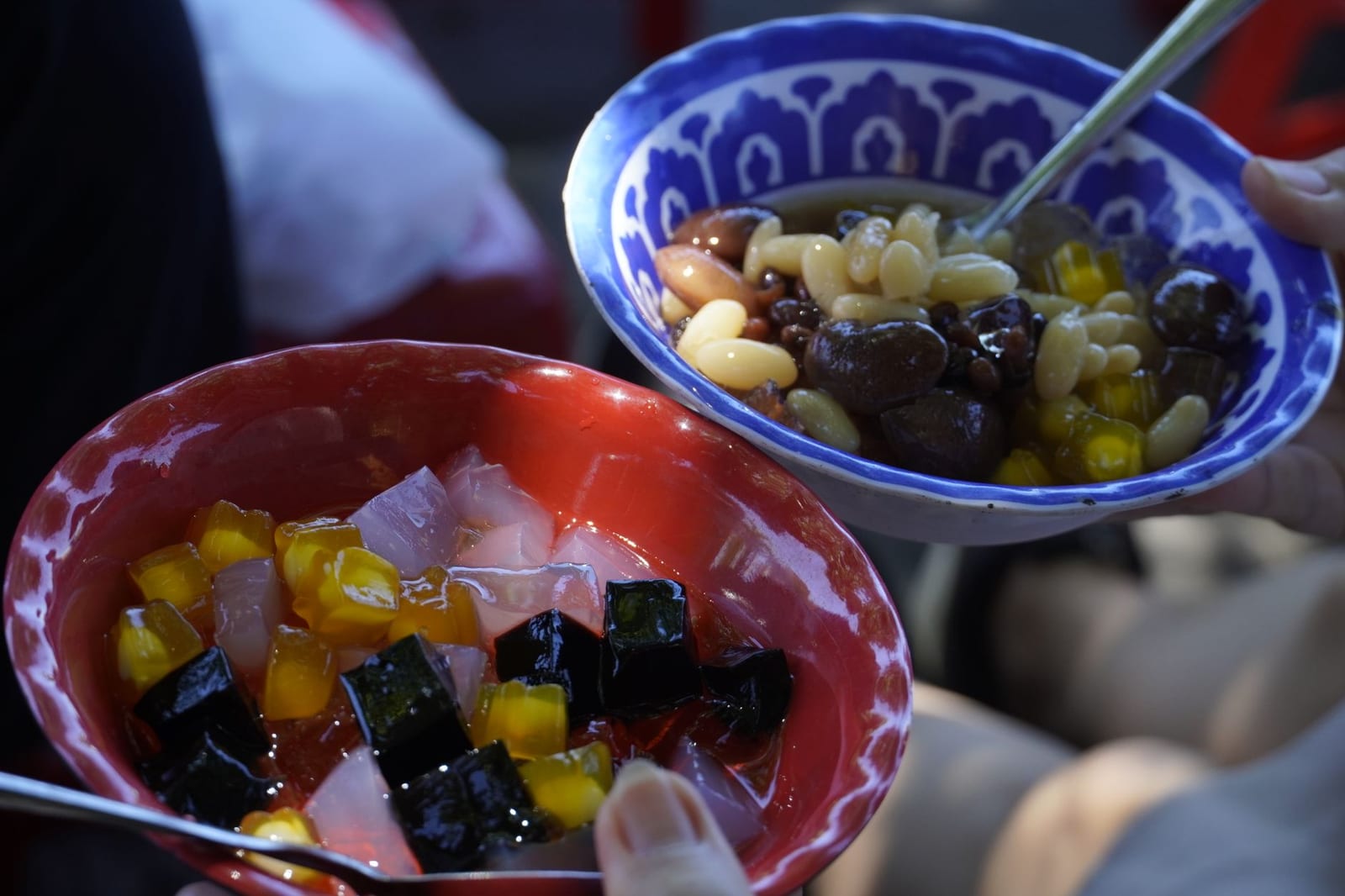 A glass of Vietnamese chè with layers of jelly, beans and crushed ice at a Da Nang dessert stall
Chè (sweet soup). Families crowd chè stalls late into the evening — peak local nightlife, no alcohol required. The two to know: chè sầu (a rich durian-and-jackfruit cup with jellies) and chè xoa xoa hạt lựu (cooling seaweed jelly with tapioca "pomegranate" pearls, black jelly, mung bean and coconut milk — the more distinctly Da Nang of the two). Durian-shy? Order the xoa xoa. Around 15,000–30,000đ. For the full menu — chè bắp, chè chuối, chè thái and the rest, plus where to find them — see our guide to chè in Da Nang.
For what goes in the cup and the chè stalls locals actually queue at, see our Da Nang chè xoa xoa hạt lựu guide.
Cà phê muối (salt coffee). On every menu and worth a try — strong Vietnamese coffee over lightly salted whipped cream, the salt cutting the sweetness. Honest note: it's a Huế invention gone nationwide, not a Da Nang original — but the city does it well. Around 25,000–40,000đ. For phin, coconut, salt and egg coffee explained — and the independent cafés to drink them at — see our Da Nang coffee guide.
In Da Nang, the best food rarely has a storefront you'd notice. Locals eat down alleys (hẻm), at single-dish family stalls, and inside the city's two big markets — Chợ Cồn and Chợ Hàn, the easiest point-and-eat entry points. Open Google Maps before you go, as small stalls move and hours shift.
The classic one-stop: dozens of stalls under one roof — mì Quảng, bún chả cá, chè, bánh xèo, fresh juice. Walk a lap, then sit where the locals are.
More central and polished than Chợ Cồn, near the Hàn River. Good for bánh mì, seafood, and a quick bowl while sightseeing.
The honest seafood neighborhood on the Sơn Trà side, near the working port — fresher catch, fairer weighing, far fewer touts than the beach strip. Pick a local-packed place and follow the weighing rules above.
The pedestrian night market in the expat "Western Quarter" behind My Khe beach — a walkable strip of stalls and bars mixing Vietnamese street food (bánh xèo, nem lụi, grills, salt coffee, chè) with international eats. Handy for beachside stays wanting late variety.
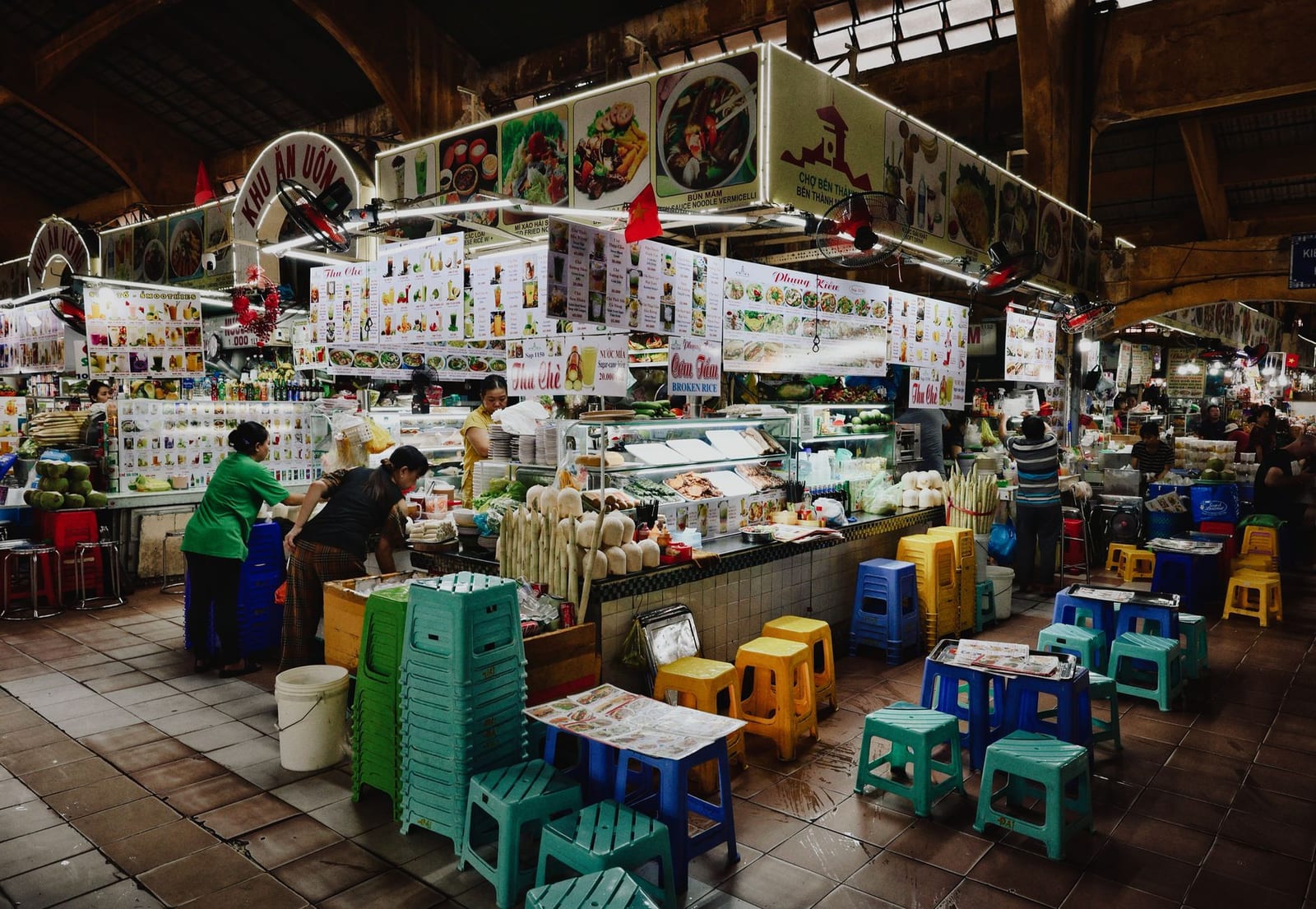 Food stalls and plastic stools inside Da Nang's Cho Con market with vendors and hanging signs
Eat where it's busy with Vietnamese diners, sit on the plastic stool, confirm prices before you order (especially for seafood), and don't be afraid of the sauce. Da Nang food rewards the curious and the slightly brave. Start with mì Quảng, work through this list, and you'll eat better — and cheaper — than almost any beach-strip restaurant will let you. For the full story on any of the three hero dishes, follow the links above.
One local roundup a month — new guides, festival dates and where to eat. No spam.