Mì Quảng is Da Nang's signature noodle dish — not phở. Here's what it is, the types to order, and 10 spots where locals actually eat it.

By the Go-Da-Nang local team · Last updated June 2026
Most visitors default to phở, but the true local staple of Da Nang is mì Quảng (pronounced "mee kwang"). These turmeric-yellow noodles sit in a rich, concentrated broth and make the perfect morning meal. It is the dish we put at the top of our local's honest guide to what to eat in Da Nang, and to see how a bowl fits into your wider trip, check out our local's guide to things to do in Da Nang.
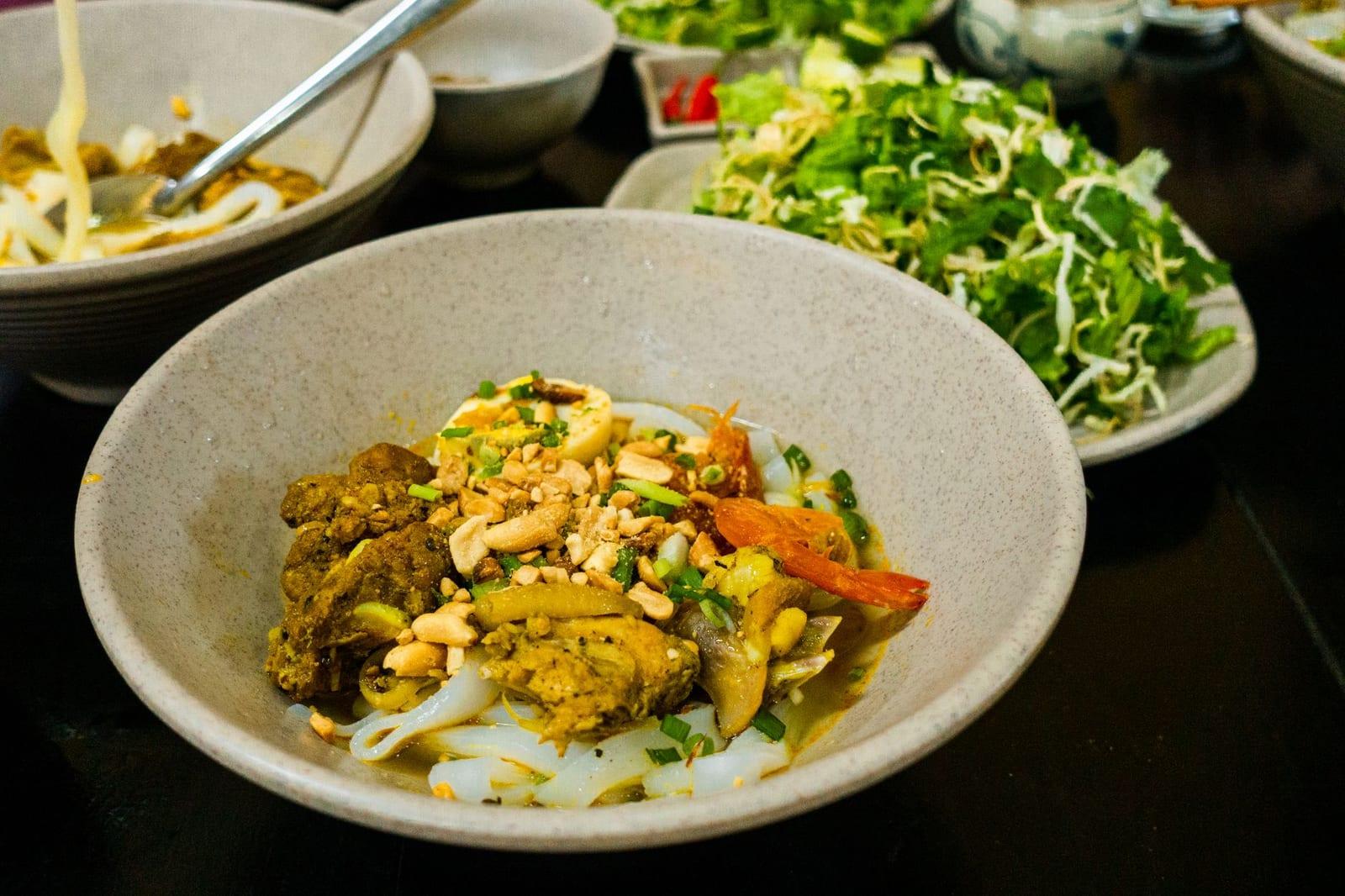
Mì Quảng is built around flat, wide rice noodles tinted yellow with turmeric. They sit in just a few spoonfuls of an intense, reduced broth made from shrimp and pork, or sometimes chicken or crab. The flavor is strong and savory.
On top of your chosen protein, you get a generous pile of raw herbs, shredded banana blossom, roasted peanuts, a lime wedge, sliced chili, and a toasted sesame rice cracker (bánh tráng mè).
You squeeze in the lime, pile on the greens, snap the cracker into shards, and toss everything together. The noodles soak up the broth and leave the bowl almost dry.
It is a light and fresh meal. Every bowl comes with a side plate of lettuce, bean sprouts, banana blossom, basil, mint, and coriander. Add as much as you like. Do not skip the fresh green chili, as a few slices give you the true local flavor.
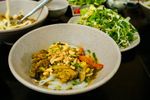
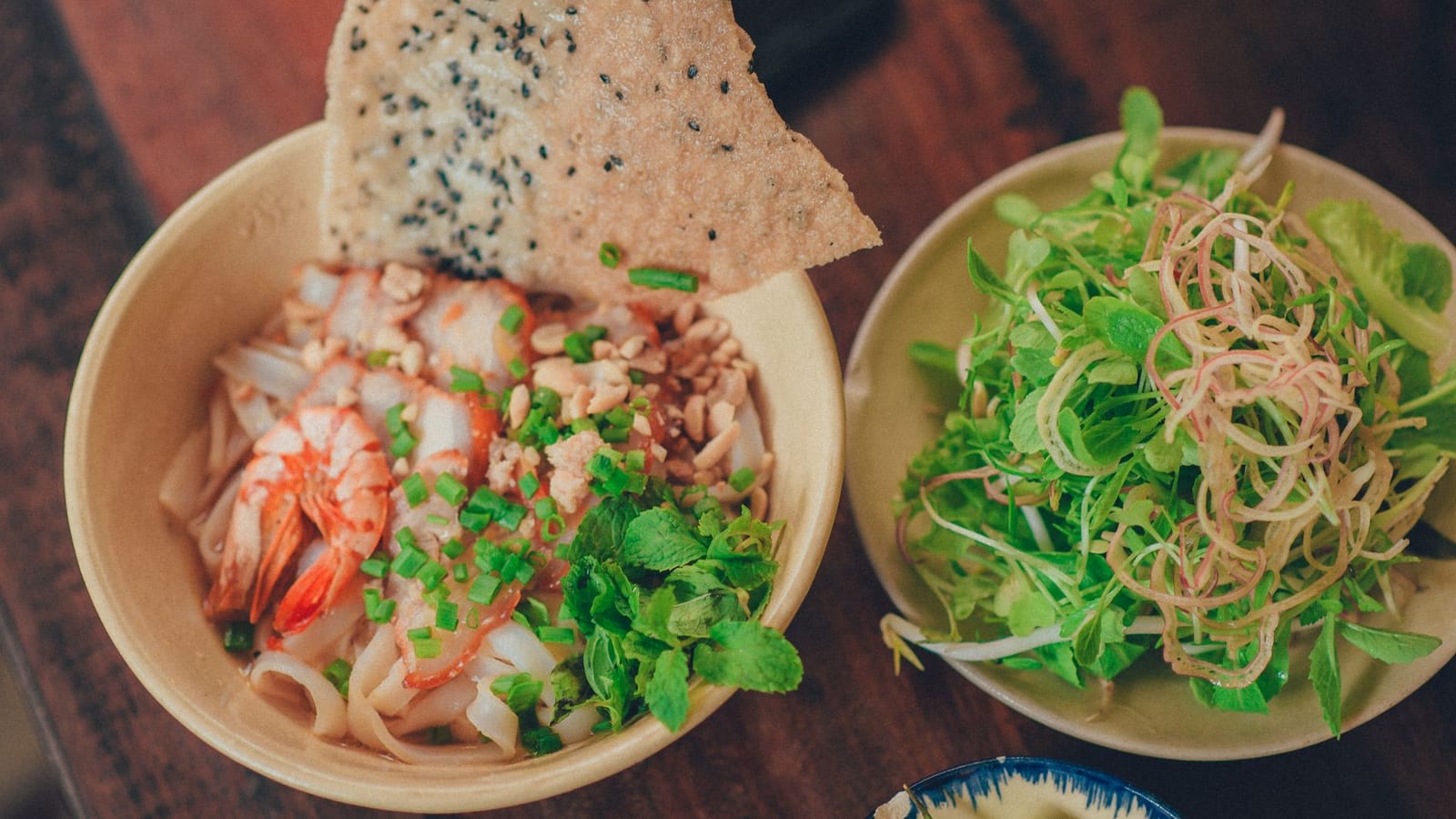 A close-up bowl of mì Quảng with wide yellow noodles, shrimp, pork, peanuts and fresh herbs
A few quick basics: A bowl runs about 20,000–40,000đ. This makes it one of the cheapest proper meals in the city. The broth is mild by default, so you add fresh chili to taste. It is a morning and lunch dish. The best spots sell out by early afternoon, so go before mid-afternoon. If you are new to it, start with tôm thịt (shrimp and pork) or gà (chicken).
Many visitors expect a traditional soup. Here is how the two dishes compare:
| Mì Quảng | Phở | |
|---|---|---|
| Noodles | Wide, flat, turmeric-yellow rice noodles | Thin, flat white rice noodles |
| Broth | Just a splash, intense and reduced | A full bowl of light, clear broth |
| How you eat it | Mixed and eaten almost dry with herbs and a cracker | Sipped as a soup with noodles submerged |
They belong to the same noodle family but offer a completely different experience.
The base of yellow noodles and concentrated broth stays the same, but the protein changes the flavor profile. Here are the variations you will see around Da Nang:
The toppings remain identical no matter which protein you choose. You always get peanuts, herbs, lime, chili, and the sesame rice cracker.
Getting the ritual right is half the fun. Here is how to eat it:
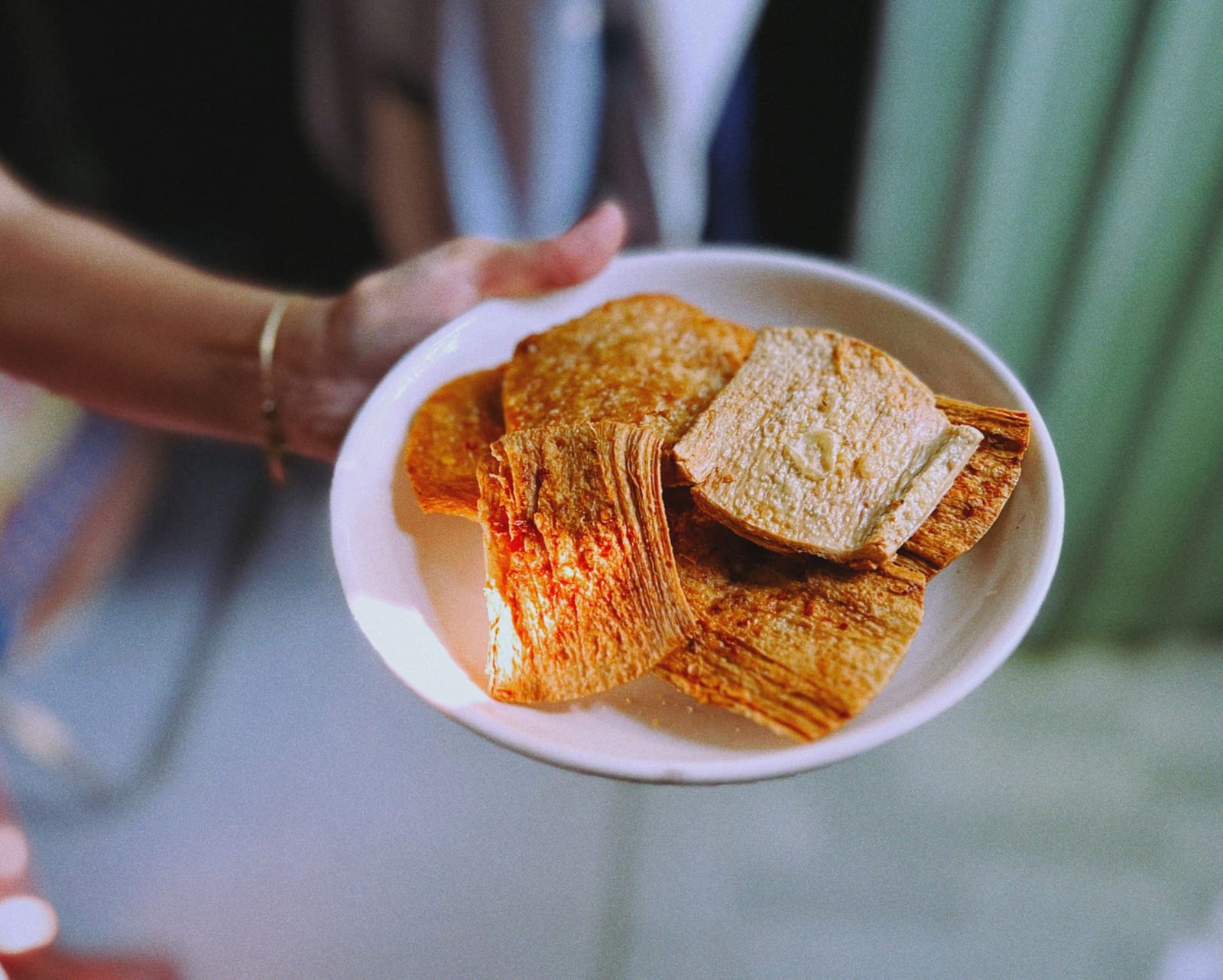 A toasted sesame rice cracker (bánh tráng mè) held over a bowl of mì Quảng, ready to crack
When to go: Mì Quảng is a morning and lunch food. The best stalls cook a single batch and close when it runs out. Many sell out by early afternoon. Aim for breakfast or an early lunch, as your options shrink fast by 2:00 PM.
Money: Bring cash in small notes. Most of these spots do not take cards. Handing over a 500,000đ note for a 30,000đ bowl will get you a look.
Ordering with no Vietnamese: Pointing and smiling works fine, but a few words help. "Một tô" (moht toh) means "one bowl." For the protein, use gà for chicken, tôm thịt for shrimp and pork, cá for fish, and ếch for frog. Saying "một tô gà" gets you one chicken bowl. Most stalls see plenty of visitors who just point at the next table.
If you are planning your meals, we slot a mì Quảng breakfast into Day 1 of our perfect 3-day Da Nang itinerary. It is a great start to a morning in the city.
These are mostly small neighborhood spots and a couple of bigger local institutions. You will find them in the Hải Châu and Thanh Khê districts on the city side, plus a few across the river near the beach. The bowls are cheap and the regulars are mostly Vietnamese. Prices are per bowl and change often, so use these numbers as a rough guide.
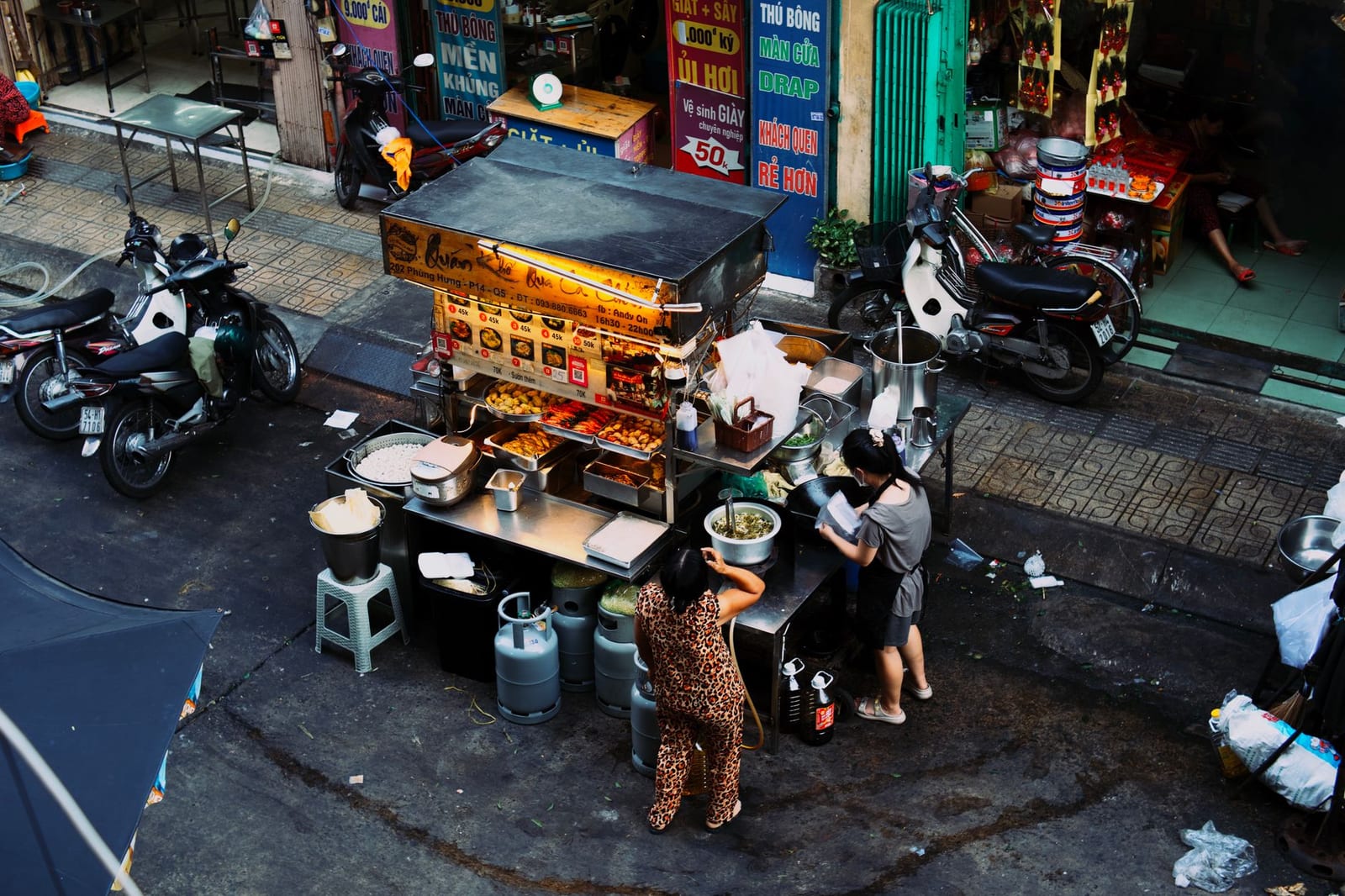 A busy local mì Quảng stall with low plastic stools and steaming pots
A reliable Hải Châu classic serving the original Phú Chiêm style with shrimp, pork, and egg (tôm thịt trứng). This is a solid, no-surprises first bowl if you are new to the dish.
This spot serves Phú Chiêm style, but the main draw is a broth made with cua đồng (field crab). It tastes sweeter and more savory than the usual shrimp and pork version. You will find it in Thanh Khê, well off the tourist trail.
Another Thanh Khê favorite located a few doors down the same street. They serve tôm thịt with a shrimp-paste-forward broth. It is earthy and slightly funky, capturing the traditional Phú Chiêm flavor perfectly.
Come here for the chicken (gà) version. They also serve snakehead fish (cá lóc) and eel (lươn) if you want to branch out. This is a gentle introduction if you are unsure about seafood broths.
If you are curious about the frog version (ếch), this well-known Hải Châu institution is the place to try it. It is a bigger and more polished operation than most on this list, but still firmly a local favorite. They also cook eel, fish, and boneless chicken, giving hesitant eaters plenty of options. The frog meat is surprisingly mild.
Cheap, traditional, and unfussy. You get a straight-up Phú Chiêm tôm thịt bowl for the price of a coffee. This is the best budget pick along the Thanh Khê stretch.
An old-school spot tucked down a kiệt (alley) off Nguyễn Văn Linh. Expect low plastic stools and rock-bottom prices. You would never find it without a local tip, but it is well worth the hunt.
East of the river and the handiest stop on this list if you are staying near My Khe Beach. They do chicken, snakehead fish, and beef. This variety helps when your table cannot agree on one thing.
Over on the Sơn Trà side, this stall keeps things simple with a tidy chicken and egg bowl. It makes a great breakfast stop if you are heading up to the Sơn Trà peninsula or the Lady Buddha.
A beloved, long-running spot that locals also know as "Mì Quảng Kho Đạn." They cook a single morning batch and regularly sell out before lunch, so the regulars show up early. Arrive before 11:00 AM to be sure of a bowl.
This is our team's regular spot. We send friends here when they ask where locals actually eat. The bowls are generous, balanced, and fairly priced. You will find it full of regulars rather than tourists. If you only have time for one stop, go here.

One local roundup a month — new guides, festival dates and where to eat. No spam.