A local's seafood guide to Da Nang: the dishes to order, where to eat by budget, real VND prices, peak hours, and how to avoid getting overcharged.
Da Nang is a coastal fishing city where fresh clams, prawns, squid, and crab come straight off the boats daily. You will eat brilliantly for a few dollars if you pick your seafood live from the tank and agree on the per-kilo price before cooking. This guide covers exactly what to order, where to find honest local prices, and how to avoid getting overcharged on the beach strip.
By the Go Da Nang local team · Last updated June 2026
Da Nang sits on the central Vietnamese coast with a working fishing fleet and one of central Vietnam's biggest wholesale fish markets at Thọ Quang. Boats come in through the night. A lot of what you eat at dinner was swimming that morning. That freshness is the whole appeal. You do not need fancy cooking when the catch is this good. Locals prefer to grill and steam their food rather than cover it in heavy sauces.
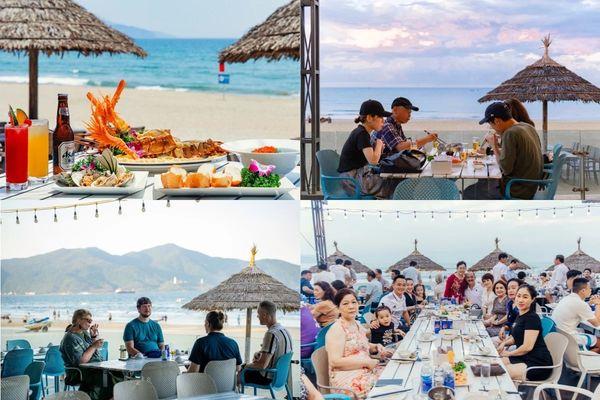
The beach strip behind My Khe is where most overcharging happens. Those big, brightly lit seafood halls with staff waving menus at the road cater to tour groups. You will find fresher, fairer seafood on the Sơn Trà and Thọ Quang side near the port, or at small local quán away from the sand. If you plan to stay near the water, this meal pairs naturally with our guide to the best beaches in Da Nang.
You do not need to memorize a menu. Cooks prepare most seafood in a few simple ways: grilled (nướng), steamed (hấp), stir-fried (xào), or in hotpot (lẩu). The quality comes from the freshness. Here is what to look for.
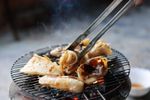
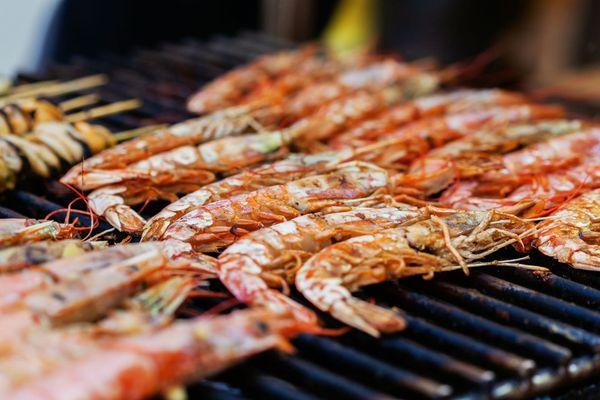
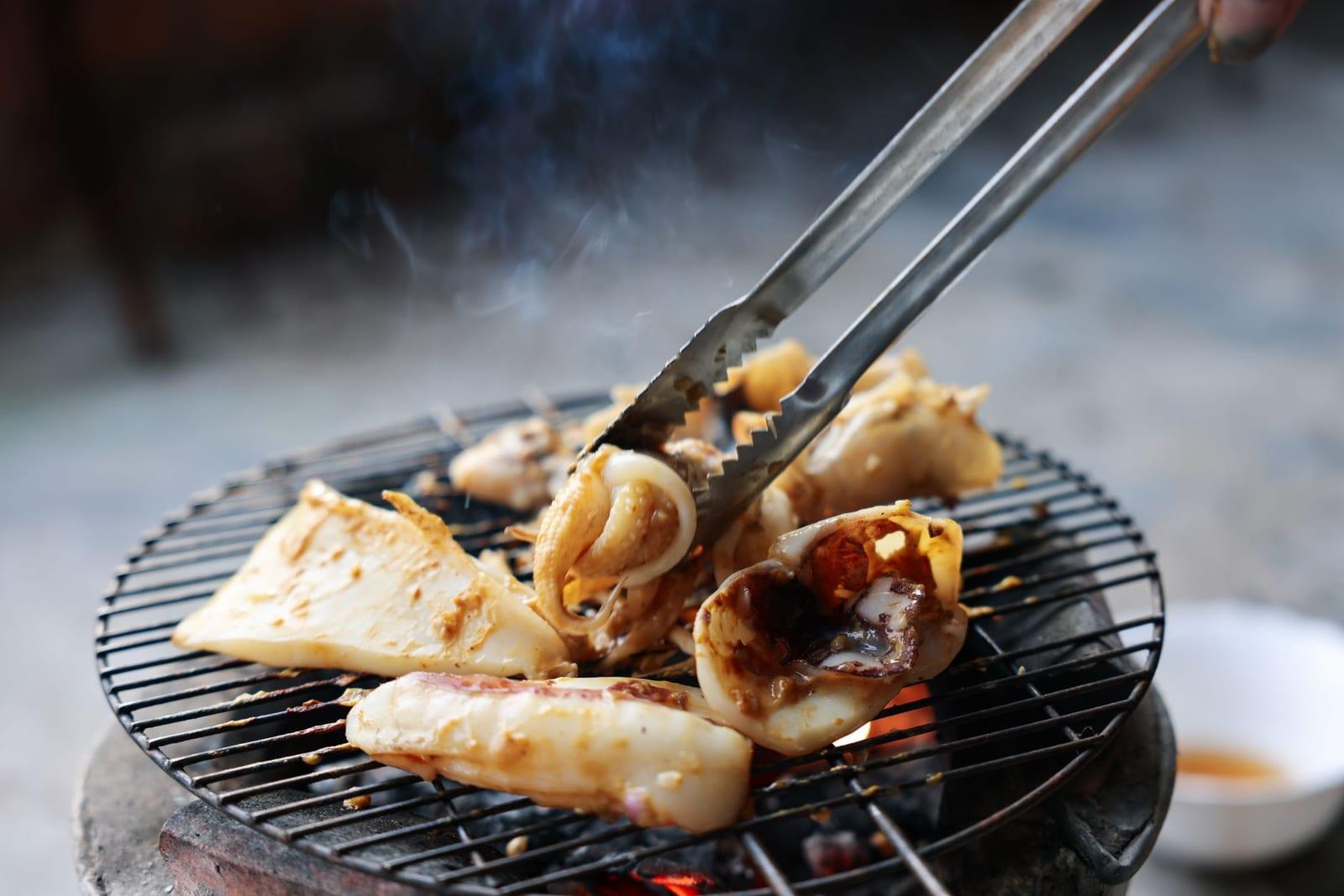
This is the default order and the hardest to get wrong. Fat prawns and tender squid go straight onto the charcoal. Swimming crab (ghẹ) is small, sweet, and worth the messy shell work. Your food arrives with a little dish of salt, pepper, and lime (muối tiêu chanh) to squeeze and dip. Sweet, smoky, and lightly seasoned, this is the perfect plate to start your meal.
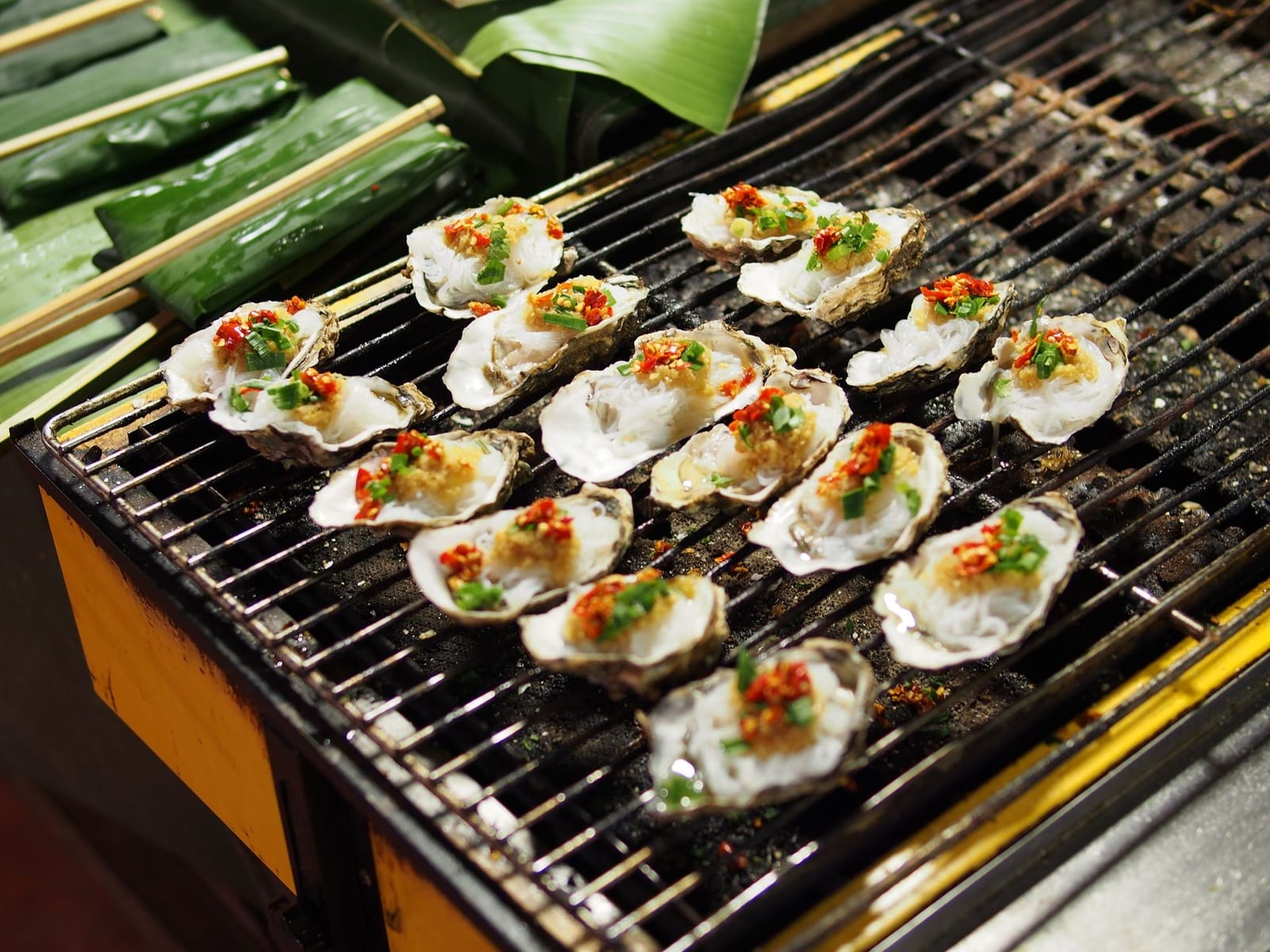 Grilled oysters topped with scallion oil and crushed peanuts on a charcoal grill
Hàu nướng mỡ hành — grilled oysters with scallion oil and peanuts, a Da Nang staple.
Oysters grilled in the half-shell are a Da Nang staple. Cooks top them with hot scallion oil (mỡ hành) and a scatter of crushed peanuts. The oyster stays soft and briny, the oil adds richness, and the peanuts bring a nice crunch. Vendors usually price them per piece rather than by weight. This makes them an easy, low-risk item to order for the table.
Eating snails (ốc) is a local ritual. You order an assortment stir-fried with tamarind, garlic, or chili (xào), or simply steamed (hấp). They arrive with a little pin or toothpick to pull each one out of its shell. This is slow, social, beer-friendly food. You sit, pick, chat, and order another plate. Do not expect a quick meal.
If you want a fully cooked crab dish, try this. Cua rang me is crab wok-fried in a sweet and sour tamarind sauce that you mop up with bread. Cua rang muối is the drier, salt-and-pepper version. Both are hands-on and messy. Crab is one of the pricier items and almost always sold by weight. You will want to confirm the per-kilo price before ordering.
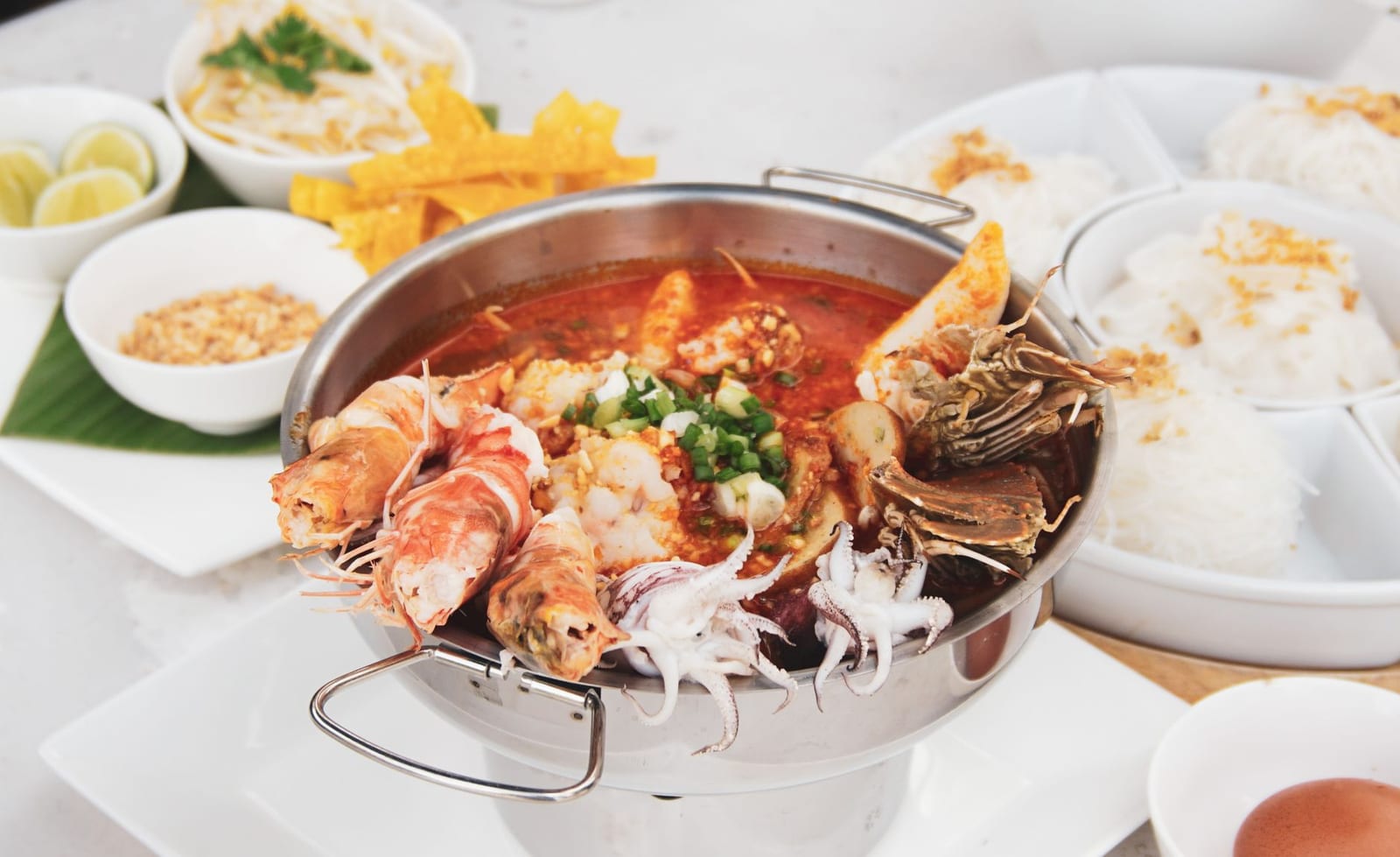 A steaming Vietnamese seafood hotpot with prawns, squid, clams and vegetables
Lẩu hải sản — seafood hotpot, the move for a group dinner.
This is the best choice for a group. A bubbling sour and spicy broth arrives on a burner in the middle of the table. It comes with raw prawns, squid, clams, fish, and a mountain of vegetables and noodles to cook yourself. It is interactive and stretches out a long evening. Restaurants usually price it as a set pot good for 3 to 4 people rather than by weight, making the bill easy to predict.
This is for adventurous eaters. Out in Nam Ô fishing village, cooks cure thin slices of raw herring in lime, ginger, and chili. You wrap them in rice paper with fig and guava leaves before dipping into a warm peanut sauce. It is raw fish, so only eat it fresh at a busy spot. If you like ceviche or sashimi, you will enjoy it. We have a full deep-dive on this dish: read our Nam O fish salad guide before you go.
Mostly yes. Grilled prawns, squid, oysters, and steamed clams are very accessible. Here are a few practical things to know:
Da Nang seafood is priced in two completely different ways. Mixing them up is the single biggest way foreigners get overcharged.
The overcharging almost never happens on the menu. It happens at the scale. A vendor quotes a number, you assume it is per kilo, and it turns out to be per lạng (100g). This makes the real price ten times higher. Always confirm the unit before you point at the tank.
Rough 2025–2026 prices to anchor yourself (illustrative — they move a lot by season and venue):
| Item | Typical price | How it's usually sold |
|---|---|---|
| Tiger prawns (tôm sú) | around 300,000–500,000đ / kg | by weight |
| Swimming crab (ghẹ) | around 400,000–600,000đ / kg | by weight |
| Squid (mực) | around 200,000–350,000đ / kg | by weight |
| Clams (nghêu) | around 30,000–60,000đ / kg | by weight |
| Sea snails (ốc) | around 60,000–120,000đ / plate | per plate (some by weight) |
| Grilled oysters (hàu) | around 15,000–25,000đ / piece | per piece |
| Seafood hotpot (lẩu hải sản) | around 300,000–600,000đ / pot (3–4 people) | per pot |
(Prices as of 2025–2026 — treat them as a guide, not a guarantee. Crab and lobster peak around March–May; squid is best June–August.)
Budget roughly 150,000 to 350,000đ per person for a solid grilled spread at a fair local place. Expect to pay a good deal more on the beach strip for the exact same food.
Here are three tiers, from plastic-stool local quán to a proper sit-down splurge. Prices are per person for a normal seafood meal with a drink. Your final bill will always depend on what you order. Want more named options beyond the picks below? See our roundup of top seafood restaurants for addresses, hours, and price ranges.
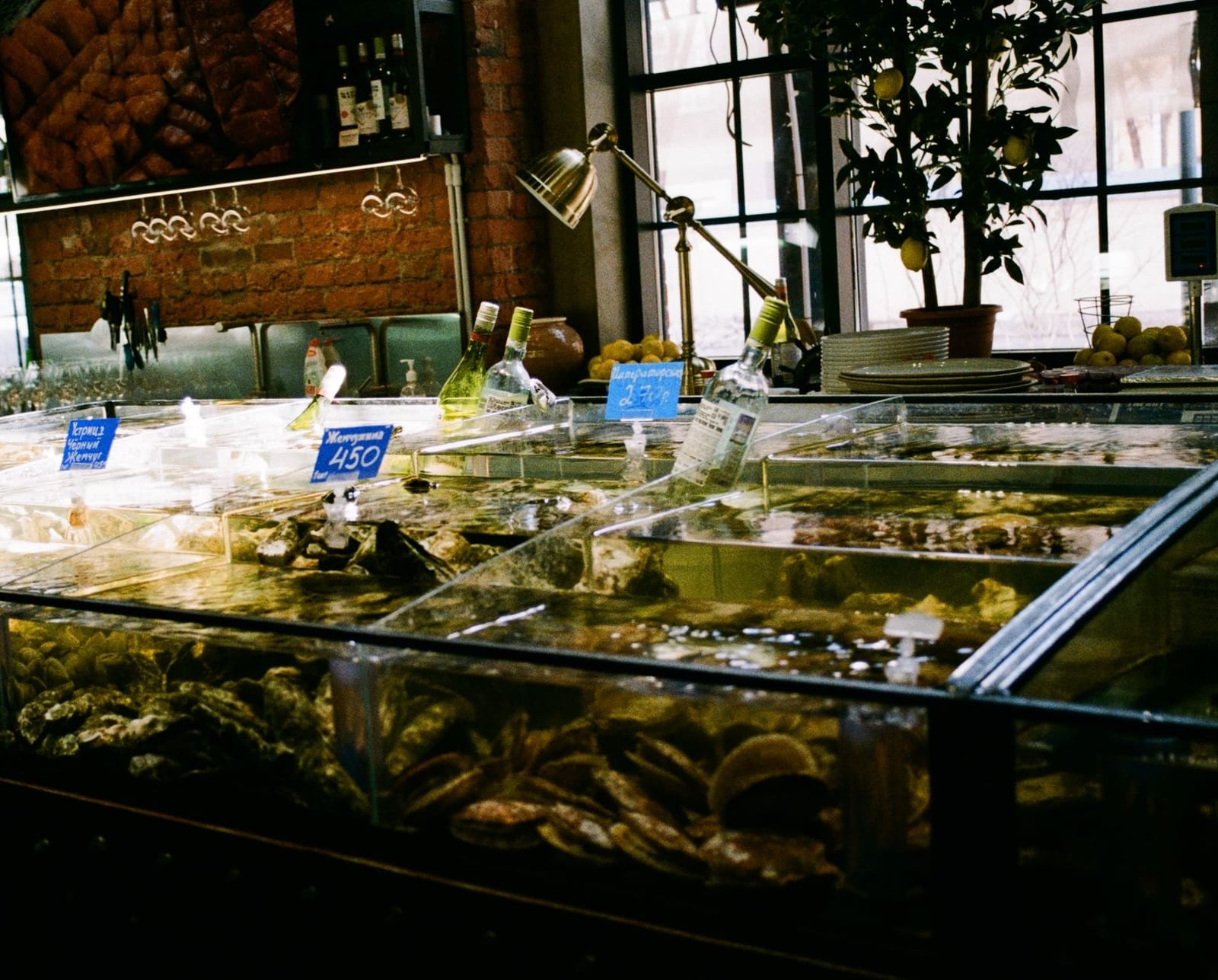 Live seafood tanks with crab, prawns and fish at a Vietnamese seafood restaurant
Pick your own from the tank — but always confirm the per-kilo price before they weigh it.
This is where locals actually eat and where seafood offers the best value. These are small, busy, no-frills places near the Thọ Quang port, often with fixed per-plate prices instead of the by-weight tank game. Expect plastic stools, paper-towel tablecloths, and an honest bill. For a bigger shortlist of these "ngon bổ rẻ" local favourites across the city, see our guide to the 10 best-value seafood restaurants in Da Nang.
Cleaner sit-down places with live tanks, more room, and a better chance of an English menu. You still pick live seafood by weight, so the per-kilo rule applies.
Polished restaurants and resort venues with consistent quality and a view. You pay a city premium, but the service and setting match the cost.
A practical tip for any tier: a seafood dinner slots neatly into an evening on our 3-day Da Nang itinerary. It also pairs well with the rest of our what to eat in Da Nang guide — and if you are eating it the local way, over beer, see our mồi nhậu guide for what to order with a drink.
Many seafood spots open from late morning and run into the night — Bé Mặn, for example, is open from around 10am to 10:30pm — but the scene is really about dinner. Here is what to plan around:
The food is honest. The bill is the only thing you need to manage. Follow these steps to stay safe:
Is seafood in Da Nang expensive? Not if you eat where locals do. At a budget port-side quán, you will spend around 150,000 to 250,000đ per person. The beach strip charges two to three times that amount for the same food. The price depends entirely on where you sit and whether you confirmed the per-kilo rate.
Where do locals eat seafood? Locals head to the Sơn Trà and Thọ Quang side near the fishing port. They avoid the brightly lit halls on the beach road where staff wave menus at passing cars. Busy, plain places full of Vietnamese diners are a reliable sign of good food.
How do I avoid getting overcharged for live seafood? Confirm the per-kilo price before anything is cooked. Ask whether it is priced per kilo or per 100g ("một ký hay một lạng?"). Watch your seafood get weighed in front of you. That single habit prevents almost every overcharge.
Is it safe to eat raw or grilled seafood here? Grilled and steamed seafood at a busy restaurant is very safe. Raw items like the Nam O salad or anything marked "tái" are riskier. Only eat them fresh at a busy spot. Skip them entirely if your stomach is sensitive. Be cautious with street-side ice, tap water, and unwashed raw herbs.
The local takeaway: Order your food grilled or steamed, pick your own live catch, and lock in the per-kilo price before they weigh it. Do that on the Thọ Quang side and you will eat some of the best, cheapest seafood of your trip. You will walk away without a single nasty surprise on the bill.
One local roundup a month — new guides, festival dates and where to eat. No spam.