Where to buy fresh seafood in Da Nang — the best wet markets for foreigners, how to tell it's alive, what it costs, and how to get it cooked on the spot.
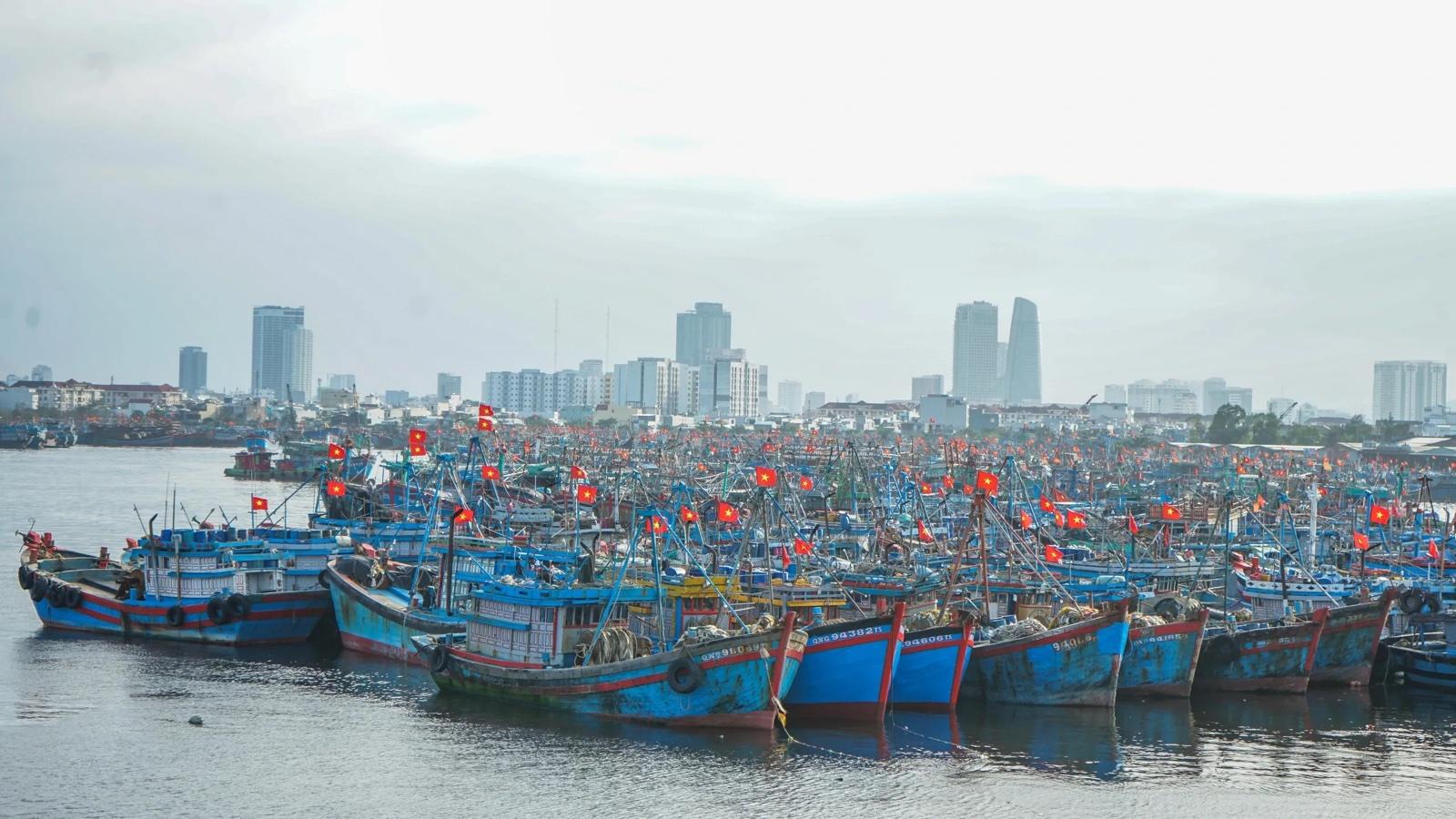
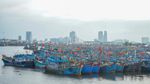
Da Nang's daily catch goes straight from the fishing boats to the local wet markets. You can buy live crabs, prawns, and fish at local prices, then have a nearby stall cook your haul on the spot. Here is exactly where to shop, how to check for freshness, and what you should expect to pay.
By the go-danang team. Last updated June 2026.
Da Nang's fishing boats operate on a strict daily rhythm. Knowing this schedule helps you buy the freshest seafood before it sells out:
This catch goes straight to the wet markets. Locals shop daily for exactly what they plan to cook that evening to avoid middlemen and restaurant markups. Market seafood is consistently fresher and cheaper than anything you will find in a supermarket.
Wild-caught and alive is the standard in central Vietnam. Locals highly prefer a live reef fish over farmed alternatives. (We explain this more in our guide to where to buy organic food in Da Nang.) At the wet market, you can see the seafood moving and know exactly what you are getting. Families run these stalls for decades, and they will happily sell you just a few hundred grams at local rates.
Da Nang has dozens of seafood markets. We start with the two easiest for visitors, located near the main beach and resort areas. After those come the bigger central markets, the wholesale fishing port, and the afternoon catch markets.
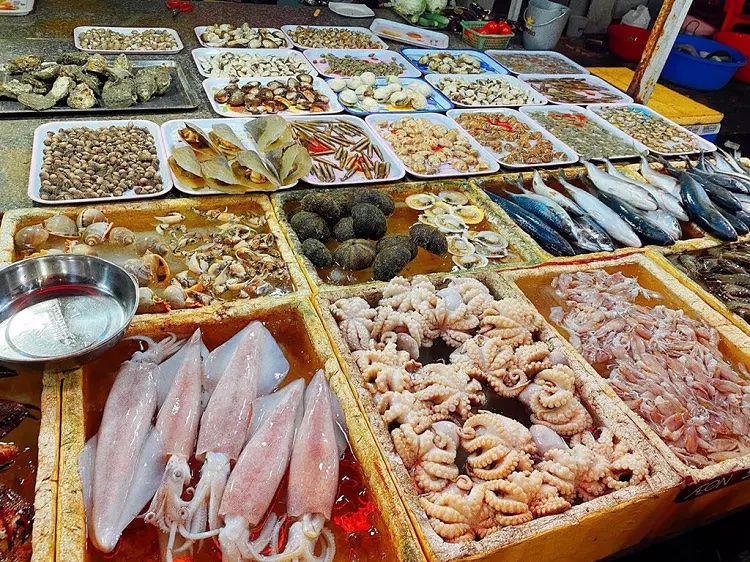 Fresh fish and seafood laid out for sale at a Da Nang wet market.
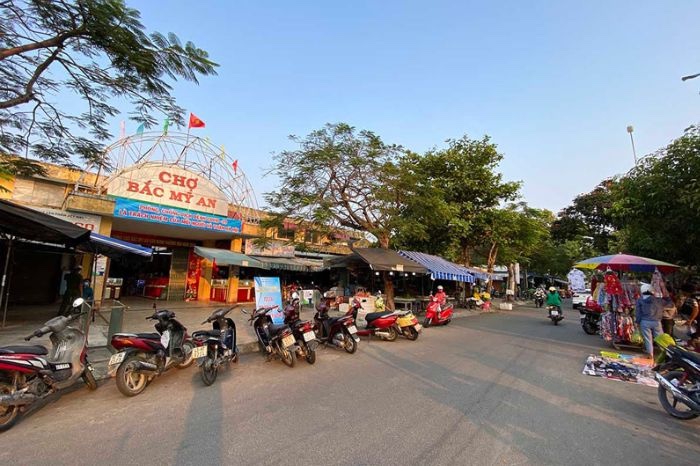 Chợ Bắc Mỹ An (Chợ Ngũ Hành Sơn) in Da Nang, the most visitor-friendly seafood market.
We always send first-timers here. This is the Chợ Bắc Mỹ An market at 25 Nguyễn Bá Lân in the Bắc Mỹ An ward of Ngũ Hành Sơn. It sits near the southern beach resorts and the Marble Mountains. You can easily take a Grab from most beachside hotels. The seafood section is packed with fish, prawns, squid, clams, and crab.
Vendors here see tourists every day. They will point at a calculator to show you the price or use basic English. You can shop easily without speaking Vietnamese.
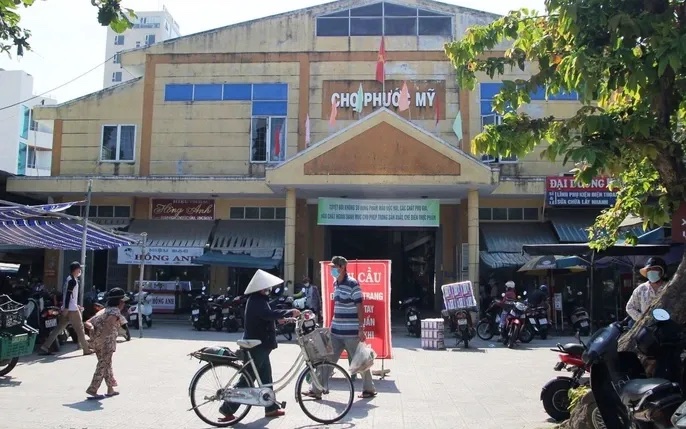 Chợ Phước Mỹ, a neighborhood market near My Khe beach in Da Nang.
If you are staying in the My Khe or Phước Mỹ area, this is your local spot. It is a small neighborhood market, but you can walk there from many beachside apartments.
Because it caters mostly to locals, you will find fewer English speakers. A calculator or a translation app helps a lot. The seafood is fresh and the vendors charge honest neighborhood rates. Like all retail markets, it is freshest in the early morning.
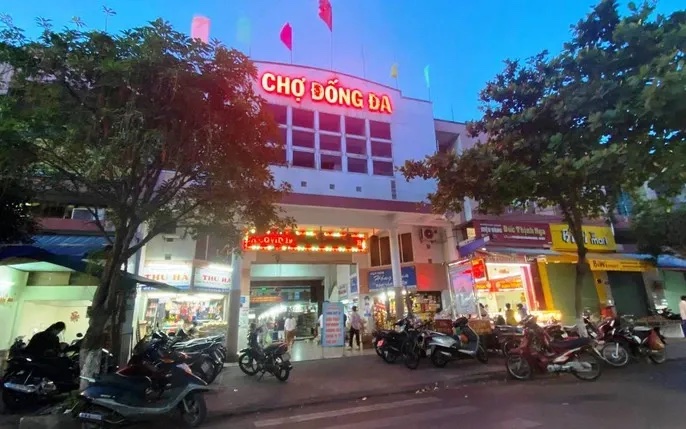 Chợ Đống Đa in Hải Châu, Da Nang, an old central market near the Hàn River wharf.
Chợ Đống Đa is one of Da Nang's three oldest markets, alongside Chợ Hàn and Chợ Cồn. It sits at 42 Lương Ngọc Quyến in the Thuận Phước ward of Hải Châu. Because it is on the Hàn River side near the fishing wharf, the seafood arrives fresh and the selection is wide.
This is a true local market. Do not expect much English, and definitely bring a calculator. It is a short Grab ride from hotels in the city center.
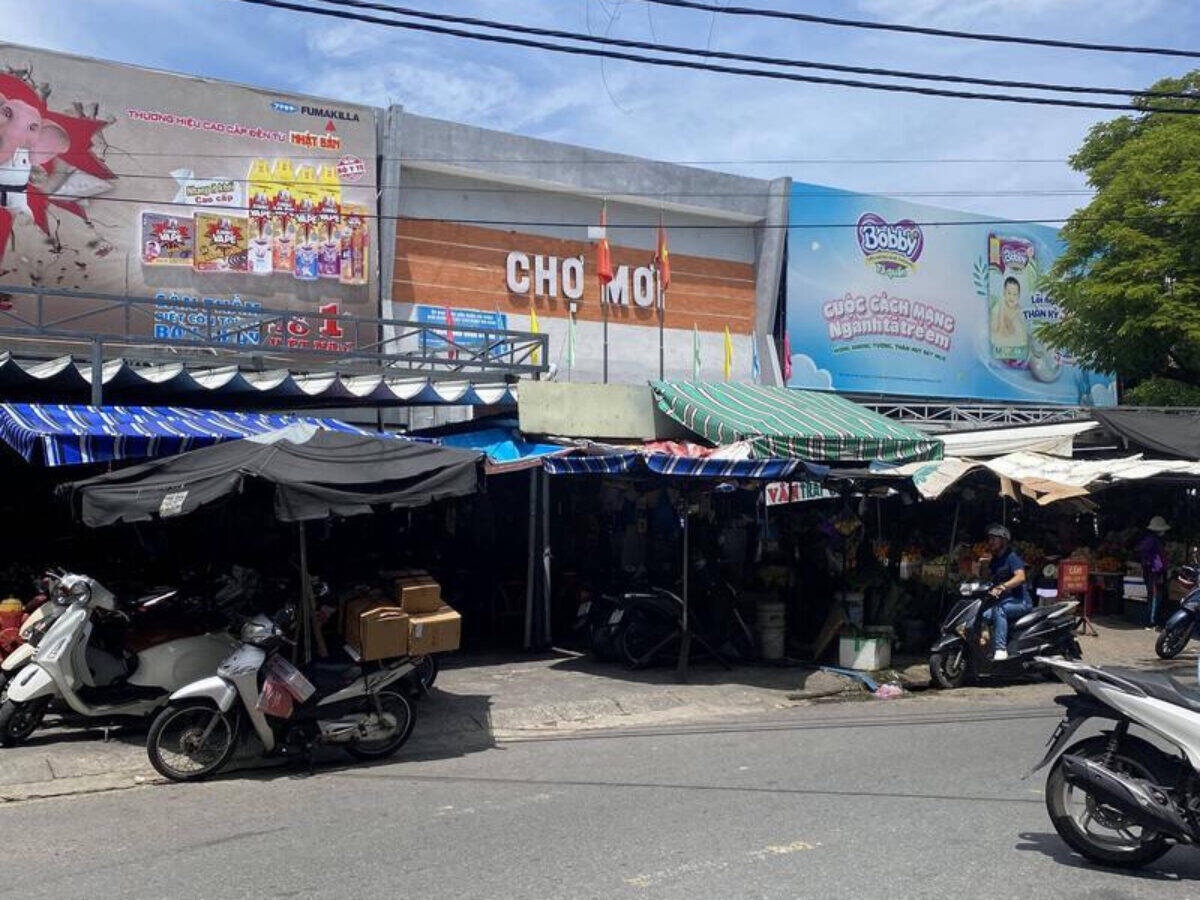 Chợ Mới on Hoàng Diệu street in Hải Châu, Da Nang, a central general-goods market with seafood stalls.
Chợ Mới is a medium, general-goods market in central Hải Châu at 212 Hoàng Diệu in the Hòa Thuận Đông ward. It is one of Da Nang's five city-managed markets. It is not a dedicated seafood market like the others, but it has a solid run of fresh live seafood stalls plus dried seafood. This makes it a handy central option.
It is easy to reach by Grab, but still a local market with little English. Bring a calculator. It opens around 7am and gets busy by about 8am.
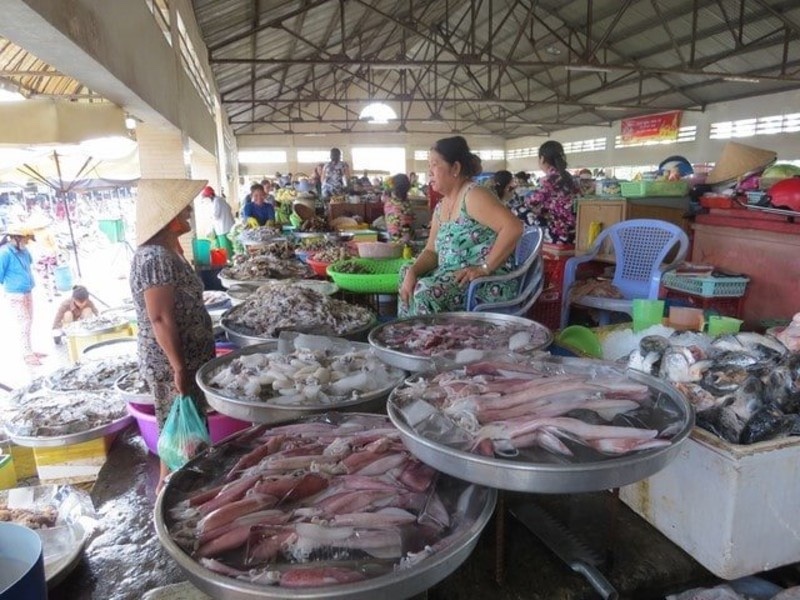 Chợ hải sản Thanh Khê Đông (Chợ Yên Khê 2) in Da Nang, a local seafood market off the beach road.
Locals know this one as Chợ Yên Khê (or Chợ Yên Khê 2). It is a local seafood market on Đường Yên Khê 2 in the Thanh Khê Đông ward of Thanh Khê. It sits near the Phú Lộc canal, about 300m off Nguyễn Tất Thành, the beach road. You can easily combine a visit here with a beach stop.
It sells both fresh live seafood and dried seafood. It also has on-the-spot cooking stalls, so you can buy your catch and have it cooked right there (mua hộ nấu, see below). Like Chợ Đống Đa, it is a local hub with little English. Come prepared with a calculator and small VND notes.
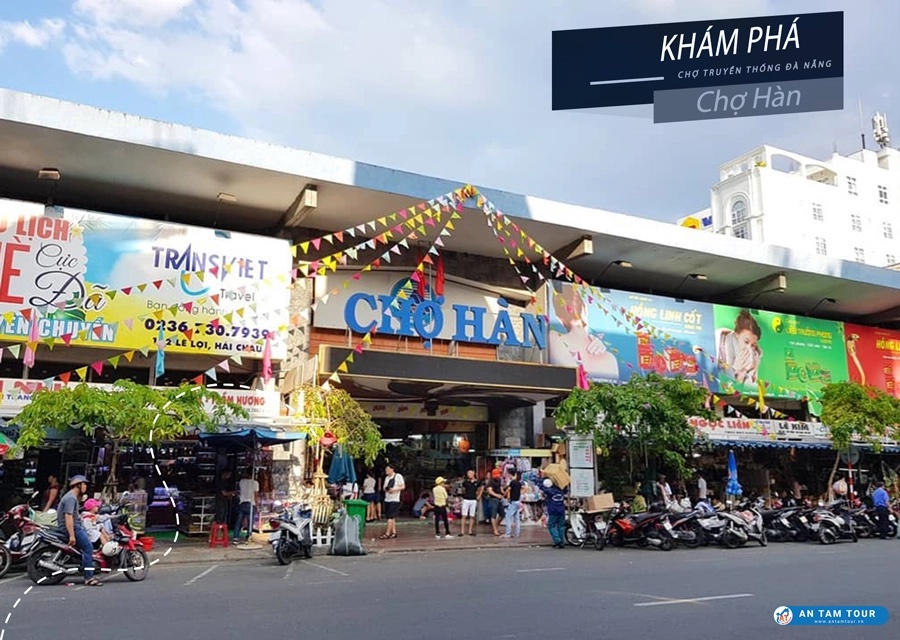 Chợ Hàn (Han Market) on Trần Phú street by the Hàn River, Da Nang.
Chợ Hàn is the famous central market by the Hàn River. It is very easy to reach and highly accustomed to tourists.
It is famous for dried seafood like squid, fish, and shrimp to take home as souvenirs. It also sells some live and fresh seafood, but prices skew higher here. Always check the price before you agree to buy. Go here for dried goods and souvenirs rather than a big fresh-catch shop.
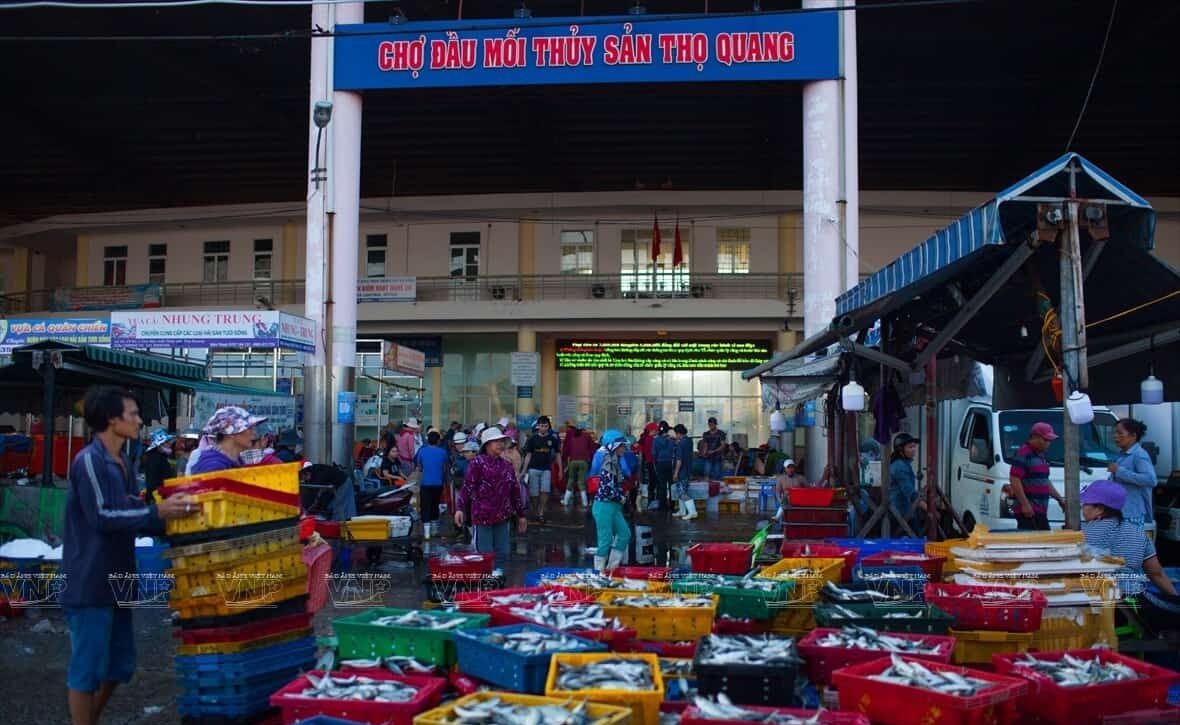 Chợ Hải Sản Thọ Quang, the wholesale seafood market at the Thọ Quang fishing port in Sơn Trà, Da Nang.
This is the massive wholesale seafood market at the Thọ Quang fishing port in Sơn Trà. You will find it at 20 Vân Đồn in the Nại Hiên Đông ward. It is central Vietnam's largest seafood market. This is where the city's restaurants and smaller retail markets buy their stock.
Seafood comes right off the boats alive. It is cheapest if you buy in volume, but vendors will sell single items. The schedule is the main hurdle. It runs on a pre-dawn wholesale timeline. It is loud, wet, and not a polished tourist experience, but it offers the absolute freshest seafood in Da Nang.
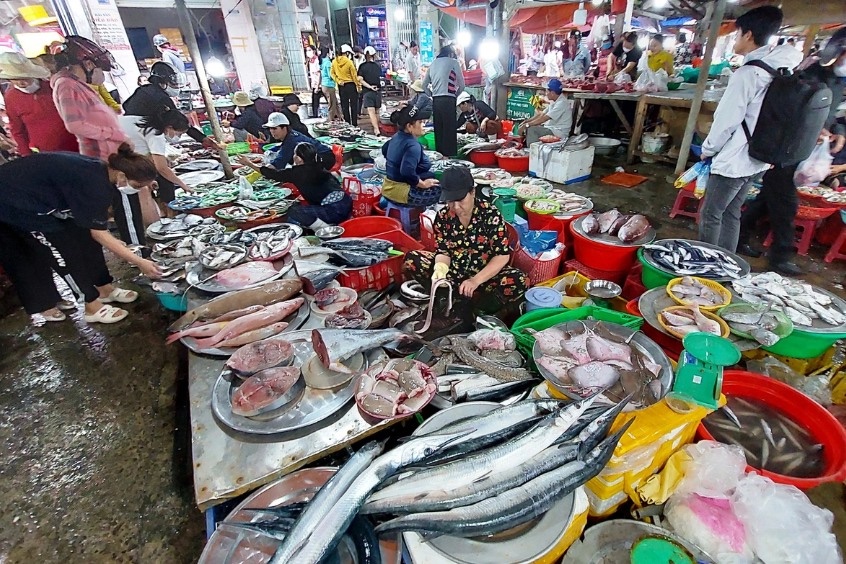 Chợ chiều Mân Thái, an afternoon seafood market by the fishing wharf in Sơn Trà, Da Nang.
Chợ chiều translates to afternoon market. It is a time of day rather than a single place. The day boats return in the afternoon, and these markets open to sell that exact catch. Because the seafood just came off the water, it is incredibly fresh and often the cheapest of the day. Vendors want to sell out by evening.
The best-known one is Chợ chiều Mân Thái at the corner of Lê Tấn Trung and Hồ Học Lãm in the Mân Thái ward of Sơn Trà. It runs roughly 3–7pm and is busiest from about 2pm to 6pm, right by the fishing wharf where the boats come in. Most of Da Nang's catch lands at Cảng cá Thọ Quang in Sơn Trà, the city's main fishing harbor, which sits in the same area.
To find another, ask your hotel or a Grab driver for the nearest chợ chiều hải sản (afternoon seafood market) near the Sơn Trà fishing wards.
The best rule for the wet market is simple. If it is moving in the tank, it is fresh. Beyond that, here is exactly what to look for.
If a vendor keeps their seafood lively in aerated tanks, you are usually in good hands. Pick the active ones yourself and watch them go into the bag.
Seafood is sold by weight. Vendors usually price it per kilogram (ký), though pricier items might be priced per 100 grams. The vendor will weigh your pick live on a scale right in front of you.
Always agree on the price per kilo before the seafood goes on the scale to prevent any surprises at the end.
As a rough guide for live market seafood, prawns and clams are highly affordable. Clams (nghêu) run around 30,000–60,000 VND/kg (roughly $1.20–$2.40 USD). Squid sits in the middle. Crab and oysters are the premium items. Prices swing heavily with season, size, and daily supply, so always check at the stall.
This is the best trick at the market. You can buy your seafood raw and have it cooked immediately. Locals call this mua hộ nấu.
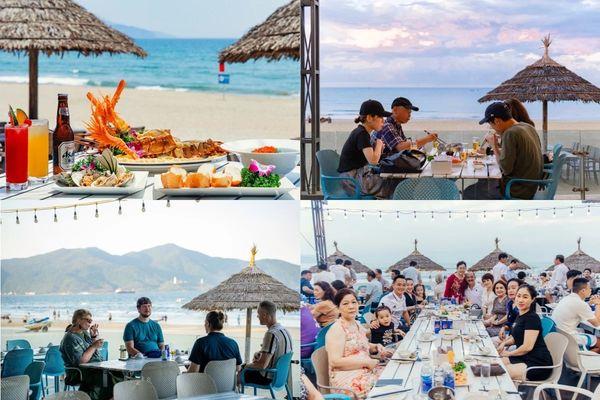
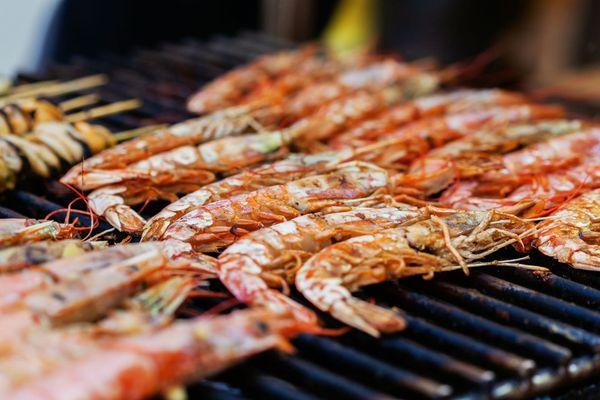
You buy your live seafood from a stall, then walk it over to a small eatery right beside the market. For a small fee, they will steam, grill, or turn your catch into a hotpot. They serve it up with fresh herbs, dipping sauces, and rice. You get a restaurant-quality meal at market prices, and you hand-picked every single piece.
There is a small extra fee for the cooking on top of what you paid the market vendor. Agree on it before they start.
If you prefer to skip the market entirely, our Da Nang seafood guide covers exactly where to eat out. If you want a meal brought to your hotel, check out our guide to seafood delivery in Da Nang.
Timing dictates both freshness and price. Plan your trip around the two landing windows mentioned at the start of this guide.
Yes, as long as it is fresh and you cook it properly. The market model relies on speed. Seafood arrives the same day and is often still alive. It spends barely any time un-chilled. Pick lively seafood, keep it cool on the way home, and cook it that same day. Using the mua hộ nấu (cook on the spot) service is one of the safest and easiest options.
You might encounter a small markup. This is normal. To keep things fair, ask for the price per kilo before the seafood is weighed. Carry small VND notes and use your phone's calculator to confirm the final number. Markets that see tourists, like Chợ Ngũ Hành Sơn, are very used to this process.
Yes. Many markets have small eateries attached that offer mua hộ nấu. You hand them the raw seafood, and they steam, grill, or hotpot it for a small fee. It is the cheapest way to eat hand-picked seafood in the city.
You can easily get by without Vietnamese at the foreigner-friendly markets. A calculator app is all you really need. Markets operate almost entirely on cash, so bring plenty of small VND notes. A few stalls might accept QR codes or local bank transfers, but do not expect to use a credit card.
Always confirm hours and exact lots when you arrive, as market layouts shift.
Da Nang's freshest and cheapest seafood is always at the wet market. Just pick the active ones, agree on the price per kilo before weighing, and hand them over to a nearby stall to cook your meal on the spot.
One local roundup a month — new guides, festival dates and where to eat. No spam.