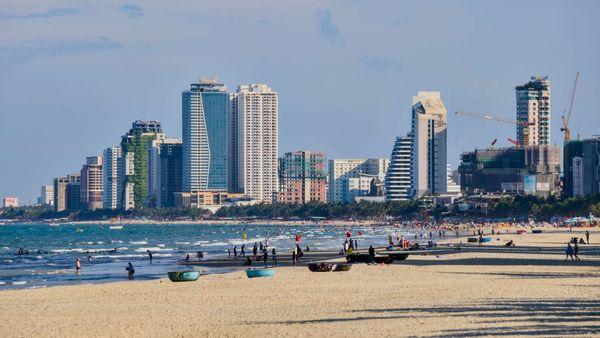
A local's guide to the best beaches in Da Nang — My Khe, Non Nuoc, and Nam O. Which to pick, when to go, getting there, and how to swim safely.

By the Go-Da-Nang local team · Last updated June 2026
The honest short answer: My Khe is the easy default — long soft sand, free, ten minutes from the airport. But if you've got more than a day, the real local play is mixing it up — My Khe at sunrise, Non Nuoc when you want calmer water and fewer people, and Nam O for a raw fishing-village sunset that most visitors never see. This guide is about choosing the right beach for your trip, when to actually go, and how not to get caught out by the surf, the hawkers, or the wet season. For where the beach fits into a wider trip, see our local's guide to things to do in Da Nang.
| Beach | Best for | Vibe | Swimming | Getting there | Watch-out |
|---|---|---|---|---|---|
| My Khe | First-timers, sunrise, easy access | Lively, resort-backed, busy | Good (calm in dry season) | 10–15 min from airport | Crowds & hawkers after ~8am |
| Non Nuoc | Calm swims, families, quiet | Relaxed, resort end, cleaner | Very good, gentler water | ~20–25 min south of city | Fewer cheap food stalls nearby |
| Nam O | Local feel, sunset, photographers | Raw fishing village, rocky | Poor — reef & rocks, not soft sand | ~20–30 min north of city | Not a swim beach; sharp reef |
| Bac My An / Pham Van Dong | Public, free, central beach day | Local, no resorts | Good | Walk/Grab from My Khe | Same surf rules as My Khe |
| Son Tra coves (Tien Sa, base of Lady Buddha) | Quiet, sheltered water | Tucked-away, green | Calm & sheltered | ~15–20 min up Son Tra | Small, can need a motorbike |
A quick orientation: Da Nang's main beach is really one long, almost-unbroken strip of east-facing sand. People split it into named sections — My Khe in the middle, Bac My An and the Pham Van Dong public beach just north of it, and Non Nuoc at the far south near the Marble Mountains. Nam O is the odd one out, sitting north of the city near the foot of the Hai Van Pass, and it's a different animal entirely.
Don't overthink it. Here's the one-line version:
If you only have one beach morning, make it My Khe at sunrise. If you have a second, make it Non Nuoc or Nam O depending on whether you want calm water or character.
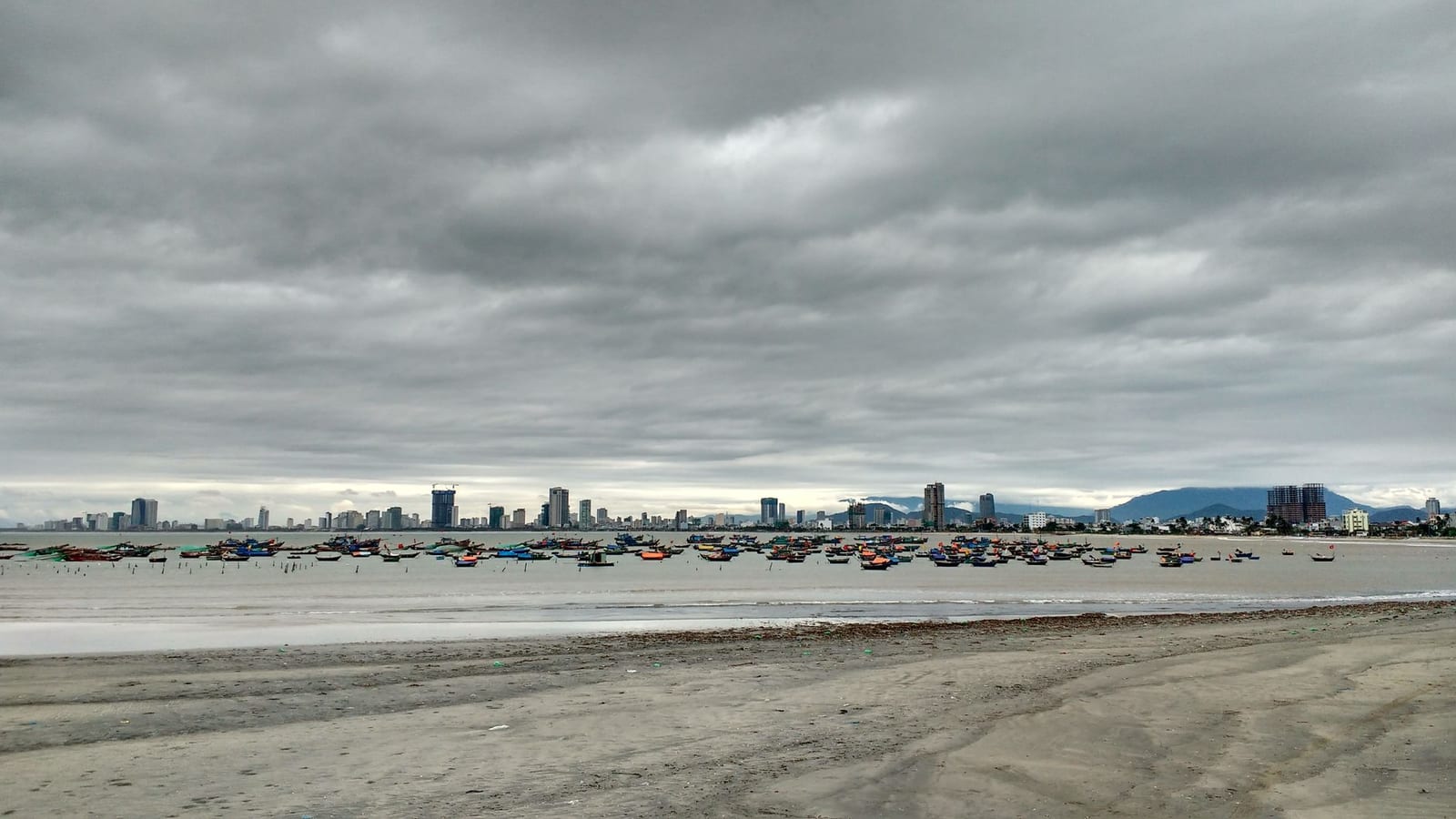
My Khe gets all the postcards, and for good reason. It's a wide, kilometres-long stretch of soft golden sand running along Vo Nguyen Giap street, backed by hotels, seafood restaurants, and a paved walking-and-cycling path.
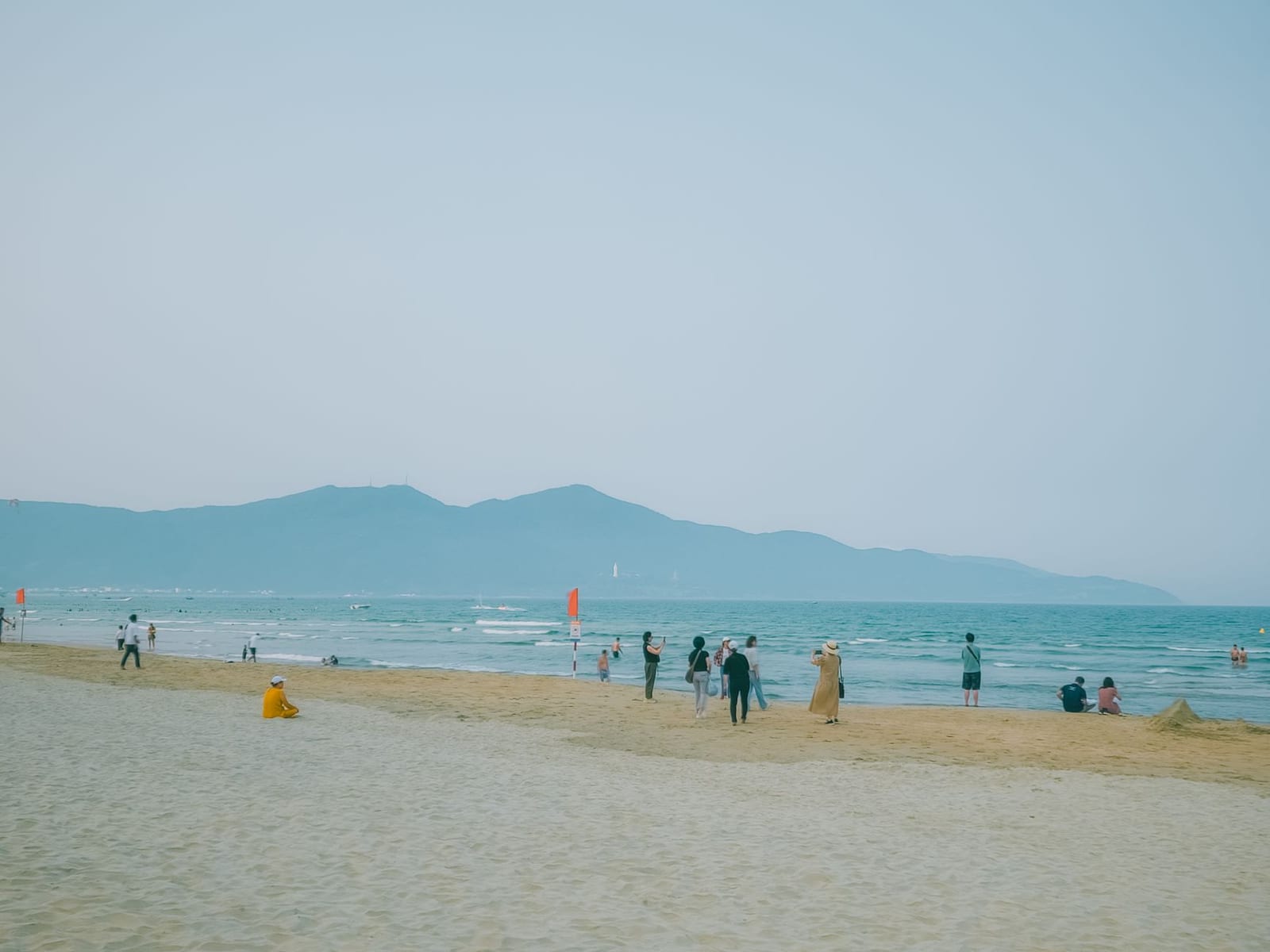 The long sandy stretch and palm-lined path of My Khe Beach, Da Nang.
Three reasons it wins for most visitors. First, it's free to access — you just walk on. Second, it's astonishingly close: only about 6km, roughly 10–15 minutes by car from Da Nang International Airport. Third, the sand is genuinely good — soft, wide, and clean enough that you can walk for an hour without leaving it. Whatever else you do, you'll probably end up here.
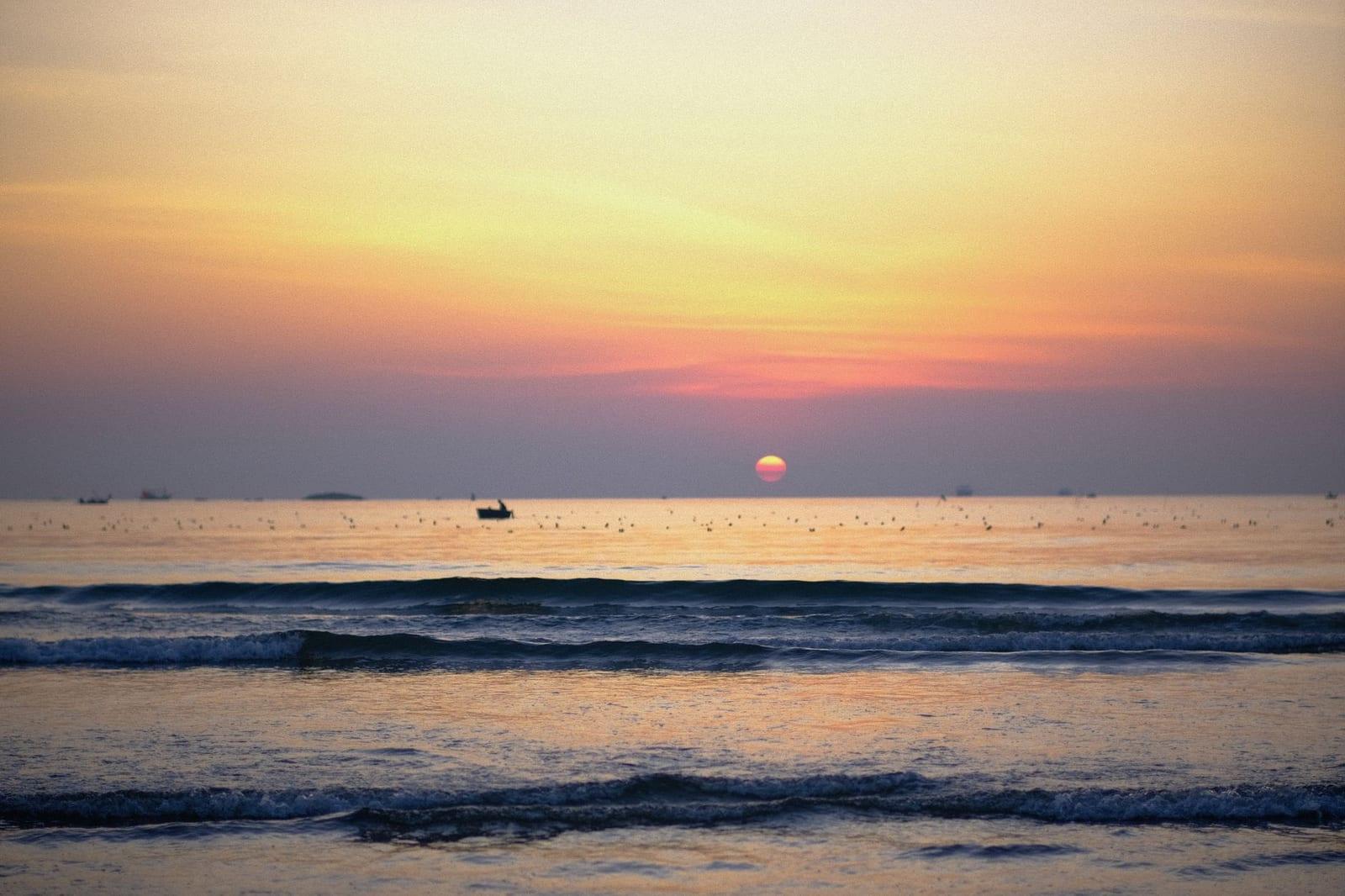
This is the local move and the single best hour to be on the beach. My Khe faces east, so the sun comes straight up out of the sea. Locals are already out by dawn — swimming, jogging, doing tai chi — and the light is soft instead of brutal.
The trick: walk ten minutes south, past the big resorts, and you'll usually have a near-empty stretch of sand to yourself while the crowds cluster near the hotels. Coconut and drinks vendors start setting up from around 6am; bring small VND notes for a fresh coconut, usually around 20,000–30,000đ (rough, and it changes; you may pay more right in front of the resorts — ask the price before you take it). Sunrise lands somewhere around 5:15–6:15am depending on the time of year — earliest in June (around 5:15–5:30am), later in winter — so check the day before rather than trusting a fixed time. We build a sunrise My Khe start into Day 1 of our 3-day Da Nang itinerary for exactly this reason.
You can rent a sun lounger and umbrella for a small fee — expect to pay roughly a few tens of thousands of đồng, and it's worth a friendly haggle, especially off-season or late in the day (rates aren't fixed, so agree the price first). Some loungers are "free" if you order food or drinks from the attached restaurant; ask first so you're not surprised.
Now the honest part. My Khe is busy. After about 8am the crowds build and the hawkers come out: sunglasses, fruit, massages, pearls. A polite, firm "no, thank you" works; you don't need to be rude. It's why we keep pushing you toward sunrise or a walk south. In the dry season the water is calm and clear; in the wet season it turns choppy and the surf gets rough (more on that below). And after a stretch of post-swim hunger, the seafood strip along Vo Nguyen Giap is right there — or grab an early mì Quảng, Da Nang's signature noodle bowl, on the way back into town. Once the sun is down, the same beach road turns into Da Nang's beachfront bar scene — beach clubs on the sand and the An Thuong bars a short walk inland.
Non Nuoc sits at the southern end of the main beach strip, right below the Marble Mountains. It's the resort end — quieter, cleaner, and noticeably more relaxed than the My Khe stretch. The water here often feels a touch gentler, and you trade the buzz (and the cheap street-side food) for space and calm.
 Quiet Non Nuoc Beach in Da Nang with the Marble Mountains rising behind it.
The smart way to do Non Nuoc is to pair it with a Marble Mountains morning: climb the cave temples early while it's cool, then come down for a swim and lunch by the sea. That combination is one of the easiest, most rewarding half-days in Da Nang, and we slot it into our 3-day itinerary. Access is free and public even though resorts line the back of it — there are public entry points near the Non Nuoc stone-carving village if a resort stretch looks gated. Sun loungers rent for a similar small fee to My Khe; agree the price first. The one trade-off: fewer cheap food stalls and conveniences right on the sand, so you're leaning on the resorts or a short Grab back toward the city.
The most common question we get. Here's the head-to-head:
Our recommendation: do both. Sunrise and your liveliest beach day at My Khe; one calm, slower swim at Non Nuoc tacked onto a Marble Mountains morning. If you genuinely only get one, pick My Khe for convenience — unless you're travelling with small kids, in which case Non Nuoc is the kinder choice.
Nam O is the one to mention to make a Da Nang local nod. It's a working fishing village north of the city, near the base of the Hai Van Pass, and it has a character the resort beaches simply don't. Round bamboo coracle boats sit pulled up on the shore, and there's a real, lived-in feel to the place.
 Round bamboo fishing boats on the rocky shore at Nam O Beach near Da Nang.
Set your expectations correctly: this is not a soft-sand swimming beach. Nam O is about rock and reef. At low tide the Nam O reef exposes flat rock shelves and shallow pools that draw photographers, and the sunsets here, west-facing toward the mountains and the pass, are some of the best near the city. People do dip in around the rocks, but you're swimming over reef and stone, not wading off gentle sand, so footwear and care matter.
It's worth a heads-up that the reef and headland sit inside a community-tourism development plan, so expect ongoing changes to paths and facilities over the years. As of now it's still open and worth the trip — and if you want the famous green-moss-covered rocks, that's only really February to March; outside those months you'll mostly see bare rock. Access to the beach itself is free; if you ride out, a local attendant usually charges a small parking fee (a few thousand đồng for a motorbike). Come for sunset, wander the village, watch the boats, and pair it with fresh seafood — but don't come expecting to lay out a towel and swim laps. That's not what Nam O is.
Da Nang's coast runs on two seasons, and it changes the beach completely.
Time of day matters as much as season. Go at sunrise for calm water, soft light, and empty sand, or in the late afternoon once the worst heat passes. Avoid the midday window from roughly 11am–3pm in summer — the sand is scorching, the sun is punishing, and the beach is at its most crowded.
For the main beach strip, Grab cars and Grab bikes are cheap and easy. Many visitors rent a motorbike to reach the quieter Son Tra coves and Nam O — only do this if you have a licence, you're confident in the traffic, and you always wear a helmet. For app and rental tips, see the getting-around section of our things to do in Da Nang guide.
The water is beautiful and usually friendly, but the Da Nang coast has real currents. Take it seriously.
Which beach is best for swimming? My Khe for convenience, Non Nuoc for the calmest, gentlest water (and the easier choice with kids). Both are best in the dry season, February to August. Nam O is not a swimming beach — it's reef and rock.
Is My Khe free, or do you pay? Access is free; you just walk on. You only pay if you rent a sun lounger or buy from vendors and restaurants.
My Khe or Non Nuoc? My Khe if you want central, lively, and everything within walking distance. Non Nuoc if you want calm, clean, and quiet — especially with young children, or paired with a Marble Mountains morning. Ideally, do both.
Are Da Nang's beaches safe to swim, and when are jellyfish a problem? Generally yes in the dry season, as long as you watch the flags and respect red flags and rip currents. Jellyfish are most likely in the warm summer months (roughly May–August) — ask locally before you swim.
What time is sunrise at My Khe? It varies through the year — roughly 5:15–6:15am, earliest around June. Check the exact time the day before rather than trusting a fixed figure.
Which beach is best for families? Non Nuoc or the sheltered Son Tra coves — calmer water, gentler surf, and far fewer hawkers than the busy My Khe stretch.
Can you swim in the rainy season? Sometimes, but be careful. From September to December the surf gets rough and red flags go up often, especially around October–November. On a calm day it can be fine; on a bad day, stay out.
The short version: sunrise at My Khe, a calm swim at Non Nuoc, and a sunset at Nam O covers the best of the Da Nang coast. Swim between the flags, carry small notes, and go early to beat the heat and the crowds. Planning the rest of your days? Start with our 3-day Da Nang itinerary and the full things to do in Da Nang guide.

One local roundup a month — new guides, festival dates and where to eat. No spam.