Gỏi cá Nam Ô is Da Nang's cured raw-fish salad from a fishing village. What it is, is it safe to eat, what it costs, and where to try it.
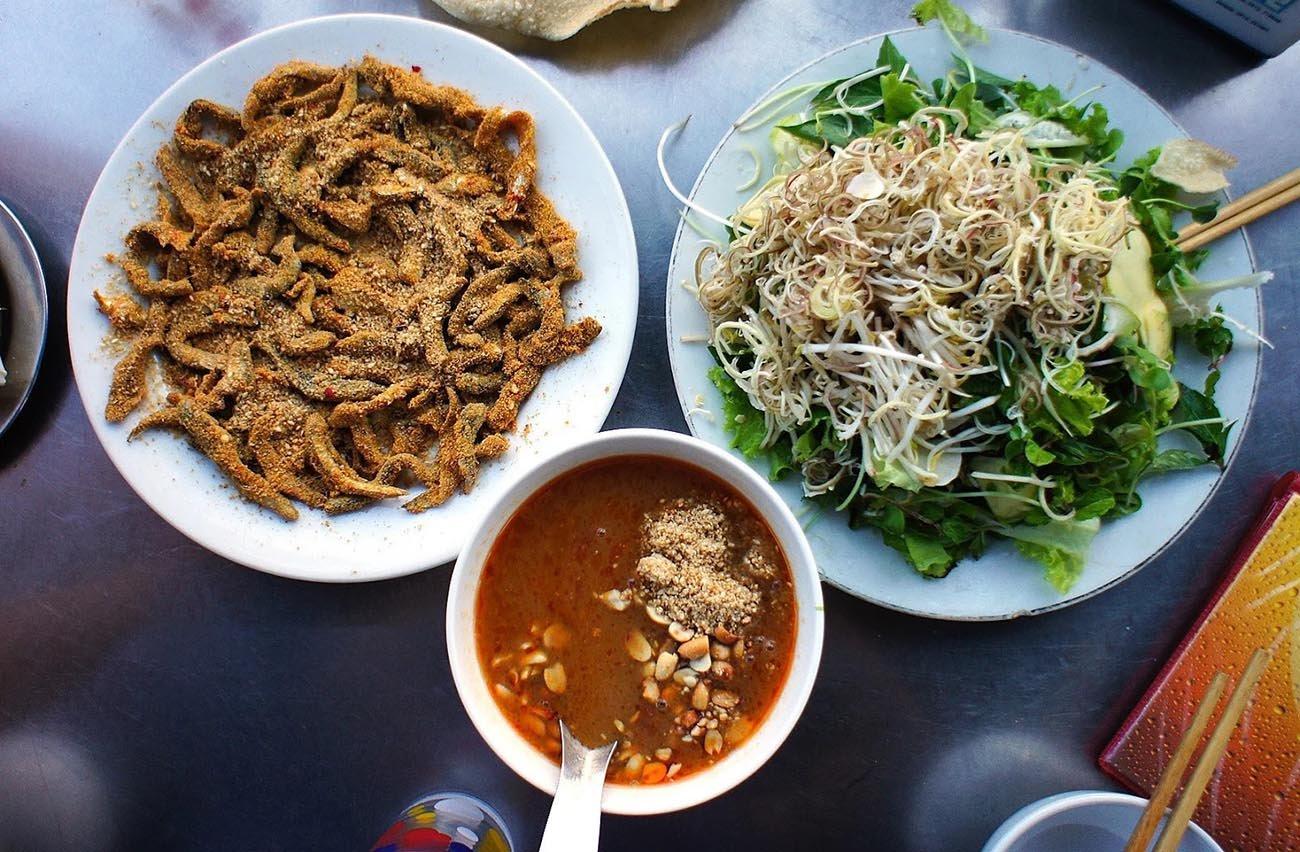
Gỏi cá Nam Ô is a bright, ceviche-style raw fish salad born in a fishing village on the northern edge of Da Nang. Cooks cure thin slices of fresh catch in lime, ginger, and chili, which you then wrap in rice paper with astringent leaves and dip into a warm peanut sauce.
By the Go Da Nang local team · Last updated June 2026
Gỏi cá Nam Ô (pronounced "goy ka nam oh") is a cured raw-fish salad. Cooks usually use cá trích (herring), though some shops prefer cá mòi (sardine) or tiny cá cơm (anchovy). They fillet the fish, slice it thin, and toss it in a bright mix of lime, vinegar, ginger, galangal, garlic, and chili. This acid bath lightly cures the outside of each slice like a ceviche, while the inside stays raw.
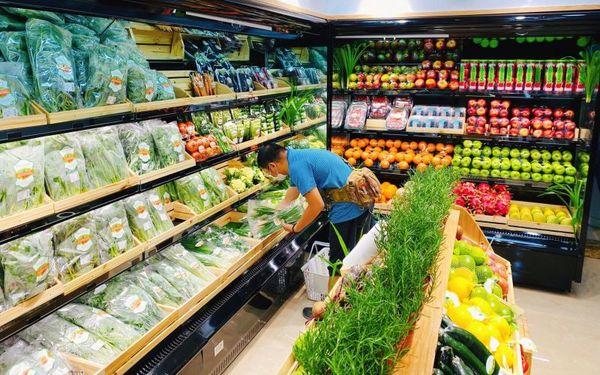
Whichever style you order, the greens do the heavy lifting. Expect lá sung (fig leaf), lá ổi (guava leaf), diếp cá (fish mint), and slices of green starfruit or green banana. These bitter, astringent leaves balance the rich fish. A proper bite is mostly herbs and leaves, using the fish and sauce as a salty, sour accent.
It comes two ways, and it helps to know which you are ordering.
The cured fish is coated in roasted rice or tapioca flour and crushed peanuts. It arrives dry and slightly crumbly, with the dipping sauce served on the side. You roll it in rice paper with the leaves, then dip. This is the easiest entry point for newcomers.
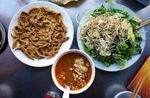
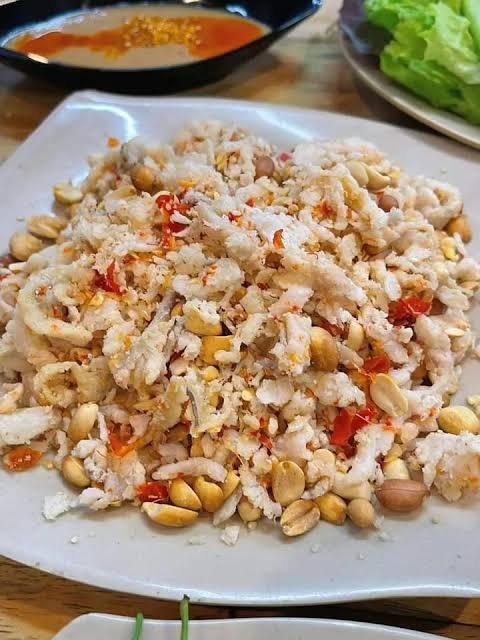 A dry-style plate of gỏi khô — cured fish dusted in toasted rice flour and peanuts, served with rice paper and herbs for wrapping
The fish sits in a thick, warm sauce made from tapioca starch and ground peanuts. It is richer and looser, meant to be spooned or dipped straight from the plate. This is the tossed style you see on most local tables.
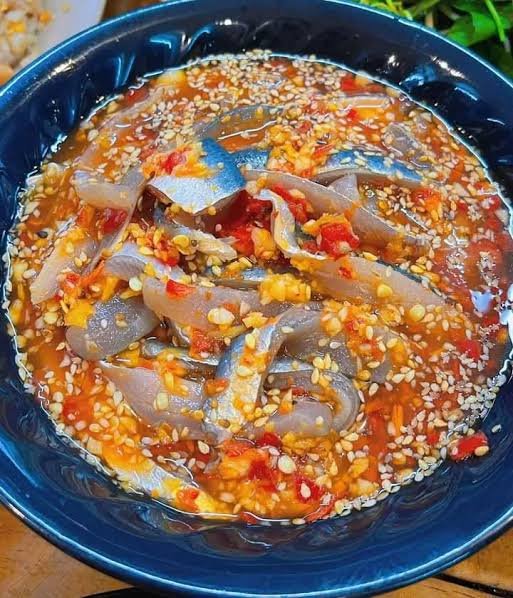 A wet-style plate of gỏi ướt — raw herring tossed with herbs, onion and a thick warm peanut-tapioca sauce
At a glance:
| Gỏi khô (dry) | Gỏi ướt / và (wet) | |
|---|---|---|
| Coating | Dusted in rice or tapioca flour and peanuts | Left plain, the sauce adds the flavor |
| Sauce | Served on the side for dipping | Warm peanut-tapioca sauce mixed right in |
| How to eat | Roll in rice paper with leaves, then dip | Spoon or dip directly; looser and richer |
The dish takes its name from Nam Ô, a century-old fishing village in the Liên Chiểu district. It sits at the mouth of the Cu Đê river on the northern edge of Da Nang. The whole appeal is the local source. Boats land small fish in the morning, and village cooks turn that fresh catch into salad the very same day. Raw fish only works when it is impeccably fresh.
Over the years, locals from across Da Nang have made the drive out just for a plate. If you have tried gỏi cá mai in Nha Trang, expect a different flavor profile. That southern-coast version uses a small fish called cá mai, while Nam Ô relies on cá trích (herring).
 Fishing boats and round basket boats on the beach at a Da Nang fishing village at sunset — where the day's catch comes in fresh
This dish asks a bit more of your palate than a standard noodle soup. The texture is firm and springy from the lime cure. The flavor hits bright and sour first, followed by a savory, fermented kick from the sauce. If you enjoy ceviche or sashimi, you will probably like it.
Follow these practical guardrails:
If you are pregnant, feeding young kids, immunocompromised, or have a sensitive stomach, skip this one. Try a cooked local dish instead. To make the flavors milder, load your rice paper with extra herbs and go easy on the fresh chili.
A plate usually costs around 40,000–100,000đ (roughly $1.60–4), depending on the fish, the portion, and the shop, as of June 2026.
This is slightly more than a standard bowl of noodles, but one plate is highly shareable and comes piled with rice paper, leaves, and sauce. Prices change over time, so treat this as a baseline. Bring cash in small notes since local shops rarely take cards.
Timing matters heavily for this dish. Most shops open from mid-morning until the evening, but the catch is freshest soon after the morning boats land — so lunch is the sweet spot.
Since Nam Ô sits out in Liên Chiểu on the northern edge of the city, plan a proper trip. Pair your lunch with a stop at the quiet Nam Ô beach nearby (see our local's guide to the best beaches in Da Nang).
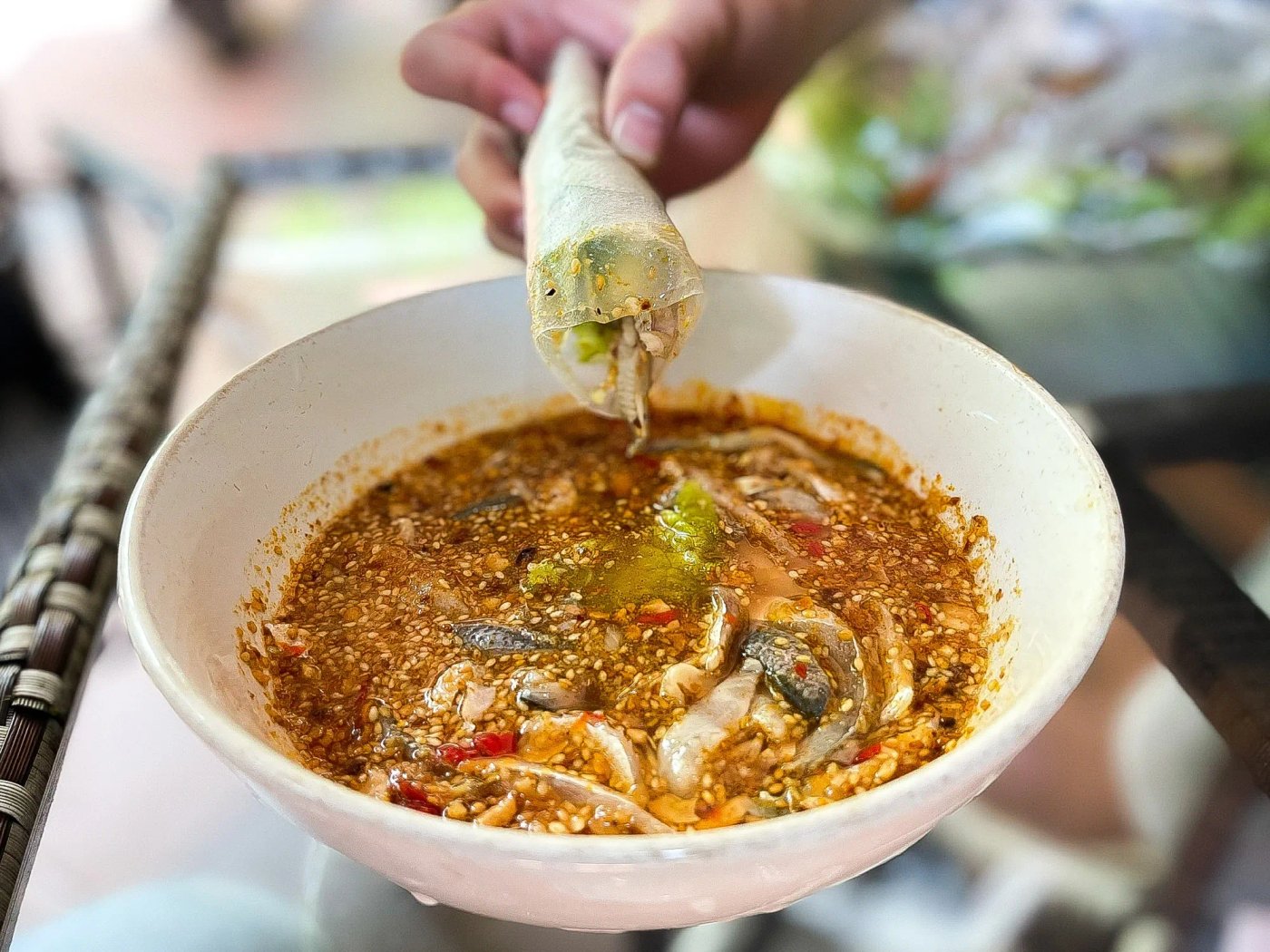 A rice-paper roll of gỏi cá being dipped into a bowl of thick sesame-peanut-chili sauce
You do not need fluent Vietnamese to get a table. Just point, or use these phrases:
Once the food arrives, you build each bite yourself:
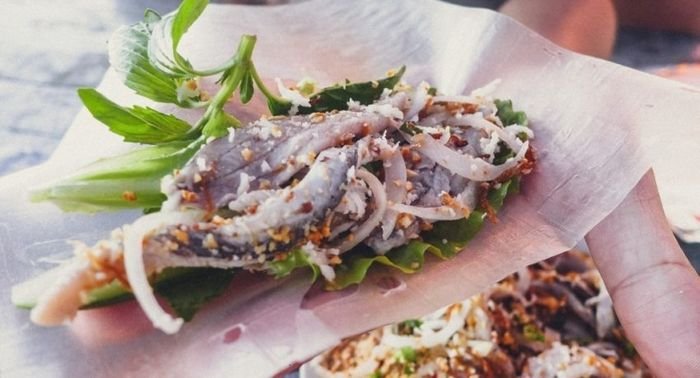 A hand holding a gỏi cá Nam Ô wrap — fish, shredded onion and herbs on a leaf and rice paper, ready to eat
If you like this hands-on eating style, you will recognize the routine from Da Nang's pork rolls and the toss-it-yourself bún mắm nêm bowls. For a cooked introduction to local seafood, mì Quảng is an easy classic.
This dish tastes best near the source. Since these are small family businesses, double-check their hours before making the drive.
To eat it right at the source, head out to the Nam Ô / Hòa Hiệp area of Liên Chiểu. Several shops cluster along Nguyễn Lương Bằng near the Cu Đê river mouth. Thanh Hương is a well-known one; there are more on the same strip, so you can also just pick the busiest kitchen on the day.
If you want to skip the drive out to Liên Chiểu, this long-running spot (open about 10 years) sits much closer to the city center. It is a dedicated raw fish shop, so turnover is reliable.
If you only have two days in Da Nang and feel nervous about raw seafood, you can skip this without guilt. But if you enjoy ceviche and want a true local specialty, the ride out to Liên Chiểu offers a great small adventure. Start with the dry gỏi khô, eat it freshly made, and wrap it heavy with herbs. For the full lineup of local meals worth your time, check out our local's honest guide to what to eat in Da Nang.
One local roundup a month — new guides, festival dates and where to eat. No spam.