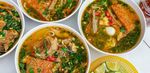
Bánh canh da nang is a thick chewy tapioca noodle soup — from cheap trackside bowls to crab. What it is, what to order, and where locals eat it.
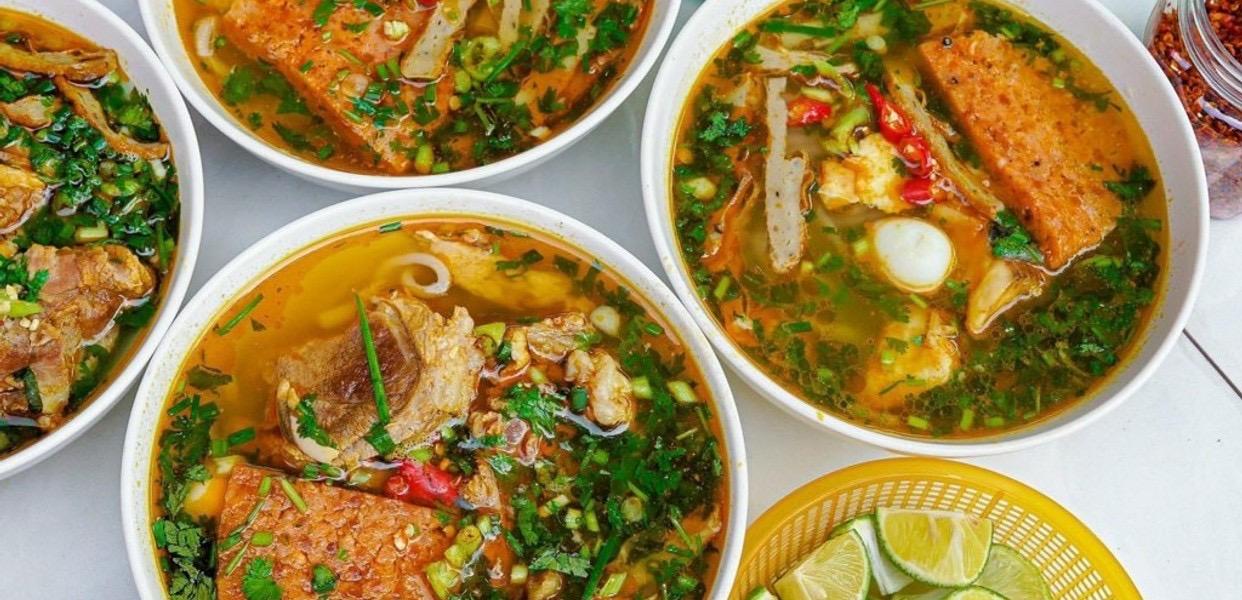
Bánh canh is a family of Vietnamese soups built around thick, chewy tapioca noodles that eat a lot like Japanese udon. In Da Nang, locals pair these springy strands with everything from cheap scad fish to whole blue crab, including famous late-night bowls sold right beside the train tracks. Read on to find out which version to order, how to handle the spice, and what you should actually pay.
By the Go Da Nang local team · Last updated June 2026
The name "bánh canh" refers strictly to the noodle. Cooks make it from tapioca starch, sometimes blending in a little rice flour, and cut it into short, thick strands. The result is chewy, bouncy, and slightly translucent. It feels closer to Japanese udon or a Korean rice cake than the thin bún you find in most local soups. As the starch cooks, it thickens the broth into a rich, gravy-like consistency rather than a clear soup.
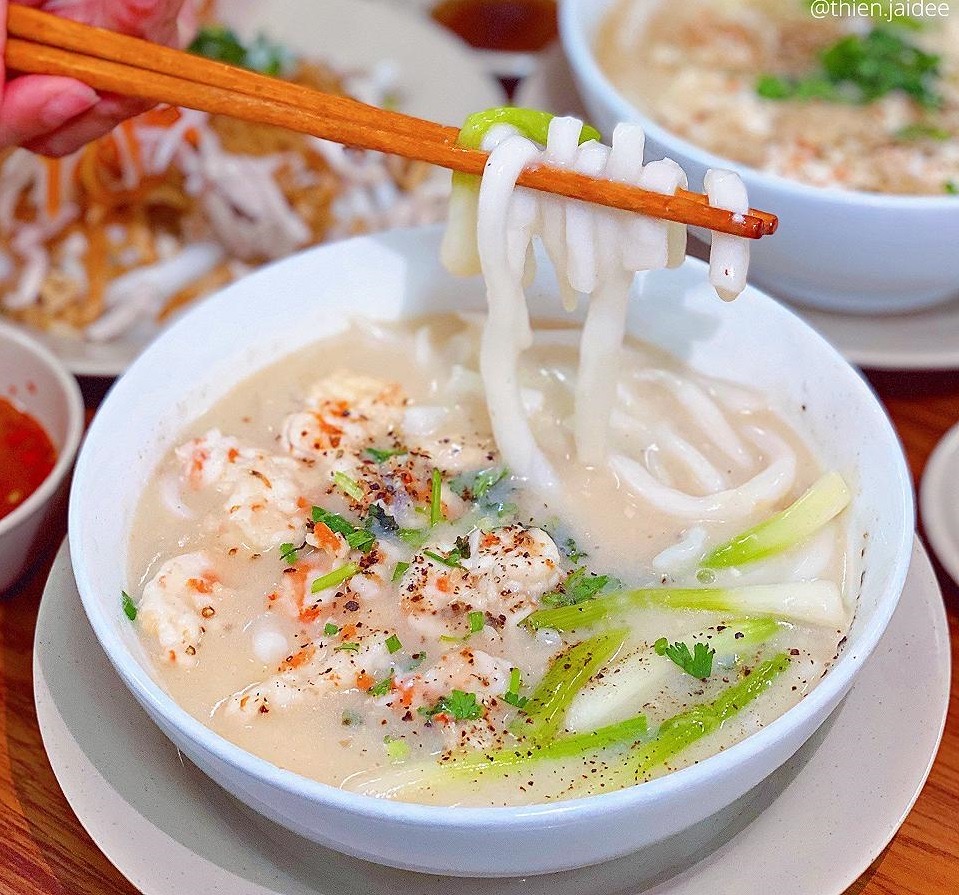 Close-up of thick, chewy semi-transparent bánh canh tapioca noodles
Cooks pair this noodle with whatever broth they are making that day. If you see "bánh canh cá nục" or "bánh canh ghẹ," you are getting the exact same noodle served in either a scad fish or blue crab soup. Just pick the topping you want.
You will run into six main versions around town. They range from everyday breakfast bowls to pricier seafood splurges. Pay attention to the spice and price notes below.
Cá nục is scad, a small and abundant local fish. This is the everyday default and the easiest place to start. The broth is light, savory, and clean. You get chunks of poached fish mixed with the thick noodles. It is mild, filling, and very cheap. You will usually see it sold as a breakfast or all-day option. Some shops also do a snakehead-fish version (bánh canh cá lóc), which is firmer and meatier than scad.
This version swaps the fish for squid (mực). You get rings and pieces of fresh squid in a similar light, savory broth. Because Da Nang is a port city, the squid is fresh and tender rather than rubbery. It is mild, beginner-friendly, and only slightly more expensive than the fish bowl.
This is a massive local favorite. Bánh canh ruộng ("field bánh canh") refers to a rustic, thicker, almost porridge-like style. In Da Nang, people call it bánh canh đường ray ("railroad bánh canh") because the most famous stalls set up right beside the train tracks. You eat on tiny plastic stools at night. The thick broth comes loaded with cheap, comforting toppings like quail eggs, pork, sliced chả (Vietnamese sausage), and sometimes shrimp. It is the cheapest bowl on this list and a great after-dark experience.
Cua means mud crab. This meat is richer and heavier than blue crab. The broth is thick and luxurious, featuring stirred-in crab meat and a deep seafood sweetness. It costs noticeably more than the fish bowls — usually around 35,000–65,000đ a bowl. Some shops let you choose between a bowl topped with a whole crab and a cheaper one with picked crab meat.
Ghẹ is blue swimmer crab. This is the photogenic treat version. The broth turns thick and orange from the crab fat, and a whole or half crab sits right on top of the noodles. You have to crack and pick the crab by hand while you eat. It is a rich and messy meal. This is one of the pricier bowls visitors order, usually around 35,000–55,000đ, though premium whole-crab bowls at well-known spots run higher. Many shops let you pick between a whole-crab bowl and a cheaper picked-meat one, so glance at the menu before you order.
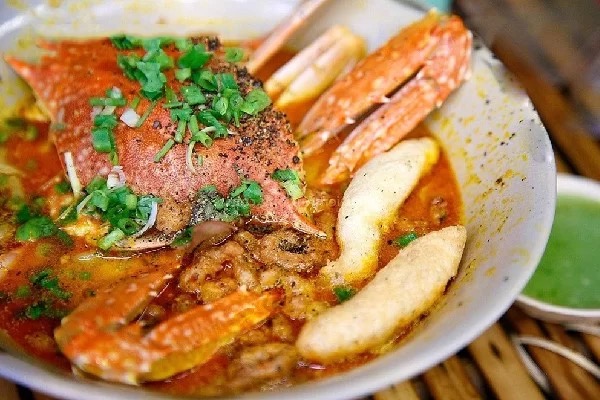 Bánh canh ghẹ — thick orange crab broth with a whole crab and chewy noodles
Tôm tít (mantis shrimp, also called tôm tích) is a prized seafood with sweet flesh. This premium bowl pairs the shrimp with the same rich broth used in the crab versions. It is a special-occasion order and sits near the top of the price range, similar to the crab bowls. Specialist mantis-shrimp shops run roughly 30,000–40,000đ a bowl.
| Version | Topping & broth | Typical price | Best time | Easy for beginners? |
|---|---|---|---|---|
| Cá nục (scad) | Light, clean fish broth | ~20,000–45,000đ | Breakfast / all-day | Yes — mild and simple |
| Mực (squid) | Light broth, fresh squid | ~25,000–45,000đ | Morning / all-day | Yes — mild |
| Ruộng / đường ray | Thick, rustic; quail egg, pork, chả | ~12,000–25,000đ | Afternoon & night | Yes, but often chili-forward |
| Cua (mud crab) | Thick, rich mud-crab broth | ~35,000–65,000đ | Daytime (go early) | Hands-on, shell work |
| Ghẹ (blue crab) | Thick, orange blue-crab broth | ~35,000–55,000đ | Daytime (go early) | Hands-on, shell work |
| Tôm tít (mantis shrimp) | Rich broth, sweet mantis shrimp | ~30,000–40,000đ | Daytime (go early) | Some shell work |
Prices are a June 2026 guide and shift constantly — confirm at the stall.
Da Nang is a working central-coast fishing port. Boats land scad, squid, blue crab, mud crab, and mantis shrimp every morning. These cheap, fresh catches are exactly what these soups rely on. A bowl of bánh canh ghẹ makes sense here because the crab came off a boat that very day. The seafood versions taste fresh from the ocean.
The trackside culture is equally local. Eating a steaming bowl of bánh canh đường ray on a low plastic stool beside the railway at night is a true Da Nang scene. Locals do this after work.
It depends entirely on which version you pick.
The easy bowls: Bánh canh cá nục, mực, and ruộng are gentle and approachable. The broths are savory, the toppings are straightforward, and there is no organ meat to navigate. The chewy noodle is the only novelty, and most people love it.
The hands-on bowls: The crab and mantis-shrimp bowls are messy, shell-on affairs. You will be cracking crab and picking meat with your hands while the noodles cool. It is fun if you are up for it, but frustrating if you want a quick, clean meal. Wear a shirt you do not mind splashing.
One warning is that Da Nang bánh canh often comes chili-forward by default. This is especially true for the trackside and crab versions. If you want a mild bowl, say "không cay" ("kohng kai") to request no chili. Also, every version uses fish, crab, or bone broth, so vegetarians will need to skip this dish.
You will find two rough price tiers.
The cheap bowls: Fish, squid, and ruộng/đường ray are budget food. Expect roughly 20,000–45,000đ (about $0.80–1.80). The trackside ruộng bowls sit at the bottom of that range — some start as low as 12,000đ.
The seafood bowls: Bánh canh cua, ghẹ, and tôm tít cost more, usually around 35,000–65,000đ a bowl, with premium whole-crab bowls at the best-known spots climbing higher. They are sold by the bowl, not weighed — but at crab shops you often choose between a whole-crab bowl and a cheaper picked-meat one, so glance at the menu first. If no price is posted, just ask "bao nhiêu một tô?" (how much per bowl?) before they cook it.
Treat these numbers as a rough guide for June 2026. Seafood prices drift, so confirm at the stall. Bring small cash, as most spots do not take cards.
Bánh canh is an all-day dish. Most shops serve it from morning right through to the evening, so you rarely have to plan around it. The fish and squid bowls in particular are easy to find at any hour. There are only two exceptions worth knowing:
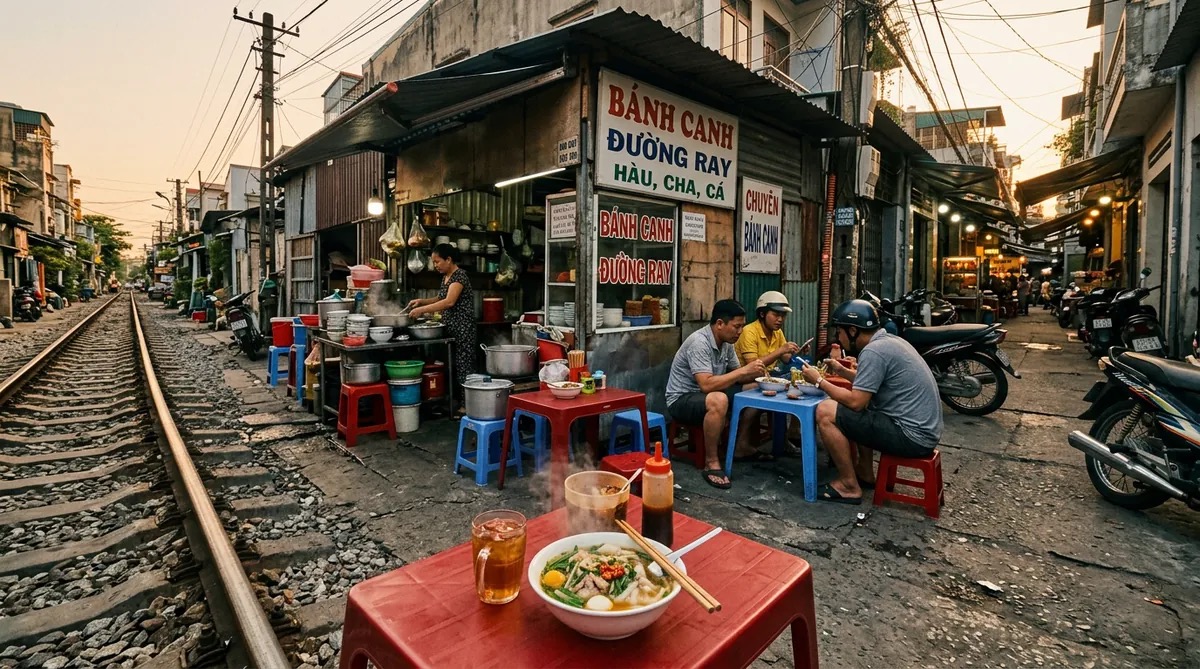 An evening Da Nang street-side noodle stall with plastic stools
Otherwise, opening hours shift at these small family stalls, so it is worth a quick check before crossing town.
Pointing works everywhere, but a few phrases help:
You will not get the big DIY herb-and-wrap kit common with other Da Nang dishes. Bánh canh arrives ready to eat. You usually get a side of quẩy (fried dough sticks) or bread for dipping. A small dish of chili, lime, or fish sauce sits on the table so you can adjust the flavor. Taste the broth first, then add heat and acid. Pay in small cash when you finish.
These are the spots we send our friends to. Confirm prices, hours, and addresses before you travel, as small stalls change locations fast.
This is the trackside classic. Come for the rustic ruộng-style bowl with quail egg, pork, and chả, eaten on plastic stools right by the railway. It is cheap, busy, and a highly local experience.
The famous, long-running ruộng spot near the Thuận Phước bridge, beloved for thick, comforting, porridge-like bowls for around 20 years. A great alternative if the trackside stalls are too far from your accommodation.
A busy, central spot serving mixed-topping bowls — crab, shrimp, snakehead fish, and chả cá in a bone broth. Handy if you are based in Hải Châu, but popular toppings can run out, so go earlier.
A well-known crab specialist and the easiest place to try bánh canh ghẹ. Going to a dedicated crab shop like this — rather than a general noodle stall — gets you the freshest crab and a properly rich, orange broth.
Bánh canh is one of Da Nang's most underrated meals. Start with the cheap fish, squid, or trackside ruộng version, then graduate to a crab bowl once you are hooked. Order "không cay" if you want it mild, glance at the menu price on any crab bowl first, and bring small cash. For the rest of the city's must-try dishes, including bún chả cá, mì Quảng, and bún mắm nêm, check out our local's honest guide to what to eat in Da Nang.
One local roundup a month — new guides, festival dates and where to eat. No spam.