Banh xeo nem lui da nang is one shared meal: crispy turmeric pancake and grilled pork skewers, wrapped in rice paper with herbs and peanut dip.

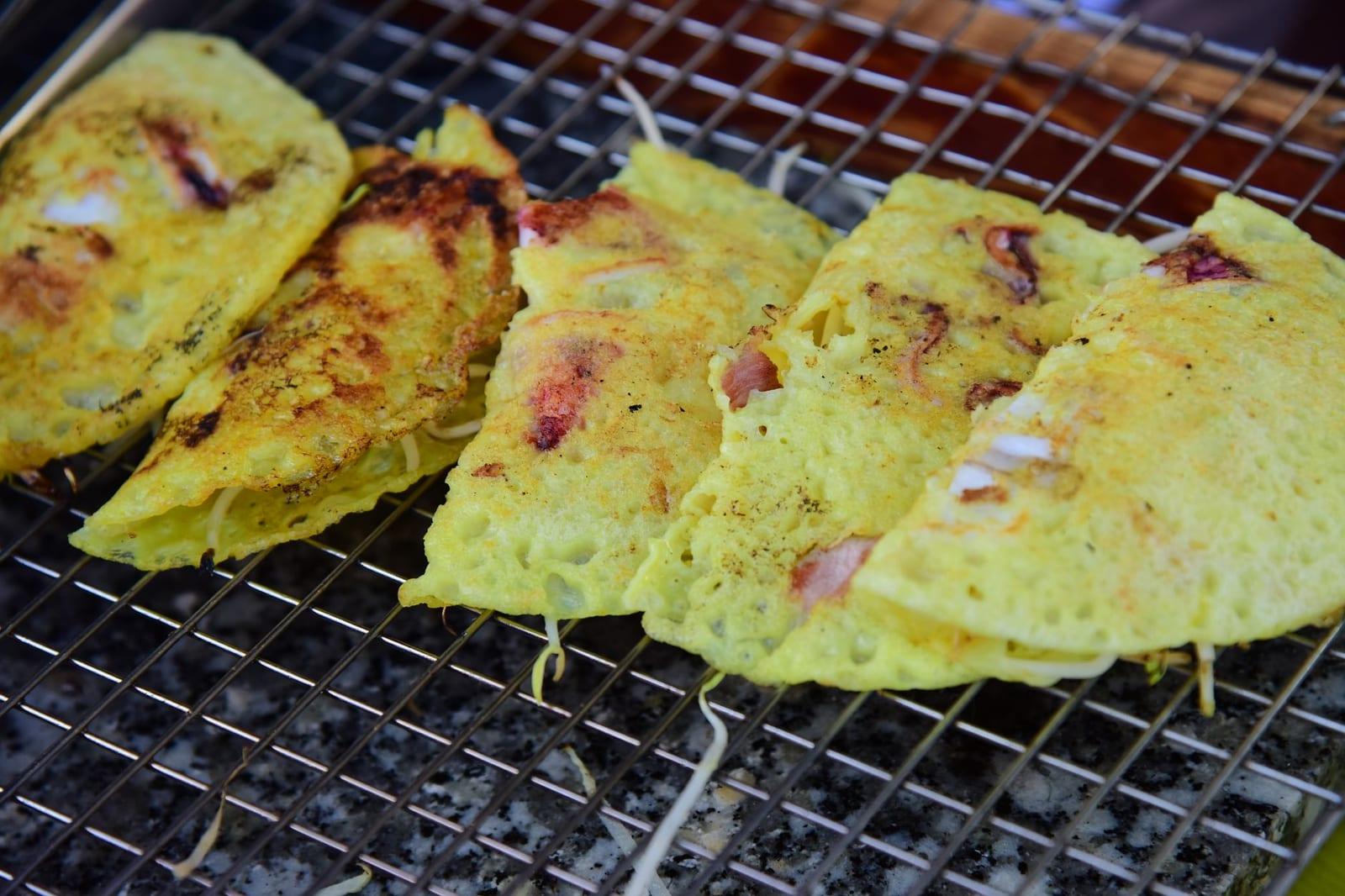
Bánh xèo is a crispy turmeric pancake folded over shrimp and pork, while nem lụi is grilled minced pork on a lemongrass skewer. In Da Nang, you eat them together by rolling both into soft rice paper with fresh herbs and dipping the wrap into a rich peanut sauce. It is a mild, hands-on meal that costs very little and serves as the perfect introduction to Central Vietnamese street food.
By the Go Da Nang local team · Last updated June 2026
If you order one without the other in Da Nang, the staff will usually bring both anyway. Locals treat them as a single meal.
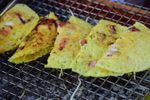
Bánh xèo translates to "sizzling pancake." The name comes from the loud hiss the batter makes when it hits the hot oil. Cooks pour a thin layer of turmeric-tinted rice flour into a pan and fry it until the edges turn lacy and crisp. They toss in a few shrimp, slivers of pork, bean sprouts, and green onions. The pancake is folded into a half-moon and served hot to keep the shell crunchy.
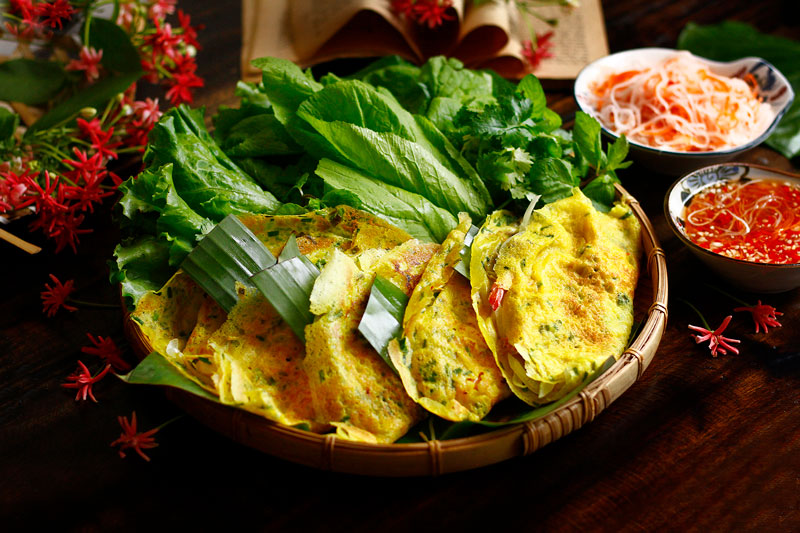 A golden, crispy turmeric-yellow Vietnamese bánh xèo pancake folded over shrimp and bean sprouts
Nem lụi is grilled pork on a stick. Cooks mince and season the pork — usually with a little diced pork fat worked in for richness — mould it around a lemongrass stalk or bamboo skewer, and grill it over charcoal. The outside chars while the lemongrass perfumes the meat. Each skewer is small, so a standard portion includes several sticks.
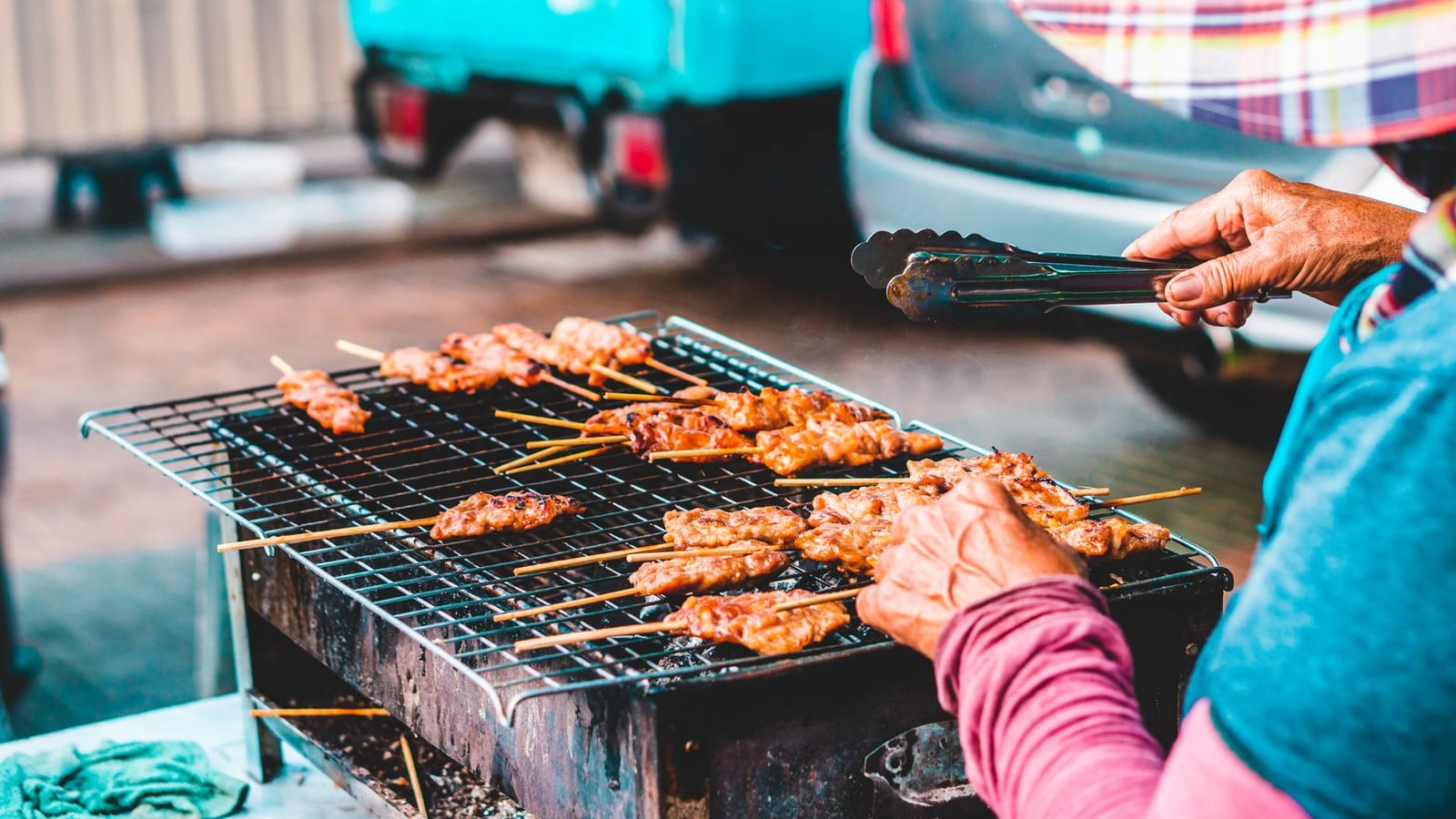 Lemongrass-wrapped grilled pork nem lụi skewers on a plate beside fresh herbs
The table setup ties everything together. Both dishes arrive with a massive plate of fresh herbs and a bowl of dipping sauce. You do not eat the pancake and skewers separately. You build rice paper wraps that combine them bite by bite.
Da Nang serves the Central Vietnamese style of bánh xèo. It is smaller, thinner, and crispier than the large southern version found in Saigon and the Mekong Delta. Southern pancakes are big, soft, and often use coconut milk. The Central version is palm-sized and built specifically for wrapping.
Nem lụi originated just up the coast in Huế and spread throughout the central region. Da Nang turned it into a street food staple. When you combine the pancake, the pork, and the peanut dip, you get a meal specific to this stretch of coast. Like where locals eat Mì Quảng, this dish belongs to Da Nang and Quảng Nam.
| Bánh xèo | Nem lụi | |
|---|---|---|
| What it is | Crispy turmeric rice-flour pancake with shrimp, pork, and bean sprouts | Grilled minced pork moulded on a lemongrass skewer |
| Rough price | ~15,000–20,000đ per pancake | ~5,000–8,000đ per skewer |
| Spice level | Mild; no chili unless you add it | Mild; smoky lemongrass flavor, no heat |
| How you eat it | Tear into rice paper, add herbs, roll, dip | Slide off the skewer into the same wrap |
| Best time | Late morning to evening; arrive before ~8pm | Same — they are sold together |
Yes. This is one of the gentlest meals you will find in Da Nang. The pancake is mild and slightly sweet from the turmeric. The pork skewers are smoky and savory with zero surprise heat. You will not find organ meat, bones, or strong fermented smells. Nothing on the plate is spicy by default. You only get fresh chili if you ask for it.
Pay attention to the dipping sauce. Bánh xèo and nem lụi in this region come with a thick, savory-sweet peanut sauce called tương. Many Da Nang cooks blend the peanuts with a little pounded pork liver to give the sauce a richer, meatier base. This dip is completely different from the sharp, fishy mắm nêm served with Da Nang's other build-your-own classic, bánh tráng cuốn thịt heo. The peanut dip is mild, nutty, and very easy to like.
The only learning curve is the wrapping process. Once you build one or two, you will have the hang of it.
The food arrives with a stack of soft rice paper and a loaded herb plate. You will usually get lettuce, mint, perilla, fish-leaf (diếp cá), cucumber batons, and thin slices of green banana and star fruit (khế) for a tart crunch. Here is how locals assemble a wrap.
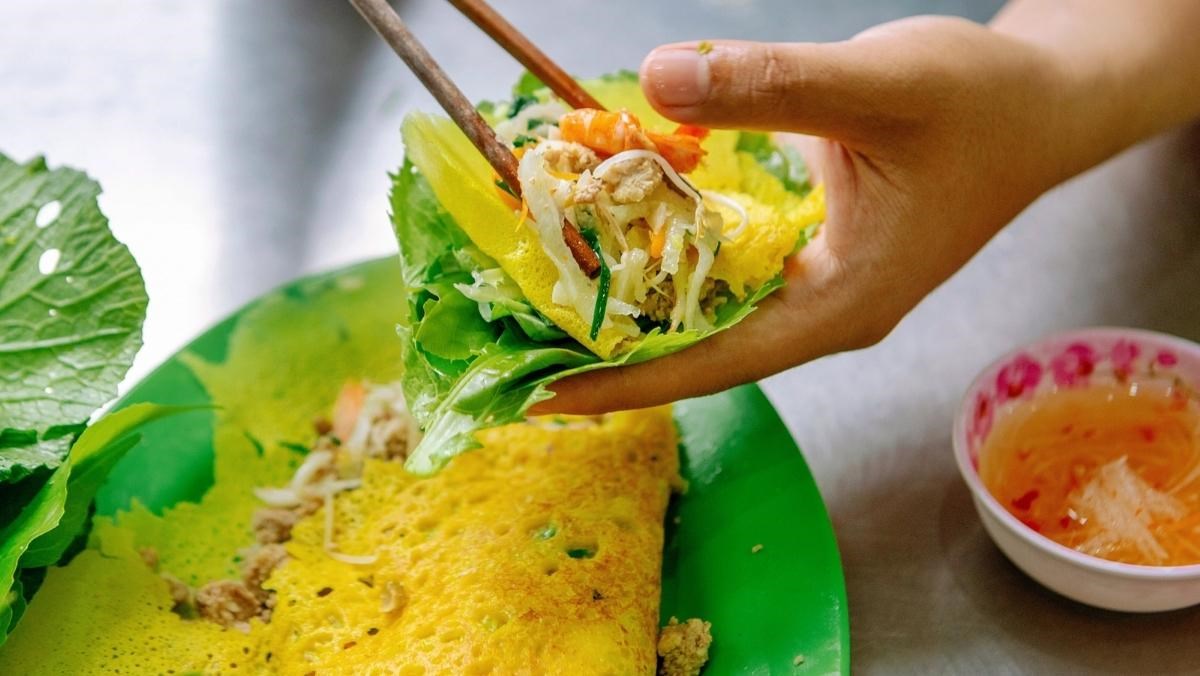 A hand holding a piece of bánh xèo wrapped in lettuce and herbs, dipping it into a bowl of nước chấm
The most common beginner mistake is overfilling the rice paper. If you cram a whole pancake and three skewers into one wrap, it will split. Use less filling than you think you need. If your rice paper tears, just double-wrap it with a second sheet. You can always build another roll.
This is a very cheap meal. Bánh xèo usually costs around 15,000–20,000đ per pancake, and nem lụi runs about 5,000–8,000đ per skewer. A filling shared meal for two people usually lands near 80,000–150,000đ total (prices as of June 2026). You order by the number of pancakes and skewers and ask for more if you are still hungry. Bring small cash notes because most spots do not accept cards.
Hours vary by spot. Some no-name stalls only fire up their grills in the afternoon, but the two places we recommend below open from late morning and run through the evening. Popular spots can run low on batter near closing, so aim to arrive before around 8pm rather than late at night.
Ordering is simple even if you do not speak Vietnamese. Pointing at the next table works perfectly. If you want to try the language, say "một phần bánh xèo" (moht fun bun seh-oh) for one portion of pancakes. Say "thêm nem lụi" (tem nem loo-ee) to add more skewers. To ensure your food is mild, ask for "không cay" (kohng kai) to skip the chili. Otherwise, just point and count on your fingers. The staff see plenty of visitors do exactly that.
We send our visiting friends to these two spots. The famous location offers a fun experience but gets busy and costs slightly more. The local alternative is cheaper and much quieter. Prices, hours, and addresses change often, so always confirm before you cross town.
This is the name most visitors hear first. It sits down a narrow alley off Hoàng Diệu, stays reliably busy, and even earned a spot in the 2025 Michelin Guide. The staff are used to foreign diners. The pancakes and skewers are consistent, and the peanut dip is excellent. The trade-off is the tourist crowd and slightly higher prices. Expect a loud, packed dining room.
When locals want this meal without the crowds or the tourist markup, they come here. This is a quiet neighborhood spot aimed squarely at regulars rather than tour groups. The pancakes are just as crispy and the skewers are just as smoky.
If you enjoyed building your own wraps, try Da Nang's other build-your-own classic, bánh tráng cuốn thịt heo. It uses the same hands-on, herb-heavy concept but features sliced pork and a punchy fermented dip. For a sit-down soup, the city's fish-cake noodle soup, bún chả cá is an easy local bowl to love. Finally, where locals eat Mì Quảng is the morning staple every visitor should try at least once. For the full lineup, see our local's honest guide to what to eat in Da Nang.
Bánh xèo and nem lụi are as friendly as Da Nang street food gets. The meal is mild, cheap, smoky, and fun to assemble. Start at a busy spot like Bà Dưỡng for the famous experience, or visit a neighborhood place like Bà Tuyết for a quieter meal. Arrive in the early evening, bring small cash notes, keep your wraps modest, and enjoy the peanut dip.

One local roundup a month — new guides, festival dates and where to eat. No spam.