Chè is Vietnam's family of sweet soups. A local's guide to the chè in Da Nang — chè bắp, chè sầu, chè thái and more, what's in each and where to eat.
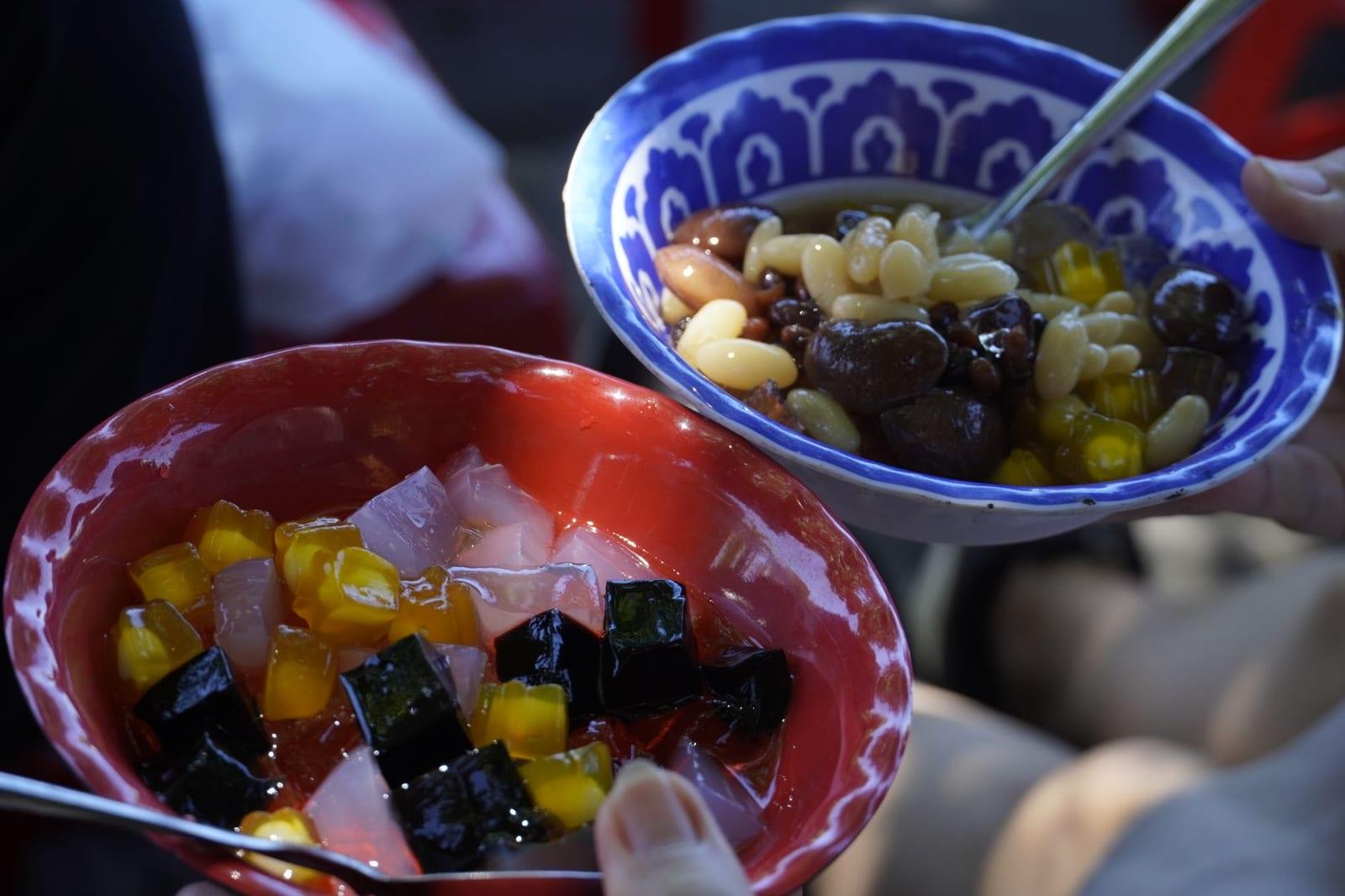
Chè is Vietnam's massive family of sweet soups, combining beans, jellies, fruit, and tapioca in lightly sweetened coconut milk over crushed ice. You will see these refreshing desserts everywhere in Da Nang, from market carts to tiny sit-down shops. Once you know what to order, a cold glass of chè is the perfect way to beat the afternoon heat.
By the Go Da Nang local team · Last updated June 2026
Think of "chè" as an umbrella term for Vietnamese sweet desserts, much like "soup" or "pudding" in English. You will find cold glasses eaten over ice with a long spoon, alongside warm bowls that feel more like comfort food.
The common thread is a mild sweetness, a pour of coconut milk, and a fun mix of textures. Every spoonful gives you something soft, chewy, and creamy. The sweetness is very gentle by Western standards because the goal is to refresh you rather than overload you with sugar.
This makes chè incredibly approachable for visitors. You do not have to worry about chili or fish sauce here. It is a safe, delicious pick for kids and cautious eaters alike.
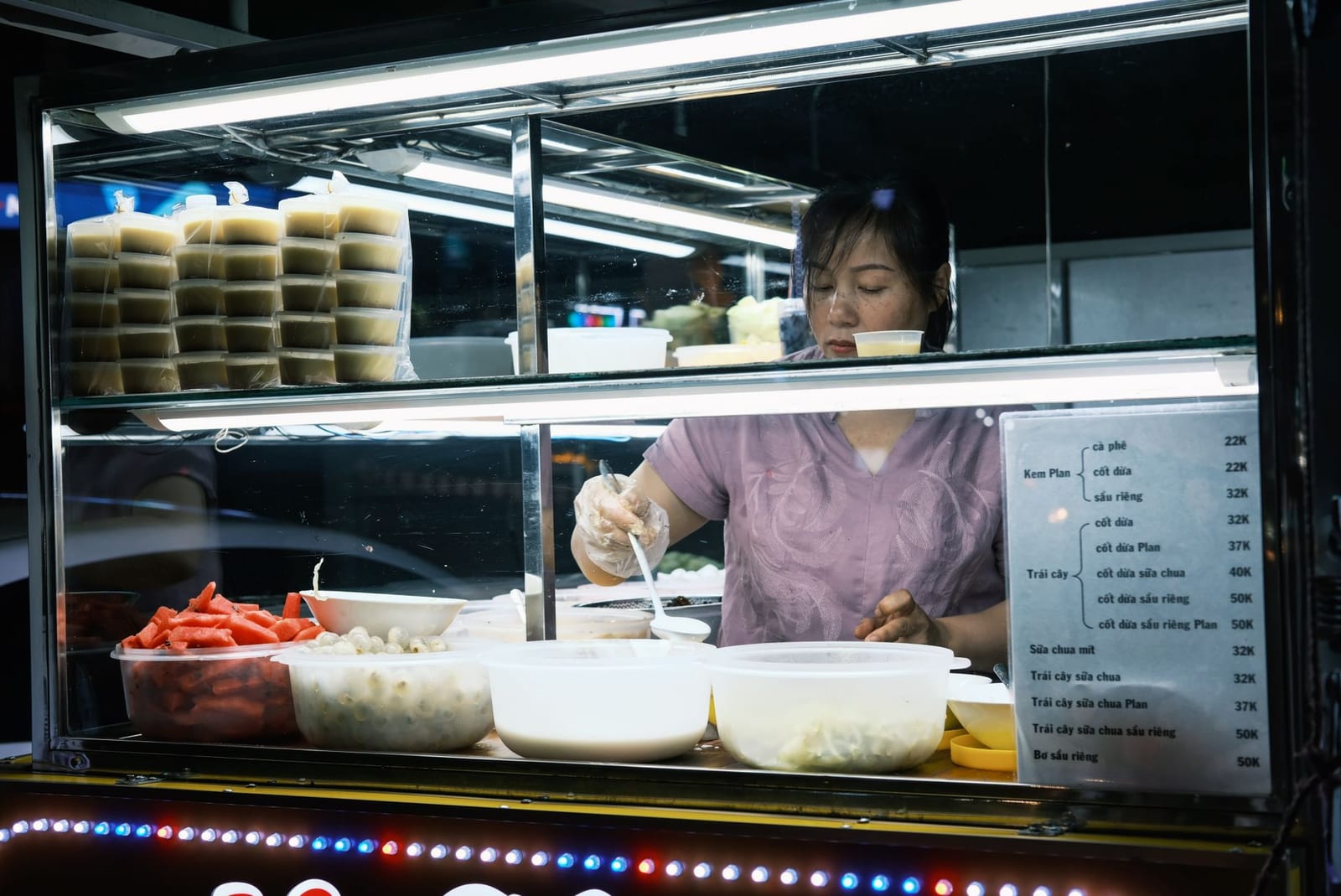 A street chè cart in Da Nang with jars of jellies, beans and tapioca toppings.
Central Vietnamese chè leans heavily on coconut milk, which gives many local glasses a thick, creamy finish.
The two varieties Da Nang and neighboring Hội An are famous for are chè bắp (sweet corn) and chè sầu (durian). Chè bắp is built on the tender young corn grown in Cẩm Nam near Hội An and Cẩm Lệ in Da Nang, while chè sầu became a Da Nang signature through the shop Chè Liên. These are the local heavyweights.
You will also see chè thái everywhere. This Thai-influenced fruit and coconut dessert is a massive hit, though it is a modern import rather than a local invention. If you want to taste what is rooted in central Vietnam, start with the corn and the durian.
Here are the main types you will spot on a Da Nang cart. Each one is served as its own individual glass or bowl.
This is the Da Nang and Hội An signature. Fresh corn is simmered with coconut milk and a little tapioca until it becomes a creamy pudding full of whole kernels. You can eat it warm or cooled. It tastes like a comforting corn dessert and is an absolute must-try while you are in town.
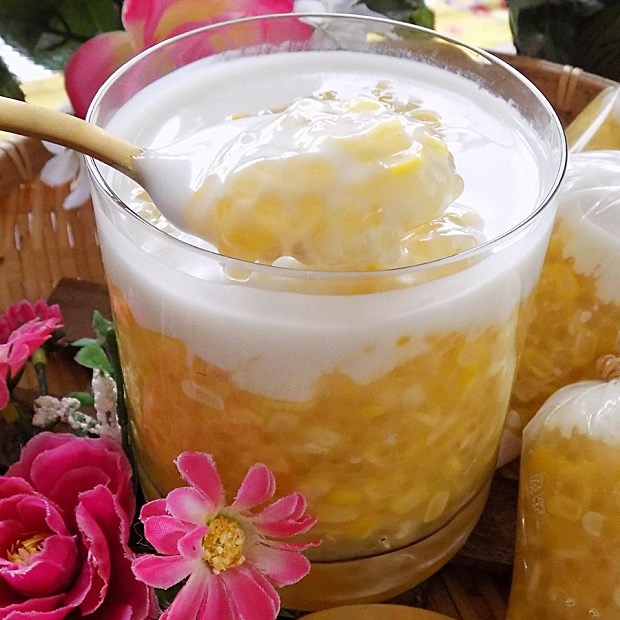 A glass of chè bắp, Da Nang's creamy sweet-corn chè with coconut milk.
Da Nang's durian chè is closely tied to one specific shop called Chè Liên, which helped put it on the map. You get durian blended into a thick coconut base alongside jelly and pieces of jackfruit. Durian has a famously strong, custardy smell that people either love or hate. If you are already a fan, order this immediately. If you have never tried durian, this sweet, creamy bowl is a very gentle introduction.
This cold, layered glass is a Da Nang street cart staple. It combines soft agar jelly, chewy red "pomegranate" pearls made from water chestnut in red tapioca, white beans, and coconut milk over ice. It is so popular that we gave it a full breakdown. For the exact shops locals recommend, read our deep dive on chè xoa xoa hạt lựu.
This warm, comforting bowl features ripe banana cooked in coconut milk with tapioca or sago pearls. Vendors usually finish it with a pinch of salt and crushed peanuts. You will also see a grilled version called chè chuối nướng, where the banana is toasted first for a smoky flavor. This is a great choice for cooler evenings when you want to skip the ice.
Smooth, cooked hyacinth beans (đậu ván) sit in a light, clear syrup. It is simple, soft, and mildly sweet. You will see it served on its own in a small glass, but it also acts as a topping inside other desserts like chè xoa xoa hạt lựu. It provides a quiet, creamy base for many local favorites.
Chè thập cẩm translates to "mixed everything." The vendor scoops a bit of every topping into one glass, combining beans, jellies, pearls, and coconut milk. Chè ba màu ("three color") is the tidier, layered cousin. It features green pandan jelly, yellow mung bean, and red bean stacked in a glass, topped with ice and coconut milk. Order the thập cẩm when you want to try a little bit of everything.
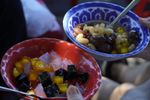
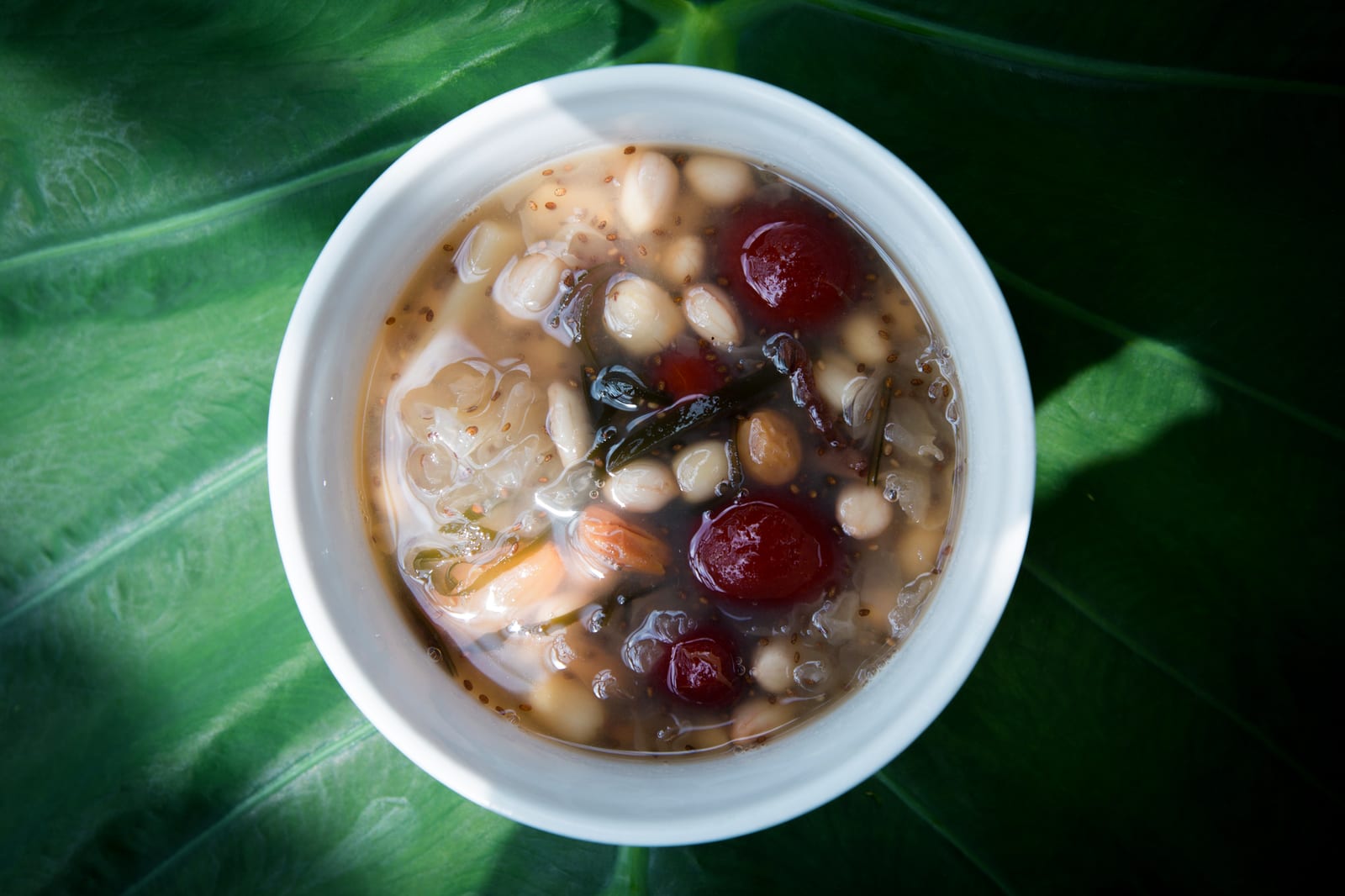 A bowl of chè thập cẩm with white beans, red jelly pearls, longan and lotus seeds in light syrup.
This modern favorite features soft, wobbly milk-jelly cubes (khúc bạch) floating in a light syrup with longan or lychee and toasted almonds. It tastes cleaner and lighter than the heavy bean and tapioca glasses. It is very popular with younger locals and incredibly easy to like on your first try.
This crowd-pleaser is built from tropical fruit, nata de coco, strips of jackfruit, and a rich coconut cream served cold over ice. It is widely beloved and appears on plenty of menus. Keep in mind that it is a modern, Thai-influenced import rather than a Da Nang original. If you prefer bright fruit over beans, this is the glass to order.
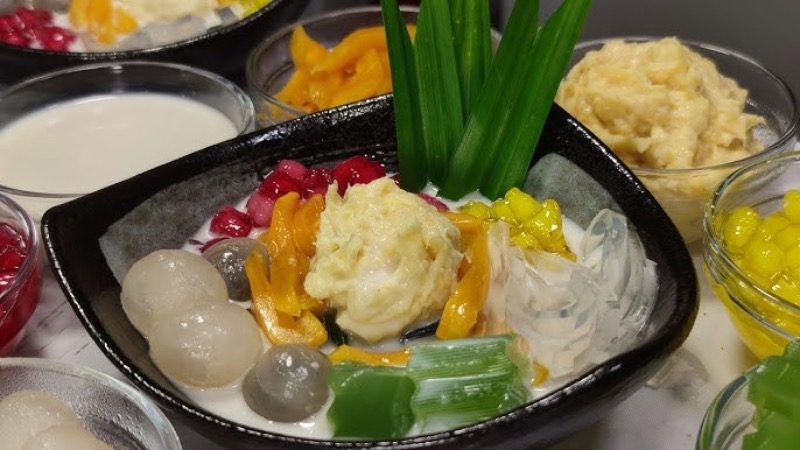 A glass of chè thái — tropical fruit, jelly and nata de coco in sweet coconut milk over ice.
Here is how the main types compare at a glance:
| Dessert | What's in it | Warm/Cold | Da Nang-traditional? |
|---|---|---|---|
| Chè bắp | Sweet corn, coconut milk, tapioca | Warm or cold | Yes, local signature |
| Chè sầu | Durian, jelly, jackfruit, coconut milk | Cold | Yes, Da Nang-famous (Chè Liên) |
| Chè xoa xoa hạt lựu | Agar jelly, red pearls, beans, coconut milk | Cold | Yes, local street staple |
| Chè chuối | Banana, coconut milk, tapioca/sago | Warm | Yes, central-VN style |
| Chè đậu ván | Hyacinth beans in light syrup | Cold | Yes, common topping too |
| Chè thập cẩm / ba màu | Mixed beans, jellies, pearls / layered three-color | Cold | Yes, everyday classic |
| Chè khúc bạch | Milk-jelly cubes, longan/lychee, almonds | Cold | Modern, popular |
| Chè thái | Tropical fruit, nata de coco, jackfruit, coconut cream | Cold | No, modern Thai import |
You order each dessert by name. The basic phrase is "một ly chè [type]" which means "one glass of chè." A few quick phrases will help you customize your order:
Cold chè arrives in a tall glass with a long spoon. The heavy ingredients sink while the coconut milk floats to the top. Stir everything thoroughly from the bottom before your first bite. Eat it quickly before the ice melts and waters down the flavor. Warm options like chè chuối come in a small bowl and do not require any stirring.
Ice at busy stalls comes from clean commercial blocks and moves fast. Picking a popular cart is always the safest bet for a sensitive stomach. Locals usually reach for a cold glass during the post-lunch slump to beat the afternoon heat. Carts get busiest from late afternoon into the evening when the toppings are at their freshest.
Many of these desserts are naturally dairy-free and vegan because the creaminess comes from coconut milk. However, some shops finish a glass with condensed milk, and a few set their jellies with gelatin instead of plant-based agar. Always ask the vendor if you have strict dietary needs.
A glass of chè costs roughly 10,000–30,000đ (about $0.40–1.20) as of June 2026. Market stalls sit at the low end, around 10,000–15,000đ, while branded sit-down shops like Chè Liên charge up to 30,000đ.
Carts and small shops are strictly cash only. Bring small notes with you. Handing over a 500,000đ bill for a 15,000đ glass will only frustrate the vendor.
After eating a savory plate of mì Quảng or bún chả cá, a cheap glass of chè is the standard local way to cool down. To see where this dessert fits into the bigger culinary picture, check out our What to Eat in Da Nang guide.
The best spots are clustered in Hải Châu, the central district where most visitors stay. These are small shops and market stalls, so hours can shift — double-check before you head over.
This is the first name locals mention for chè sầu (durian), served Thai-style with coconut milk and jelly. They make their toppings fresh daily, and the shops get very busy in the evenings. Chè Liên has grown into a small local chain with several branches around the city, so just pick the one closest to your hotel — the original is on Hoàng Diệu.
The stalls inside Chợ Cồn offer the cheapest, most traditional way to eat chè in Da Nang. Some vendors have operated here for decades. Head into the food court and look for the cart with the longest line of locals — the chè stalls run from the daytime into the early evening.
Right in the tourist center on Trần Phú, the chè stalls at Chợ Hàn are the easy pick when you want variety in one stop — chè bắp, chè chuối nướng, chè thập cẩm, and chè thái are all here. It is more central and tourist-friendly than Chợ Cồn, though prices run a touch higher.
You do not need a high chili tolerance or an adventurous palate to enjoy chè. Just bring an open mind for a few fun new textures. Order a glass by name in the late afternoon, stir it from the bottom, and pay with small notes. Whether you just finished a plate of bánh tráng cuốn thịt heo or you are simply hiding from the midday heat, this is the easiest, most refreshing sweet in Da Nang.
One local roundup a month — new guides, festival dates and where to eat. No spam.