Cha bo da nang is the city's peppery beef sausage: what it is, how to eat it, what it costs, and where to buy it as a take-home gift.

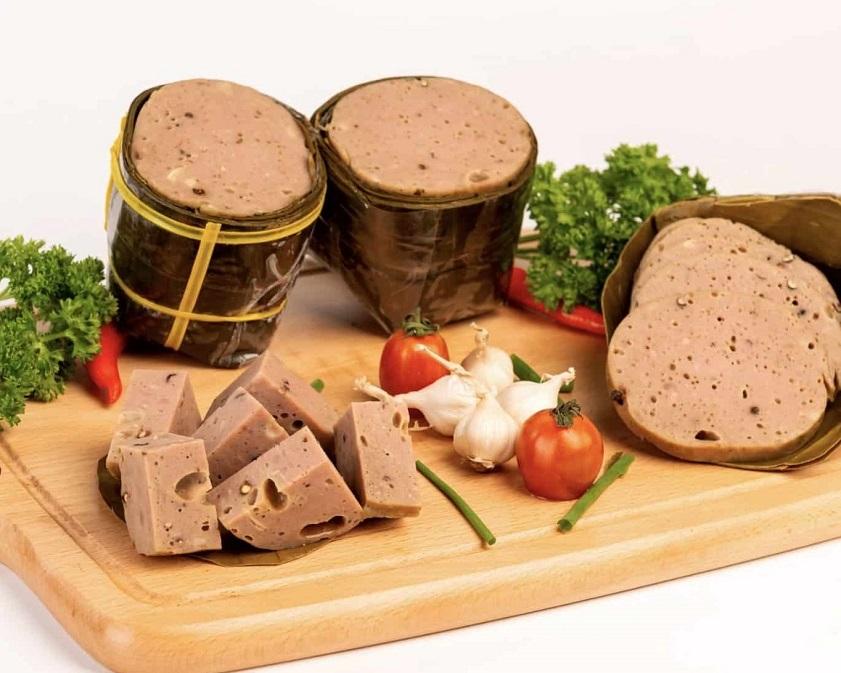
Chả bò is a springy, pepper-flecked beef sausage wrapped in banana leaves and steamed to a satisfying snap. You will find it stuffed into local bánh mì, sliced up as a beer snack, or vacuum-packed as Da Nang's favorite edible souvenir.
By the Go Da Nang local team · Last updated June 2026
"Bò" means beef. Cooks pound lean beef into a fine paste, add a little pork fat for richness, and season the mix with fish sauce, sugar, garlic, and plenty of cracked black pepper. They wrap the paste tightly in banana leaves and steam it into a firm log that you slice into rounds.
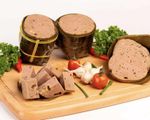
Cut a piece open and you see pale pink meat dotted with black pepper. A good chả bò is giòn dai (snappy and chewy) with a clean bounce. That springy texture comes entirely from pounding the meat fine, without any fillers.
If you know Vietnamese cold cuts, you have probably tried chả lụa (or giò lụa), the mild pork sausage found in bánh mì nationwide. Chả bò is its peppery beef cousin. It uses the same steaming method but brings a darker color, a firmer bite, and a bold, spicy kick.
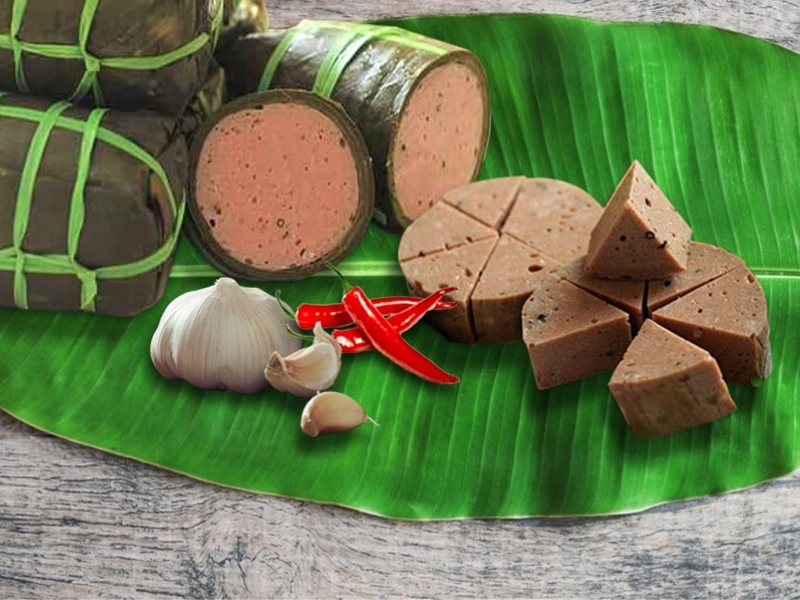 Close-up of pink, springy beef sausage slices flecked with cracked black pepper
Many regions make sausage, but chả bò belongs to central Vietnam. Da Nang has built a massive reputation for it. Ask a local what food to bring back from a trip here, and chả bò is the immediate answer. It travels well, tastes great, and feels like a true đặc sản (local specialty).
This reputation comes from a few long-running family shops, most famously the Bà Đệ / Ông Chánh name on Hải Phòng street. The original Bà Đệ recipe dates to the 1950s and was passed down through the family to today's Ông Chánh shop, which now holds the registered "Tré Ông Chánh" name. These shops built their legacy on chả bò and tré (more on that below). Over the years, the two items became a matched pair. The classic Da Nang gift box includes both, sold side by side at the same counter.
Chả bò is highly approachable for first-time visitors. It is savory, meaty, and garlicky, with a clean bite. There is no organ meat and no fermented funk. It tastes like a heavily seasoned, peppery meatloaf.
The main thing to expect is the pepper. The recipe relies heavily on cracked black pepper and garlic, giving each slice a warm tingle at the back of your throat.
That last point matters. Tré is fermented and noticeably sour. Chả bò is the safe crowd-pleaser, while tré is for adventurous eaters. Start with chả bò if you only want to try one.
The most common way to eat chả bò in Da Nang is sliced into a bánh mì. A proper local sandwich layers rounds of chả bò with pâté, pickled carrot, daikon, cucumber, cilantro, chili, and sauce. The pepper cuts through the rich pâté, and the sausage adds a great chew. If you see a cart advertising "bánh mì chả bò," this is exactly what you get.
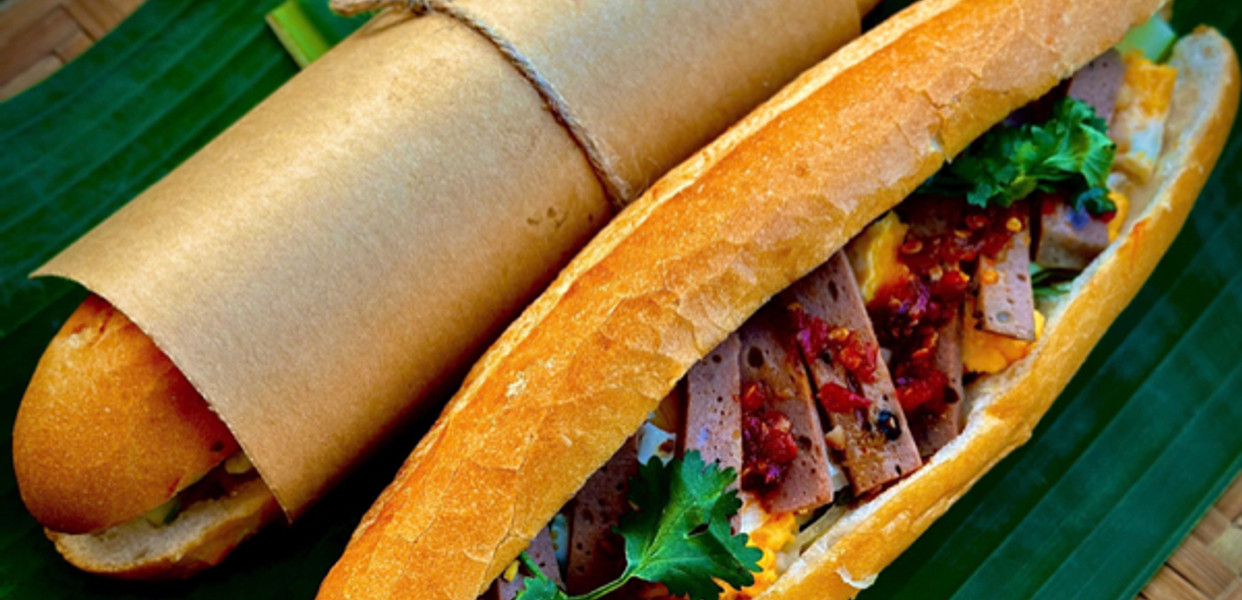 A Da Nang-style bánh mì filled with sliced sausage, herbs, pickled vegetables and chili
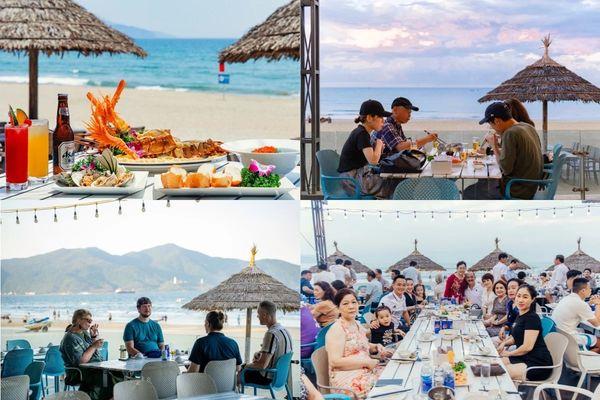
The second method involves a plate and cold beer. Nhậu is the local culture of drinking and snacking, and chả bò fits perfectly. You cut the sausage into bite-size wedges and serve it with fresh herbs and a dip made of pepper, salt, and lime (muối tiêu chanh). Dunk a slice, add a herb leaf, take a sip of beer, and repeat.
The final way is as a souvenir. You buy a log, the shop vacuum-packs it, and you fly it home. Even inside the plastic seal, it usually stays wrapped in its banana leaf.
Shops sell chả bò by weight. As of mid-2026, retail prices generally run about 280,000–380,000đ per kilo, depending on the shop and grade, but treat that as a rough baseline. You rarely need a full kilo. Asking for half a kilo (nửa ký) gives you plenty for a gift or a few sandwiches.
If you buy it inside a bánh mì, the meat is simply part of the sandwich price. Expect a chả bò bánh mì to cost the standard street rate, typically around 15,000–30,000đ as of mid-2026. Bring small cash notes, as specialty counters and street carts rarely accept cards.
Chả bò is fresh meat, so you need to handle it properly.
Buy your chả bò near the end of your trip so it stays fresh, and always ask the shop to vacuum-seal it.
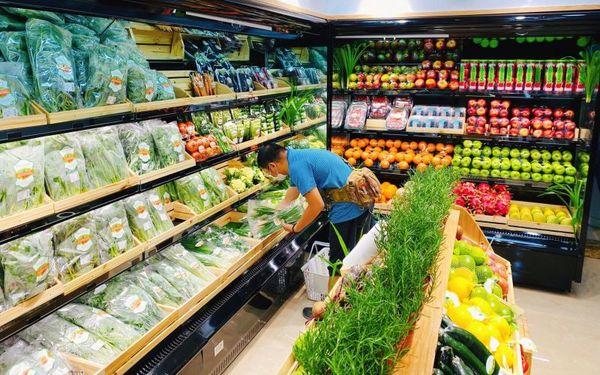
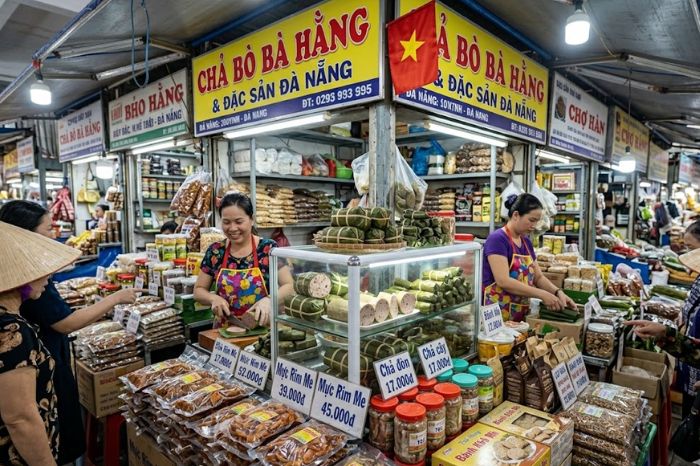 Banana-leaf-wrapped sausages stacked at a Vietnamese specialty-food stall
You will always see tré sold right next to chả bò. Tré is a fermented pork dish made from shredded pork, crunchy pig ear, and skin. Cooks season it with galangal, garlic, toasted sesame, and chili, then wrap it in leaves and bundle it with dried straw to ferment for two to three days. This process creates a sour, tangy flavor that tastes completely different from peppery chả bò. Most visitors prefer chả bò, while locals love tré.
Use these phrases to make buying easy:
Save this errand for the end of your trip. Prices and hours change, so confirm the details before heading out. Remember to ask for nửa ký if you just want a small gift.
This name is synonymous with Da Nang chả bò. Bà Đệ and Ông Chánh belong to the same family lineage. They are not rivals. Their counter sells the classic chả bò and tré pairing, making it the best stop for a take-home gift. The staff will quickly vacuum-seal your order for the flight.
If you want to buy chả bò while shopping for other souvenirs, head to the city's two main markets. Chợ Hàn (Han Market) is the tourist-friendly option near the river. Chợ Cồn is larger, busier, and more local. Both markets have specialty-food stalls selling chả bò and other Da Nang gifts. Quality varies between stalls, so ask for a taste test and make sure they can vacuum-seal your purchase.
Chả bò is just one part of the local food scene. See how it fits into our full guide to what to eat in Da Nang. If you have a bánh mì in hand and want more classics, try the dish Da Nang is named for, mì Quảng, get hands-on with Da Nang's build-your-own pork rolls, or warm up with the city's fish-cake noodle soup, bún chả cá.
Chả bò is the easy, peppery beef sausage that locals love to take home. It will easily win over any first-timer, and it makes a great edible souvenir. Buy it late in your trip, ask the shop to vacuum-seal it, and keep it cool until you fly.

One local roundup a month — new guides, festival dates and where to eat. No spam.