Cao lầu is Hội An's famous chewy noodle dish. What it is, how it differs from mì quảng, the best spots in Hội An — plus where to get it in Da Nang.

By the Go-Da-Nang local team · Last updated June 2026
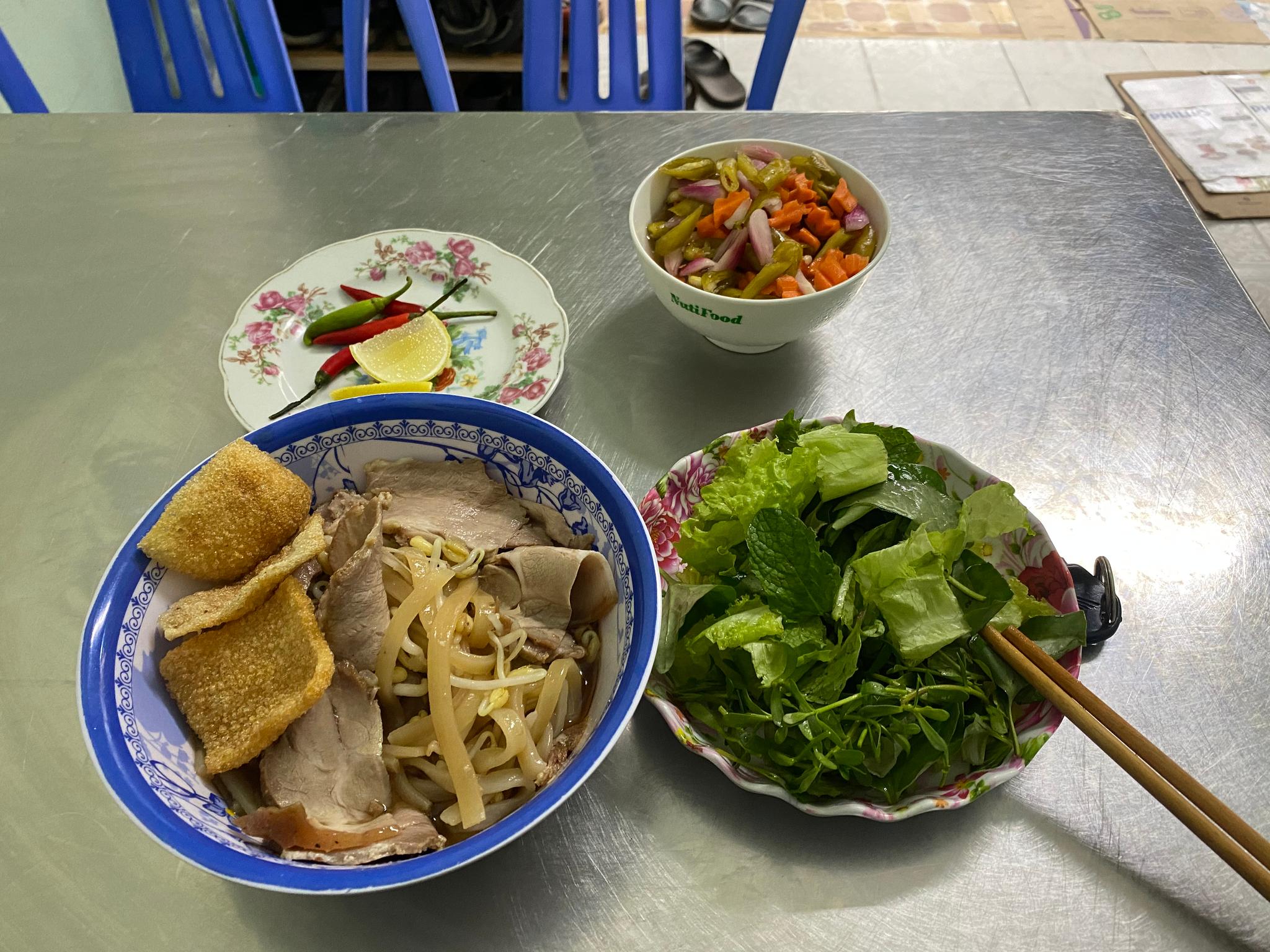
Cao lầu (pronounced "kao loh") is the signature dish of Hội An, featuring thick, chewy noodles tossed with sweet char siu pork, fresh greens, and crunchy fried squares. You eat it almost completely dry, mixing the ingredients with just a few spoonfuls of rich sauce at the bottom of the bowl. You won't find a proper version anywhere else in the world, earning it a top spot in our local's guide to what to eat in Da Nang.
The star of the bowl is the noodle. It is thick, firm, and pale brown, feeling much closer to a Japanese udon than a soft Vietnamese rice noodle. This heavy, chewy bite is the whole point of the dish.
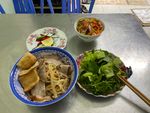
On top, you get slices of sweet, roasted char siu pork surrounded by fresh lettuce, bean sprouts, mint, and local herbs. Crispy fried noodle squares are scattered over everything to add a heavy crunch.
First-timers are usually surprised to find almost no broth. You just get a few spoonfuls of a rich, dark sauce hiding at the bottom. You toss the noodles, pork, greens, and crunchy bits together and eat the whole thing mostly dry.
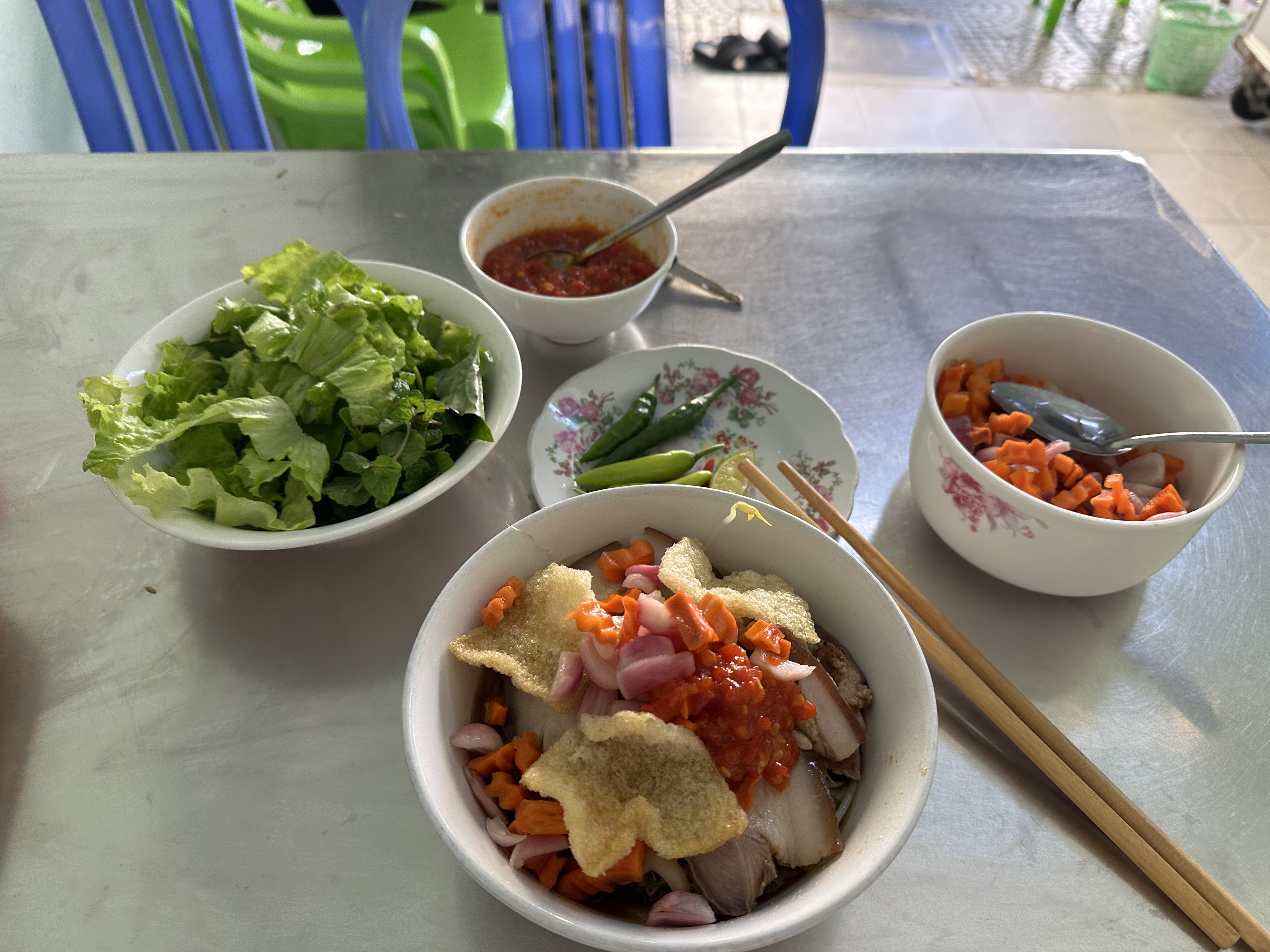 Close-up of cao lầu showing the firm pale-brown noodles, char siu pork and crunchy fried squares
Hội An operated as a busy trading port for hundreds of years. Merchant ships from Japan and China stopped here, leaving pieces of their food culture behind. You can taste that history directly in cao lầu. The roasted pork brings a clear Chinese influence, while the thick noodles remind many people of Japanese udon. The town blended these ideas into something entirely new.
Locals tell two main stories about why these noodles taste so distinct. The first claims the dough must be mixed with water drawn straight from the ancient Bá Lễ (Ba Le) well in town. The second says the rice is soaked in ash water made from wood gathered on Cù Lao Chàm (Cham Island). According to the legend, this specific combination creates the pale color and firm chew. Proven fact or not, the result is a noodle you simply cannot find anywhere else.
Visitors often mix up these two famous central Vietnam noodle dishes. Here is how to tell them apart at a glance.
| Cao lầu | Mì quảng | |
|---|---|---|
| Where it's from | Hội An specifically | Quảng Nam / Da Nang region |
| Noodles | Thick, firm, chewy; pale brown-yellow | Wide, flat, turmeric-yellow |
| Liquid | Almost none (eaten dry) | A splash of intense, reduced broth |
| Main topping | Char siu pork + crispy fried squares | Shrimp & pork, chicken, fish, frog |
| Texture | Chewy, with crunchy bits on top | Soft noodles, peanuts, sesame cracker |
| How you eat it | Toss and eat almost dry | Toss with herbs, snap in the cracker |
If you want to try this cousin dish while you are in the region, read our guide to mì quảng and where locals eat it.
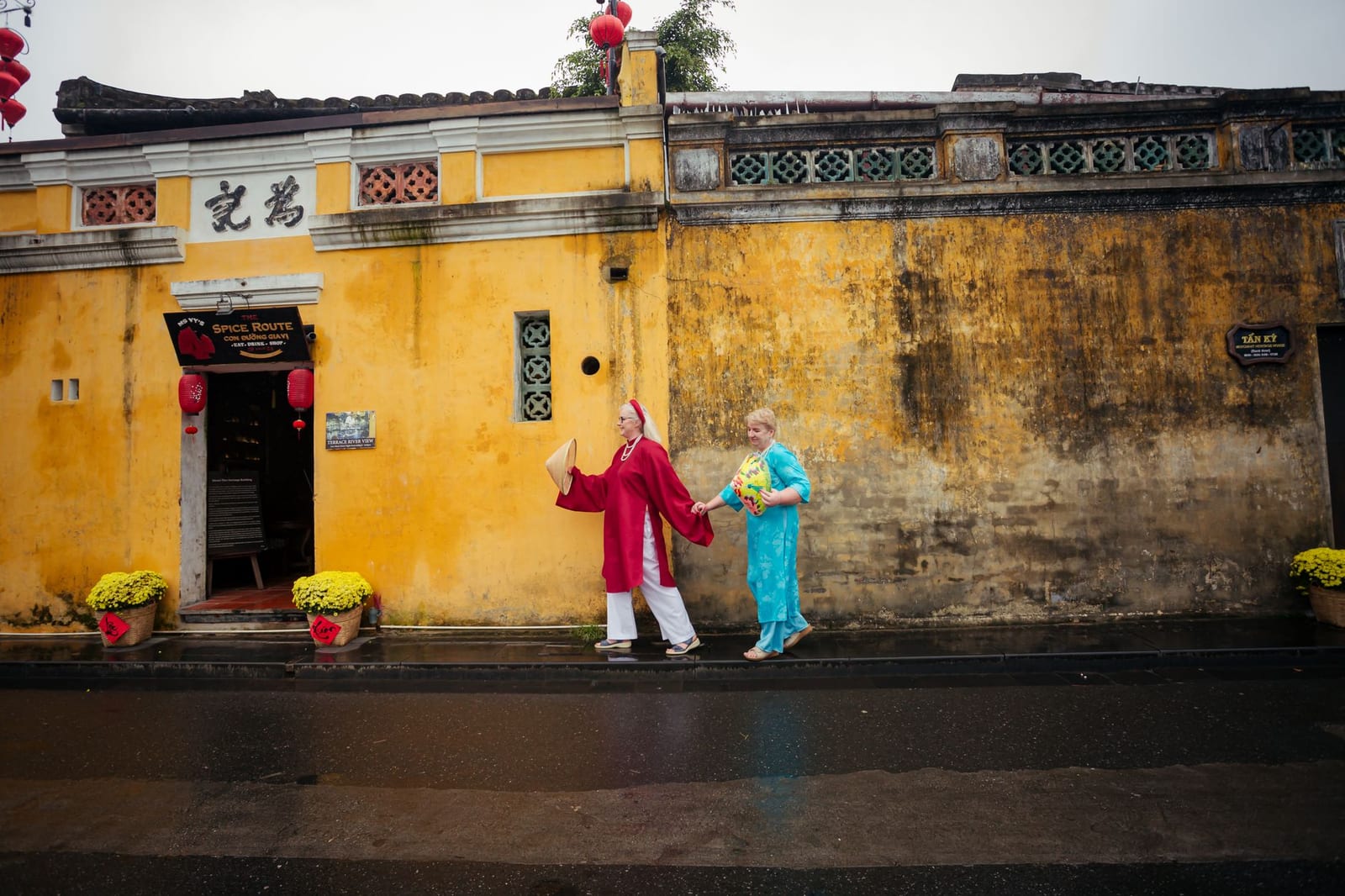 A food stall in Hội An's Old Town, the ancient port town where cao lầu comes from
Yes. Cao lầu is actually one of the most approachable central Vietnam dishes for visitors. You will not find any organ meat or strong fermented smells here. The pork is mild and sweet, tasting very similar to standard Chinese char siu.
The only unfamiliar element is usually the noodle itself. It is dense and chewy rather than soft like phở. Most people love the texture right away, especially with the crispy fried squares adding a heavy crunch. The bowl is served mild by default, leaving you in total control of the spice level with chili on the side.
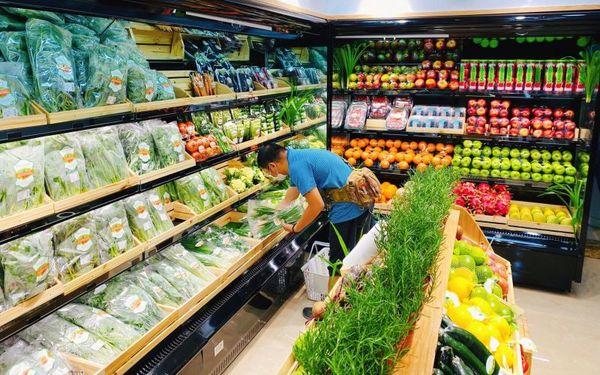
You also get a large plate of raw greens to mix in as you see fit. Just remember to start tossing right away instead of waiting for broth.
A bowl in Hội An usually runs about 30,000 to 50,000đ (roughly $1.20 to $2.00). Restaurants right inside the historic Old Town often charge slightly more for the prime location. If you grab a bowl at a neighborhood spot in Da Nang instead, expect to pay around 20,000 to 30,000đ. These are June 2026 prices and they do fluctuate.
Always bring cash in small notes. Most family-run places only accept physical cash, so leave the credit cards and large bills at the hotel.
Many traditional cao lầu stalls operate strictly during the day. They cook a set amount of food and close up shop the moment they sell out, which often happens by mid-afternoon. You will want to arrive earlier in the day to catch these family-run spots.
The tourist-focused restaurants inside the Old Town stay open much later, easily accommodating an evening meal after a long day of sightseeing. Just keep in mind that the Old Town gets very hot and crowded around midday. Going early gives you a cooler walk and guarantees you will not miss out on the best local bowls.
Ordering is very straightforward. The phrase you need is "một tô cao lầu" (pronounced moht toh kao loh), meaning "one bowl of cao lầu." Saying the phrase, holding up one finger, or just pointing at a menu all work perfectly fine.
The bowl arrives fully assembled. You just need to toss the ingredients so the dark sauce at the bottom coats every noodle. Mix in a few of the crispy squares, save the rest for a crunchy topping, and add your preferred amount of chili, lime, and fresh greens. Since the dish is traditionally dry, you won't need to ask for any extra broth.
Cao lầu is a Hội An specialty through and through, meaning the best bowls are found right in town. Here are four highly reliable spots in Hội An, plus one solid option in Da Nang if you skip the trip south. Prices and hours change often, so treat the numbers below as a rough guide and double-check on the spot.
Cao Lầu Trung Bắc
This Old Town institution sits inside a roughly 100-year-old house and has been run by the same family for generations. They serve a highly traditional, balanced bowl that makes a perfect starting point for first-timers.
Cao Lầu Thanh
This locals-focused spot serves cao lầu and very little else. It is a small, long-running local stall, so go earlier in the day — they can sell out before closing.
Cao Lầu Không Gian Xanh
Located just outside the Old Town walls, this is a quieter local pick away from the heavy foot traffic. It is a great choice for a much calmer meal.
Bon Restaurant
You will find this relaxed, family-owned restaurant about 1km outside the Old Town. The atmosphere is completely unhurried with plenty of seating, making it a handy escape when the town center feels too packed.
Cao lầu truly belongs to Hội An, located about 30km south of Da Nang. If you are basing yourself entirely in the city and skipping the trip, you can still track down a proper bowl without leaving town.
Cao Lầu Mỳ Quảng — "Cô Chú Già" (Quán Cao Lầu Đặc Sản Hội An)
An older couple runs this small family spot in Sơn Trà, east of the river. They serve authentic Hội An-style cao lầu at local prices — bowls cost around 20,000đ. It is a morning-only spot and often sells out before noon, so go early.

One local roundup a month — new guides, festival dates and where to eat. No spam.