Skip the tourist bars. Here are the best local quán nhậu in Da Nẵng — plastic stools, iced Huda, grilled mồi, and real local atmosphere.
Last updated June 2026
Da Nang's real food and drink scene happens on low plastic stools at street-level quán nhậu, where cold beer flows over ice and tables fill with locals by 6 pm. This guide covers five spots worth finding, what to order when you sit down, and the few words of Vietnamese you need to blend right in.
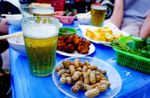
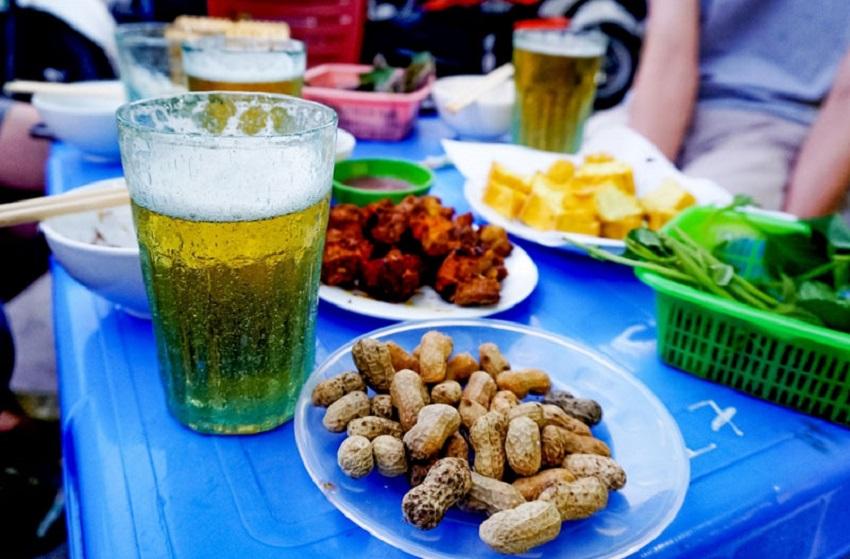
A quán nhậu is a sidewalk drinking session that doubles as a social ritual. The setup is always the same: low plastic tables, short stools, fluorescent lights, and cold Huda or Tiger poured into ice-filled glasses. You don't order a drink and nurse it alone. You share a rotating set of mồi (beer food) with the whole table.
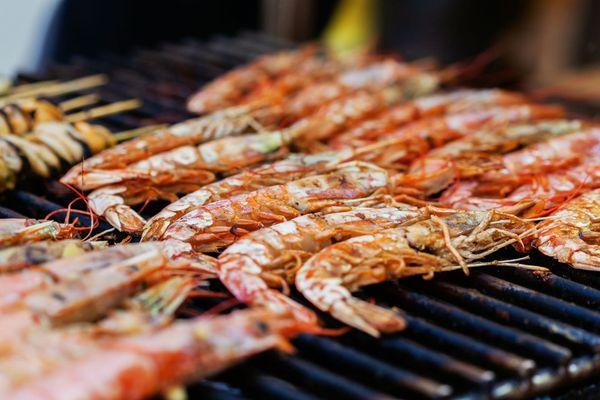
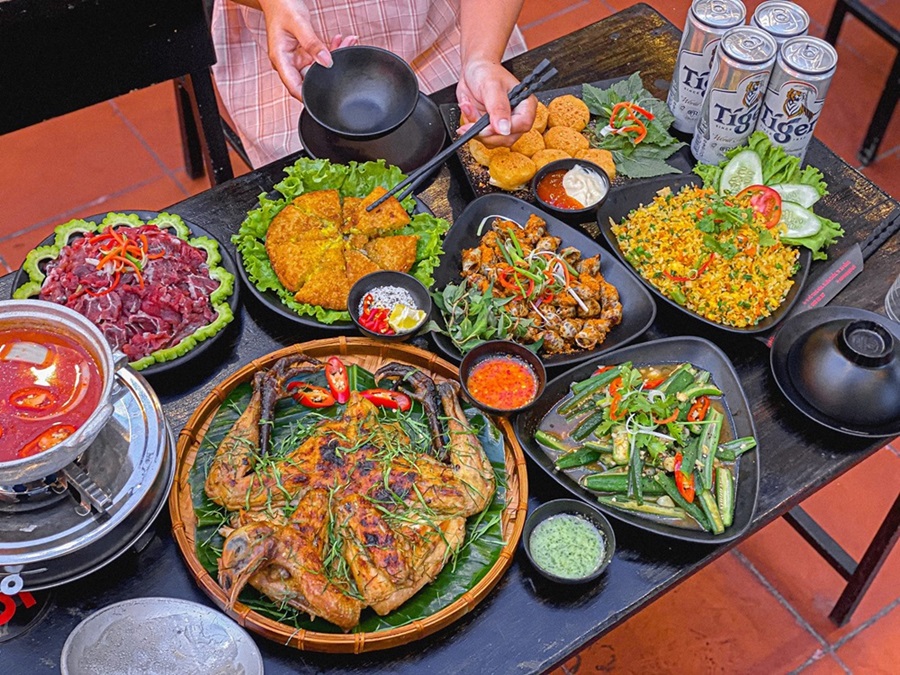
The food is just as important as the beer. Expect grilled skewers, fresh seafood salads, stir-fried snails, and tamarind squid. People show up to eat, drink, and talk loudly. The bill comes when you ask for it, and it usually costs far less than you expect.
For a deeper look at the etiquette, read the Da Nang drinking culture guide. Expect Vietnamese menus, friendly stares, and zero cocktails.
Sơn Trà / An Hải (east bank) is the denser local neighborhood. The streets running inland from the My Khe beachfront, especially around An Hải Bắc and Mân Thái, are packed with open-fronted spots that fill up fast on weekends. This is where Da Nang residents actually live, and the drinking culture here feels completely authentic.
Hải Châu / city-centre (west bank) draws a mixed crowd and is easier for first-timers to navigate. Streets near Lý Tự Trọng and the wholesale market area feature long rows of nhậu spots ranging from scrappy to semi-polished. A Grab driver will know exactly where to drop you if you name the street.
Both areas are about 10 to 15 minutes apart by Grab.
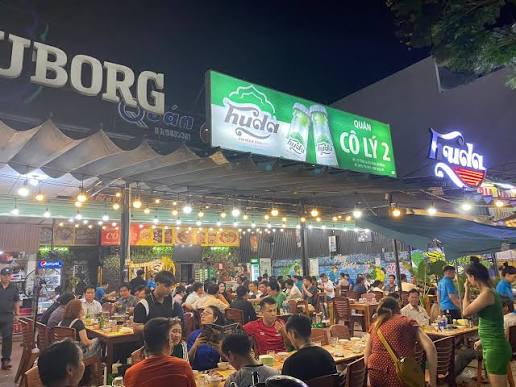 Bàn nhậu tại Cô Lý 2 — local Da Nang nhậu spot with lẩu and grilled dishes
Order the hotpot (lẩu) to see why this place has regulars who have visited for years. The broth smells of dill and spring onion, bubbling away on a small table burner. The menu spans miến lòng gà (vermicelli with chicken offal), lẩu bò (beef hotpot), and grilled options — hearty, unpretentious, and paired naturally with cold Huda. It is a sit-down-and-stay place, not a fast-turnaround spot.
This is a budget spot for local workers tucked into a residential alley off Trần Quang Khải in Sơn Trà. Day-labourers and motorbike-taxi drivers come here because the seafood starts around 60,000đ and the beer is cold. Expect zero frills. The plastic chairs are cracked, the menu lives on a whiteboard, and the lighting is harsh. But the food is honest, the portions are massive, and two people can easily eat and drink well for under 200,000đ. Even the Michelin Guide has listed it — quietly, without fanfare, which feels exactly right.
The name means "chilli dipping" — the signature dish is bò nhúng ớt: thin-sliced beef cooked tableside in a fiery chili broth. Order the ếch xào sả ớt (frog with lemongrass and bird's-eye chili) if you want the kitchen to take you seriously. The chip chip (tiny clams) and gà chiên mắm (fish-sauce fried chicken) are solid supporting acts. The crowd leans younger, mostly in their mid-twenties, and the noise level climbs steadily after 7 pm.
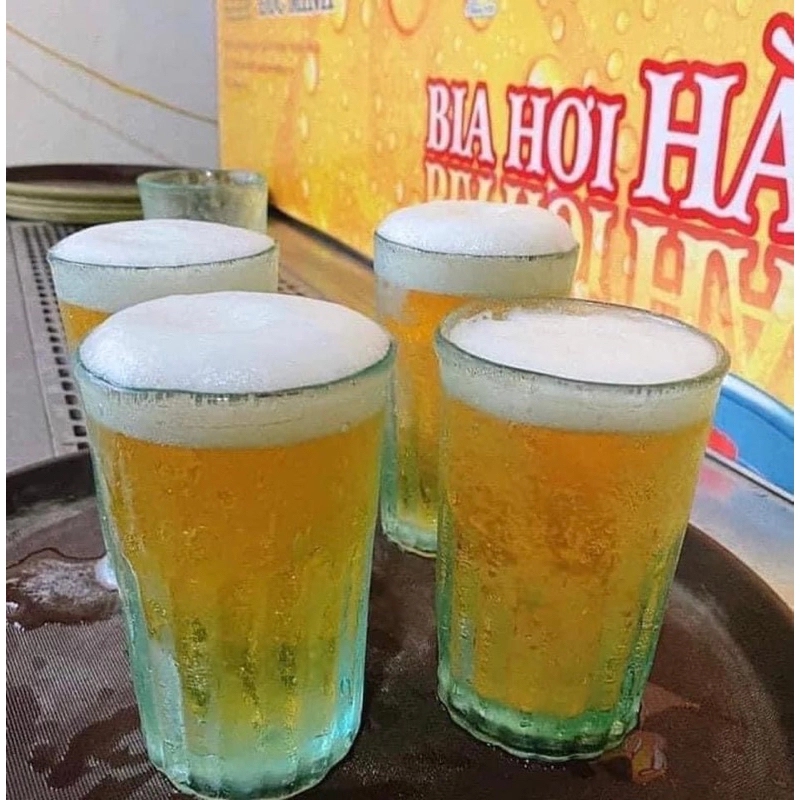 Bia hơi — draught beer poured fresh at a Da Nang street stall
Da Nang is not Hanoi, so bia hơi (unpasteurised draught beer) is harder to find. Bia Hải Xồm is the city's best-known draft beer chain, with a Sơn Trà branch that pours cold draught from the barrel at 12,000–13,000đ per glass (or 99,000đ for a 2-litre bôm jug). The mồi menu covers grilled skewers, snails, and salads. If you want to understand what bia hơi actually is before heading to one, the Da Nang drinking culture guide covers it well.
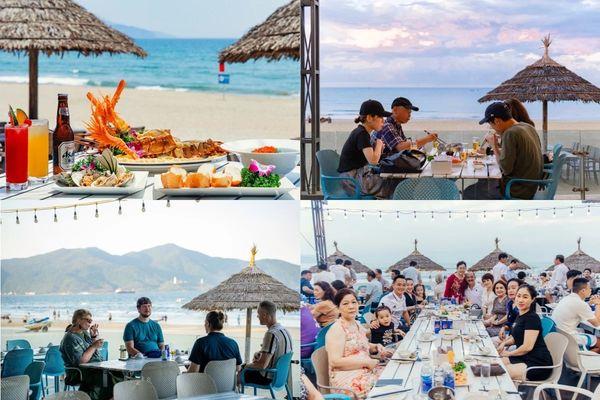
The Võ Nguyên Giáp strip running along Mỹ Khê beach is lined with open-air nhậu restaurants that open from mid-afternoon. La Bàn is one of the most popular: order grilled seafood by weight, various snails (ốc), and cold Huda with sea breezes coming off the beach. These spots are not exactly cheap — beachfront means a slight markup — but the atmosphere and the fresh seafood make the price reasonable. Arrive before 6:30 pm on weekends or you won't find a table.
 Locals sharing iced beer and grilled food at a Da Nang sidewalk quán nhậu at dusk
Always order the beer first. Asking about food the second you sit down looks a bit strange to locals. Getting beers on the table immediately shows you are ready to settle in.
For the food, check out our mồi nhậu guide to see everything from ốc hút (suction snails) to jackfruit salad. If it is your first time, start with something grilled like octopus (bạch tuộc nướng). Add a fresh salad (gỏi) for contrast. Save the snails for later once you figure out the rhythm of the table.
A rough beer price guide for Da Nang quán nhậu:
| Beer | Approximate price per bottle/glass |
|---|---|
| Huda (bottle, 330ml) | ~20,000–25,000đ |
| Tiger (bottle, 330ml) | ~25,000–30,000đ |
| Bia hơi (glass, ~330ml) | ~12,000–13,000đ |
| Bia Lào (if stocked) | ~30,000–35,000đ |
Prices vary by spot; beachfront locations like Mỹ Khê sit at the higher end.
Arrive early on weekends. The best spots fill up by 6:30 pm on Friday and Saturday. Get there by 6 pm to pick your table. If you show up at 7 pm, expect a wait.
Bring cash. Carry small notes in 10,000đ, 20,000đ, and 50,000đ denominations. Most local nhậu spots run cash or bank transfer (chuyển khoản via QR). Card terminals (Visa/Mastercard) are rare at traditional quán nhậu.
Language cheat-sheet:
Getting there. Grab works perfectly for these areas. Parking is tight or nonexistent for cars, so a motorbike or Grab drop-off makes the most sense. The app's Vietnamese address search is highly accurate.
Designated driver. Vietnam has zero tolerance for drink-driving. If you rent a motorbike, decide who stays on water before the first round. Taking a Grab back is always the safest move.
What is the difference between a quán nhậu and a bar in Da Nang? Bars in Da Nang, especially near Phạm Văn Đồng or An Thượng, serve cocktails, play loud music, and cater to tourists. A quán nhậu serves cold beer over ice with shared food at a pavement table, surrounded by locals. They are completely different in atmosphere and price.
Is nhậu culture foreigner-friendly? Yes, if you have a little patience. English menus are rare at these spots, but pointing and miming works perfectly. Locals love it when foreigners join in without feeling self-conscious. Pour for others before yourself, cheer before every drink, and order generously.
How much does a night at a quán nhậu cost per person? Budget roughly 150,000 to 250,000đ per head (around US$6 to $10) for a full evening of beer and food at mid-range spots. Budget places like Năm Đảnh run closer to 100,000–150,000đ; beachfront spots like La Bàn will push toward 250,000đ if you order seafood by weight.
What beer do locals drink in Da Nang? Huda is the default. It is brewed in Huế, distributed cheaply across Central Vietnam, and acts as the standard local choice. Tiger is available everywhere for a slightly higher price. Heineken pops up at slightly nicer spots. Draught beer (bia hơi) is harder to find here than in Hanoi but still exists at pavement stalls.
One local roundup a month — new guides, festival dates and where to eat. No spam.