What nhậu means, how Da Nang's drinking culture differs from Hanoi and Saigon, the four styles of nhậu, the beer over ice, and the table etiquette.
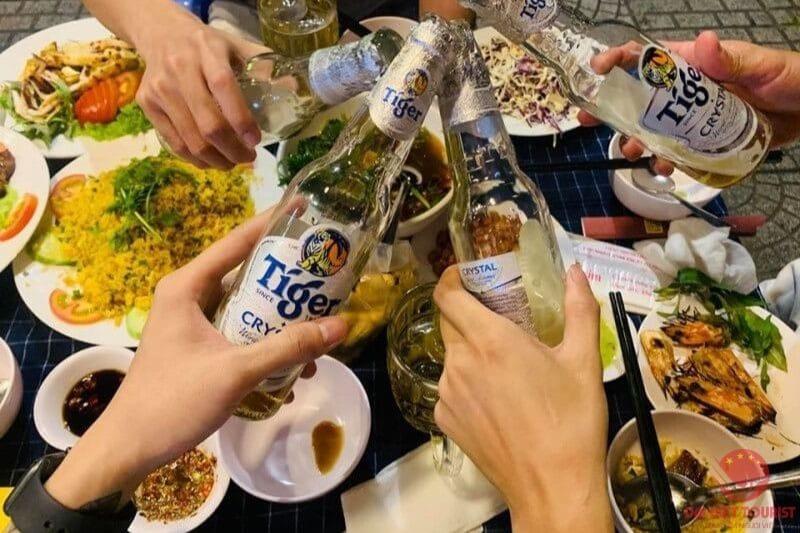
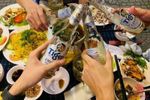
Walk down any street in Da Nang after dark and you will hear the familiar shout of "một, hai, ba, dô!" rolling out from a roadside table. This is nhậu, Vietnam's unhurried ritual of sharing cold beer, small plates, and hours of conversation with friends. Da Nang does this differently than the rest of the country, building its loud and welcoming sessions almost entirely around bottled beer poured over ice.
By the Go Da Nang local team · Last updated June 2026
Nhậu (pronounced roughly "nyoh") is the Vietnamese verb for drinking alcohol socially. However, that translation barely scratches the surface. A nhậu is a full evening event where you settle in, order round after round, and let the conversation run.
The food you eat while drinking is called mồi, and it is half the point of the night. Tables stay covered in grilled meats, seafood, and salads the entire time the beer flows. Vietnamese drinking culture is rarely dry. Ordering well is a skill of its own. Local snacks like tré, the region's fermented-pork bite, and chả bò, the peppery beef sausage, exist largely to pair with a cold drink.
If a local invites you to nhậu, they are offering a warm welcome rather than a quick pint. Sitting down at the table is the main event.
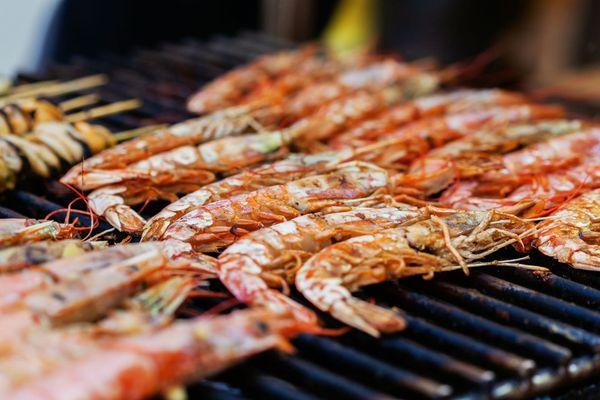
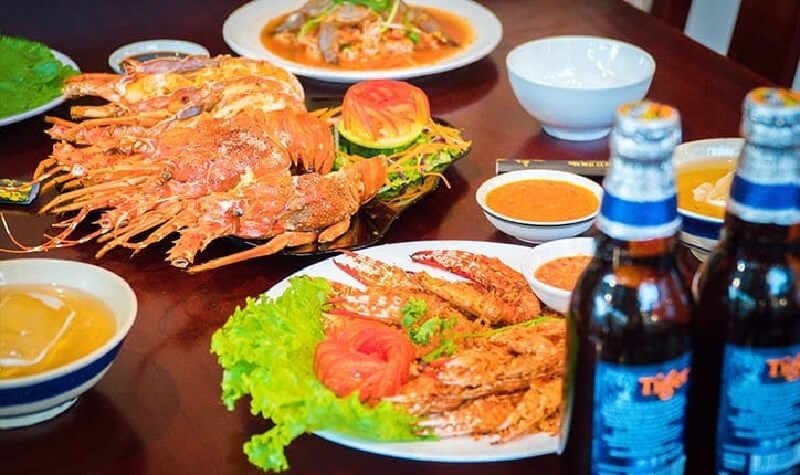 A shared nhậu spread of grilled prawns and seafood dishes with bottles of cold beer on the table.
In Da Nang, nhậu is simply how people come together. It is the default setting for almost any reason to gather. You nhậu to unwind after a long shift and let the stress of the day fall away. You nhậu to catch up with an old friend you have not seen in months, or to welcome someone who has travelled in from far away. There is a nhậu for every milestone too, whether it is a promotion, a new house, a baby on the way, an exam passed, or a deal finally closed.
It is also how strangers turn into friends. Start a new job and your colleagues will pull you to a table within the week, and that first session is how you actually get to know the people you work with. Once everyone is seated, the conversation roams across everything under the sun, from football and work gossip to family stories and big opinions about life. As the night softens and the table gets pleasantly tipsy, the volume climbs, and a heated argument can flare up out of nowhere before dissolving back into laughter and another toast a minute later. None of it is really about the beer. It is about sitting close, talking long, and leaving the table closer than you arrived.
Vietnam drinks differently from region to region. Da Nang sits squarely in the middle of the country both geographically and in its drinking style.
The North (Hanoi) is famous for bia hơi. This ultra-cheap draft beer is brewed daily and served on low plastic stools at corner halls. The Hanoi session is usually a bit more reserved and finishes earlier, with people heading home at a sensible hour. Bia hơi is a Northern institution. If you spot a bia hơi sign in Da Nang, it is an import.
The South (Saigon) starts late and goes big. Ho Chi Minh City is the home of the flashy beer club. Drinking there usually happens later in the night and focuses heavily on loud music, neon lights, and bottle service.
The Central coast (Da Nang) has its own distinct character. You will not find traditional draft-beer halls here. The default is bottled or canned beer poured over ice. You will usually drink a local central-Vietnam label: Larue, a beer dating to 1909 that is now the Da Nang and Hoi An favourite, or Huda, made just up the coast in Hue. A Da Nang nhậu is loud, warm, and emotionally intense. Expect endless toasts, long stories, and arms thrown around shoulders. Locals often claim that Da Nang starts earlier than Saigon and finishes later than Hanoi. Treat that as local folklore rather than a hard statistic, but it captures the spirit perfectly. The central session is sentimental and runs long.
Within that central-coast character, the scene still shifts with who is at the table and why. How and where you drink in Da Nang changes with your age and your mood. Here are the four styles you will actually run into around the city, including the crowds they draw and the venues where they happen.
Who: The crowd is broad, but it mostly skews toward working-age men between 25 and 50 unwinding after a shift. This is the bread-and-butter of Da Nang drinking.
Where: Open-front sidewalk beer joints and quán bình dân. These are no-frills places with plastic stools spilling onto the pavement, a cooler of beer, and a grill smoking out back.
The vibe: Cheap, fast, and unpretentious. The mồi features grilled odds and ends, peanuts, snails (ốc), and central-Vietnam snacks like tré and chả bò. The beer comes in bottles and goes straight over ice. This is a loud, friendly environment focused entirely on the company.
Who: A mixed crowd of family groups, old friends, and people marking an occasion like a birthday or promotion. Ages usually range from the 30s to the 50s.
Where: Seafood houses and snail (ốc) spots. You will find many of these near the coast where the catch is freshest.
The vibe: A step up from the sidewalk. The table fills with platters of grilled, steamed, and stir-fried seafood. You will see trays of ốc to pick through and shared dishes meant to last the evening. This is home turf for gỏi cá Nam Ô, Da Nang's raw-fish salad. The pace is slower and more celebratory, though the beer still goes over ice.
Who: A younger crowd of locals in their 20s, university students, expats, and travellers.
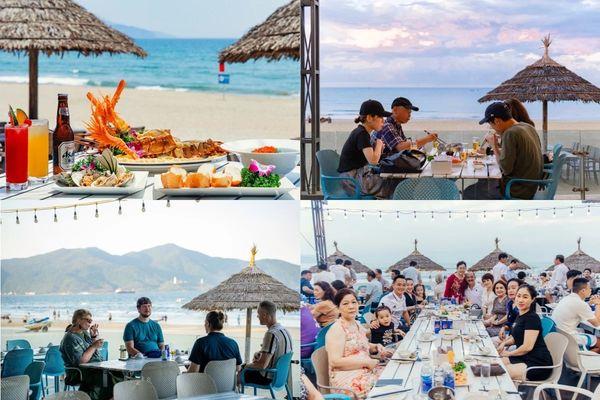
Where: The beach itself or the informal coastal setups that appear during the warm months. You can bring your drinks right down to the sand or pull up to a low table facing the water.
The vibe: Relaxed and low-key. You will find lighter mồi like dried squid, snails, and basic snacks alongside a bucket of cold cans. The sunset does most of the heavy lifting. This is the most easygoing way to drink and the easiest setting for a newcomer to join.
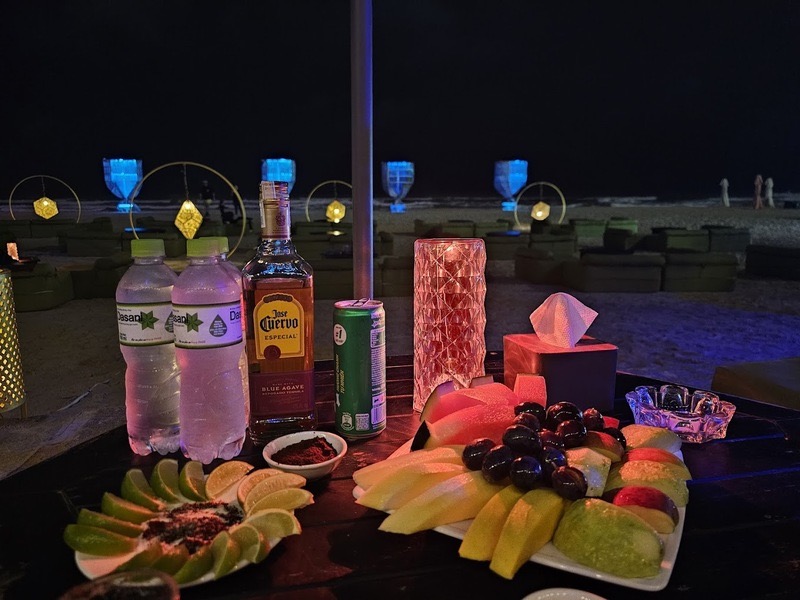 Drinks and a fruit platter set up on a Da Nang beach at dusk.
Who: The youngest crowd, mostly people in their early 20s to 30s looking for a big night out.
Where: Beer clubs and bars featuring loud music, DJs, and bottle service.
The vibe: This is the most Saigon-like way to drink in Da Nang and the least traditional. The food takes a back seat, the volume goes up, and it becomes a standard global night out rather than a slow session over mồi. It is a fun time, but the first three styles offer a much better look at local drinking culture.
Nhậu has a few simple rules based on respect rather than strict etiquette. Follow these steps and you will fit right in at the table.
One non-negotiable rule is to never drink and drive. Vietnam enforces a strict, zero-tolerance blood-alcohol law for drivers and riders, and breathalyser checkpoints are common in the evenings. After a nhậu, take a Grab car or a xe ôm (motorbike taxi) home. It is cheap, easy, and the only sensible move.
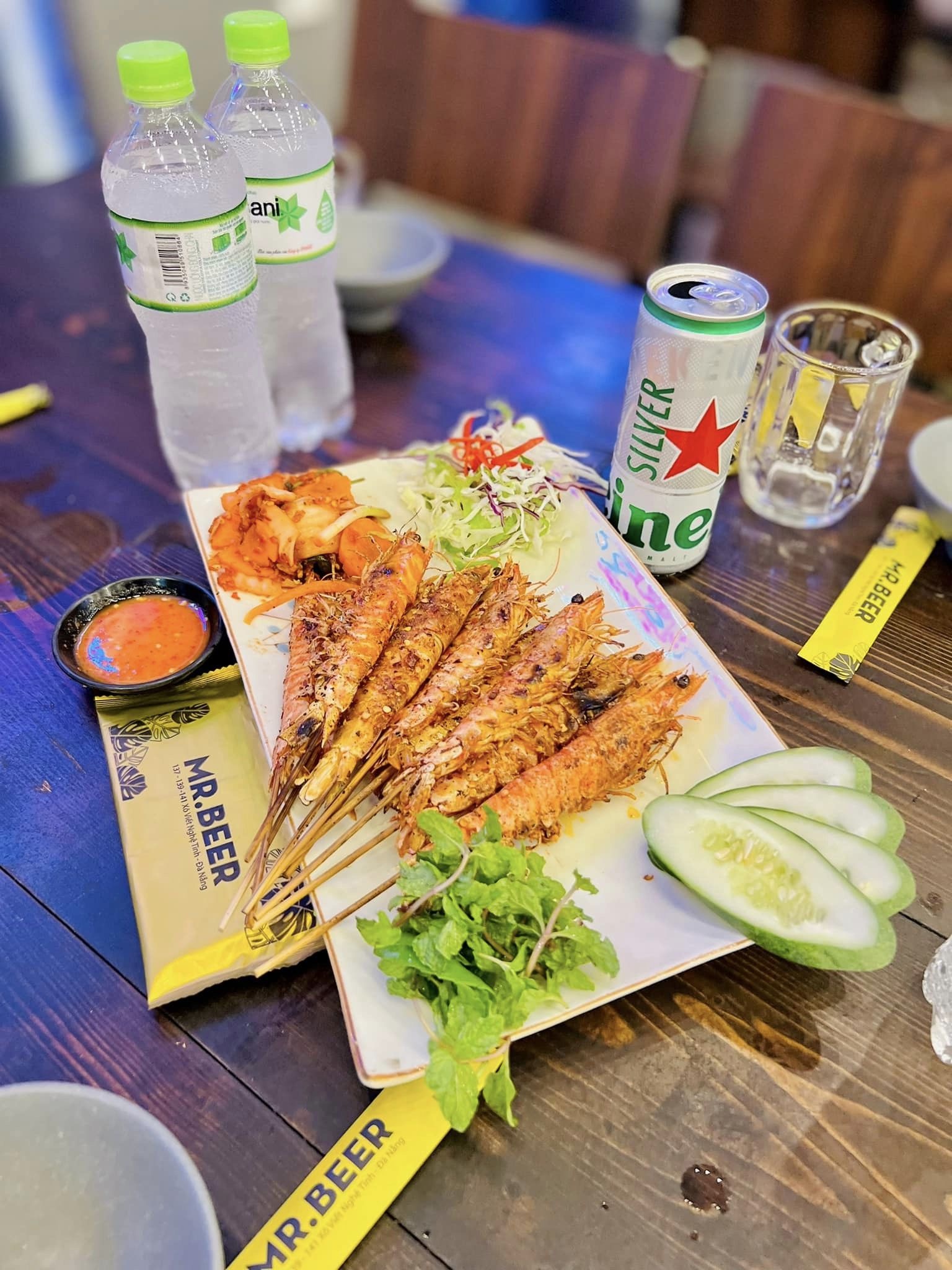 Grilled tiger prawns with a Heineken Silver and a glass of beer over ice at a Da Nang nhậu spot.
The best season for nhậu is the warm, dry stretch of spring and summer evenings. This is when the sidewalks fill up and the beach setups appear. Pick a balmy night and the city will do the rest.
Getting invited is easier than you might think. Da Nang locals are highly hospitable. A foreigner who shows up curious and respectful is a welcome addition to the table. Sit down at a busy quán bình dân rather than a tourist bar. Learn to say "dô!" and "trăm phần trăm," accept the first toast with a smile, and be ready to share your story.
Read up on the mồi before you go. Knowing your tré, chả bò, and gỏi cá Nam Ô means you can order with confidence. There is no faster way to win a table over than reaching for a local snack everyone assumes you will avoid. For a full picture of the drinking food itself — what to order with your beer, dish by dish — see our mồi nhậu guide, or browse our honest Da Nang food guide. When you are ready to pick a table, our local nhậu spots guide covers five venues across both sides of the river. And if you'd rather start with a cold one somewhere foreigner-friendly near the sand, see our beach bars near My Khe guide.
What does nhậu mean? Nhậu is the Vietnamese ritual of drinking alcohol socially over food and conversation. It is a long, shared session rather than a quick drink. The food you eat while drinking is called mồi, and it is central to the entire experience.
Is Da Nang's drinking culture different from Hanoi and Saigon? Yes. Hanoi has fresh-draft bia hơi halls and wraps up earlier. Saigon starts late and leans heavily into glossy beer clubs. Da Nang's central-coast style is loud, story-driven, and built around bottled beer poured over ice. Locals often joke that Da Nang sessions start earlier than Saigon and finish later than Hanoi.
What beer do people drink in Da Nang? You will mostly see local central-Vietnam labels served in bottles or cans and poured over ice: Larue, the regional icon, and Huda, brewed up the coast in Hue. Bia hơi (fresh draft beer) is a Northern tradition and is not native to Da Nang.
What is mồi? Mồi is the food you eat while drinking. This includes grilled snacks, seafood, snails, salads, and local bites like tré and chả bò. Vietnamese drinking is rarely dry, and the mồi is half the experience.
How do I cheers without offending anyone? Wait for the toast, clink glasses with everyone you can reach, and make eye contact. When cheering with someone older or senior, use two hands and let your glass rim sit slightly lower than theirs. "Trăm phần trăm" means bottoms up, but you can always politely pace yourself or decline.
Can tourists and women join? Is it safe? Yes. Nhậu is highly social and welcoming to everyone. Women take part regularly, and respectful travellers are always welcomed. The one firm rule is road safety. Never drive or ride a motorbike after drinking. Always take a Grab.
Why is the beer served over ice? Da Nang is hot, beer is often stored at room temperature, and sessions run long. Ice keeps each glass cold and drinkable for hours. It is the local norm.
The next time a table waves you over, do not overthink it. Sit down, take the first toast, reach for the mồi, and let the evening run long. When you are ready to order like a local, plan your meals with our full Da Nang food guide.
One local roundup a month — new guides, festival dates and where to eat. No spam.