Banh trang kep da nang is the grilled rice-paper snack rolled or folded over savory toppings. What's in it, vs banh trang nuong, price, where to eat.
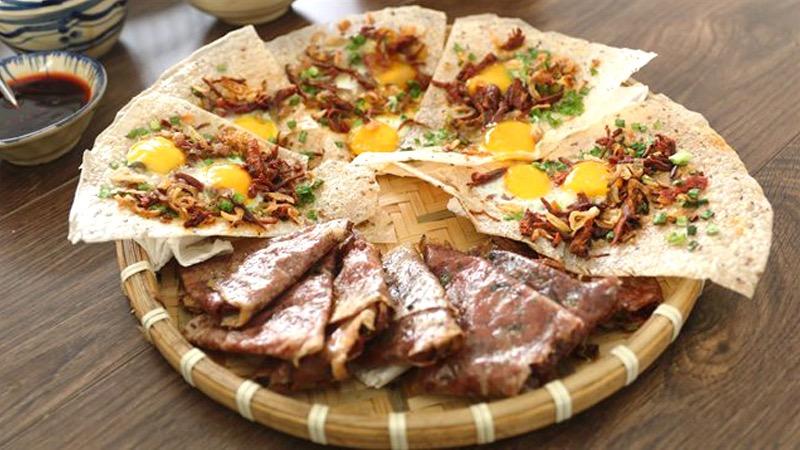
Bánh tráng kẹp is a cheap, charcoal-grilled rice paper snack loaded with savory toppings like pâté, quail egg, and dried beef. You will find locals gathered around alleyway grills every afternoon, waiting for these hot, folded treats and their sweet-savory dipping sauce. It is one of the easiest and most addictive street snacks to try in Da Nang.
By the Go Da Nang local team · Last updated June 2026
The word kẹp means "to clamp" or "fold," so the name translates literally as "folded grilled rice paper." English speakers usually only know its flat cousin — the "Vietnamese pizza" (bánh tráng nướng) — so there is no common English name for the folded Da Nang version; locals just call it bánh tráng kẹp. In Da Nang, this name covers a small family of grilled rice-paper snacks. A cook places a round piece of rice paper over glowing charcoal, brushes it with beaten egg, and piles on the toppings. The final shape depends on how the cook finishes it:
Every stall uses a slightly different mix of toppings to win over regulars. The standard Da Nang recipe includes a smear of pâté, a scatter of ruốc (dried pork or beef floss) or khô bò (dried beef), a brushed-on quail egg or chicken egg, dried shrimp, and a generous drizzle of mỡ hành (scallion oil). Some places will add butter or a little cheese if you ask.
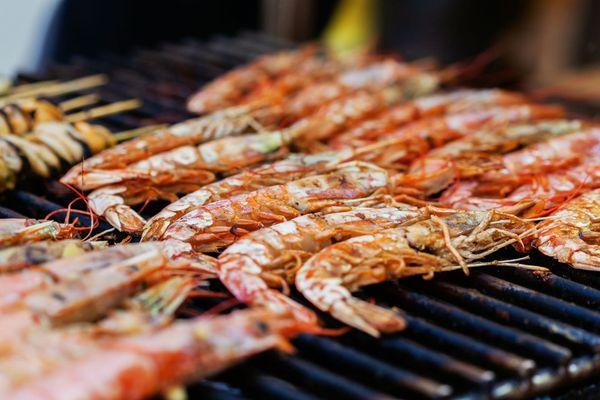
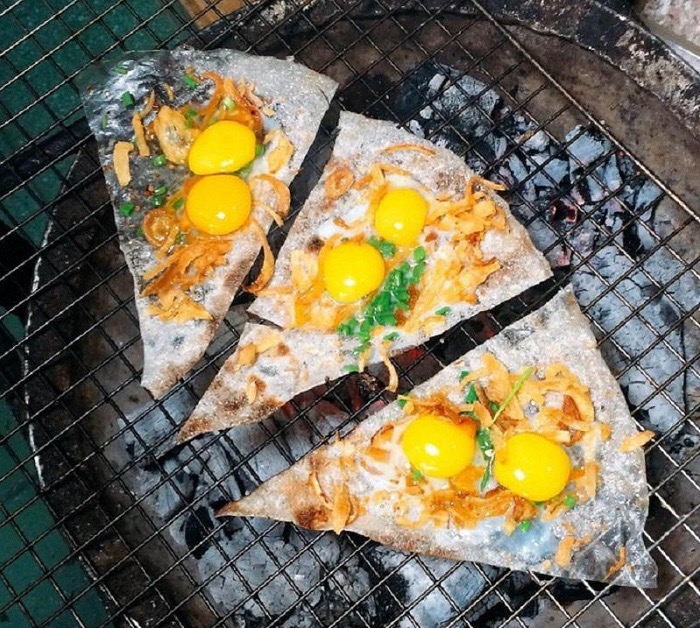 Bánh tráng kẹp grilling over charcoal — egg, dried floss and scallion crisping on the rice paper.
You will hear locals order two main textures: dẻo (soft) and giòn (crispy). Dẻo stays pliable and chewy. Giòn stays on the grill longer until it shatters like a cracker. If this is your first time, start with a soft dẻo roll or fold. It is easier to eat and highlights the toppings perfectly. Every order comes with a small cup of sweet and savory chili dip that ties the flavors together.
Many English-language guides lump these two snacks together. They share the same charcoal-grilled rice paper base and similar toppings. The spread-flat (rải) style of kẹp looks almost identical to the bánh tráng nướng from Da Lat that tourists often call "Vietnamese pizza." The real difference comes down to the shape and how you eat it.
Bánh tráng kẹp is usually rolled (cuộn) or folded in half (gập). You hold it in your hand and dunk it into a dipping cup. Bánh tráng nướng stays flat and open like a thin tostada. The cook loads it with egg, scallion, dried shrimp, and chili, then cuts it into wedges.
| Bánh tráng kẹp (Da Nang) | Bánh tráng nướng (Da Lat) | |
|---|---|---|
| Shape | Rolled or folded over the filling | Flat and open like a thin pizza |
| How you eat it | Held in the hand, dipped in the cup | Cut into wedges, eaten flat |
| Texture | Soft (dẻo) or crispy (giòn) | Always crisp all the way through |
| Nickname | "The rolled / folded one" | "Vietnamese pizza" |
If you ask a Da Nang vendor for "bánh tráng kẹp," you will get the rolled or folded local style. If you ask for "bánh tráng nướng," you will get the flat pizza version. Many stalls sell both.
Bánh tráng kẹp is a massive favorite across Da Nang and central Vietnam. Walk down an alley in the Thanh Khê or Hải Châu districts in the late afternoon and you will see the charcoal grills firing up. A local "dì" (auntie) fans the coals while customers pull up plastic stools. Students, office workers, and families all stop here for an evening bite.
This is street-snack culture at its most honest. It is cheap, made right in front of you, and eaten standing up or perched on a low stool. You will not find a famous restaurant version with white tablecloths. The best spots are the neighborhood alley stalls that have served the same block for years.
Yes. This is one of the friendliest gateway snacks in Da Nang. The flavors are mild, and the toppings like egg, pâté, and scallion are familiar to most palates. There is no organ meat and no bones to navigate.
There are just a few things to keep in mind. The dried shrimp and brushed-on satay (sa tế) add a savory, slightly funky depth. The little dipping cup can pack serious chili heat. A handful of stalls also serve it with mắm nêm, the pungent fermented-anchovy dip famous from Da Nang's build-your-own pork rolls, bánh tráng cuốn thịt heo.
You can easily adjust your order. Say "ít cay" (less spicy) or "không cay" (no chili) to keep the heat down. Ask for the dip on the side so you can taste it before dunking your whole snack. The cooks are used to visitors and will happily customize your order.
Expect to pay roughly 10,000 to 20,000đ per piece (about $0.40 to $0.80 at mid-2026 rates), with the most basic ones starting around 5,000đ and fully loaded versions running up to 25,000đ or more. The price depends on the stall and how many toppings you pile on.
Since this is a light snack, order two or three pieces if you want to make a meal out of it. Bring small cash notes. These are tiny sidewalk operations and they do not accept credit cards.
Bánh tráng kẹp is an afternoon and late-evening tradition. Most stalls fire up their charcoal around 3:00 to 4:00 pm and stay open until about 10:00 pm. It is the perfect bite to grab after the midday heat breaks. Do not bother looking for it in the morning.
If you are walking near the Han River or Dragon Bridge in the early evening, you are in prime bánh tráng kẹp territory.
You only need a little Vietnamese to get exactly what you want. The main phrase is "cho tôi một cái bánh tráng kẹp" (give me one bánh tráng kẹp). You can customize it with these words:
The cook will hand it to you folded in a small piece of paper to protect your fingers from the heat. If you forget the vocabulary, just point at what the person next to you is eating and hold up your fingers for the quantity.
Since bánh tráng kẹp is small, it leaves plenty of room for other local food. If you enjoy the rice paper format, try bánh tráng cuốn thịt heo, which features soft rice paper wrapped around sliced pork and fresh herbs. For another charcoal-grilled classic, bánh xèo and nem lụi gives you a crispy turmeric pancake with lemongrass pork skewers. To cool down, grab a glass of chè xoa xoa hạt lựu, Da Nang's famous layered jelly dessert served over crushed ice. You can find more ideas in our local's guide to what to eat in Da Nang.
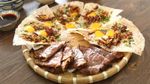
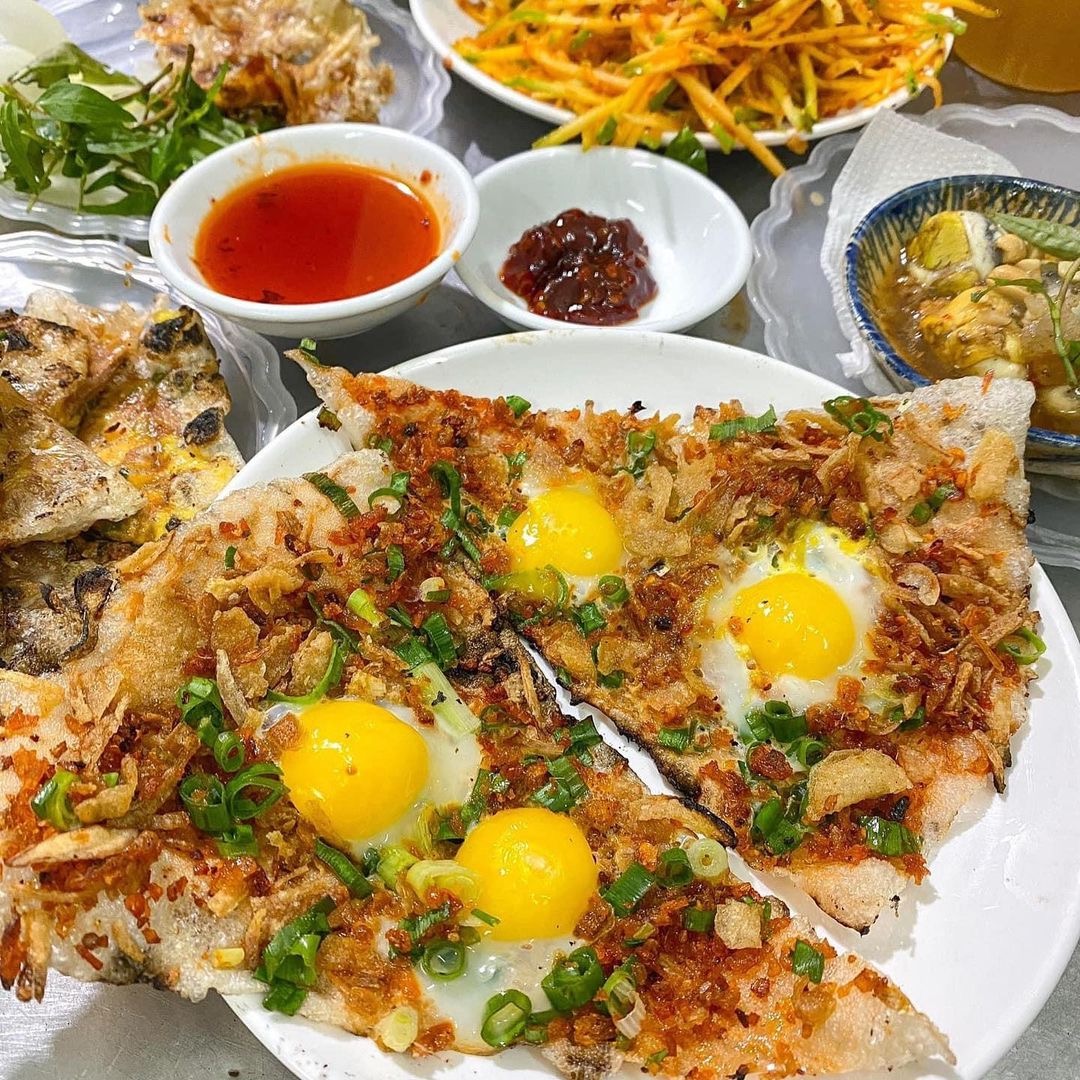 Close-up of bánh tráng kẹp — crispy grilled rice paper topped with quail egg, dried floss and scallion, with dipping sauces alongside.
These are informal alley stalls. Prices, hours, and exact locations can shift, and most of these aunties do not keep a strict schedule. Head out in the late afternoon, bring small bills, and follow the smell of the grill.
This long-running stall is famous for its homemade pâté. It is tucked down an alley, so keep an eye out for the glowing charcoal grill instead of a large sign.
A completely no-frills spot off Núi Thành on the Hải Châu side of the river. The prices are incredibly low, and the customers are almost exclusively neighborhood regulars.
One of the older stalls in the city, located on Điện Biên Phủ in the Thanh Khê district. This is the exact version of the snack that many locals grew up eating after school.
This is your most convenient option if you are staying near the beach or Dragon Bridge. It sits on Nguyễn Văn Siêu in Sơn Trà, making it an easy walk from the riverfront.
One local roundup a month — new guides, festival dates and where to eat. No spam.