No, you usually don't need a GP in Da Nang. Here's how Vietnam's healthcare system actually works for foreigners — and who to see instead.


One of the first things Western foreigners ask when they get sick in Da Nang is: "Where's my GP — my family doctor?" The short answer is reassuring: you usually don't have one here, and you usually don't need one. Vietnam's healthcare system isn't built around a single registered family doctor who controls access to everything else. You can walk into a hospital or clinic and go straight to the care you need. This guide explains how the system is actually structured, so the whole thing stops feeling confusing — and so you know who plays the role your GP used to.
By the Go Da Nang team — Last updated June 2026.
No — in Da Nang you usually don't need a GP, and you don't need a referral to be seen. As a foreigner you self-pay for healthcare, and on that self-pay route you can go directly to a hospital or clinic and choose the department you need. There's no compulsory "register with one doctor first" step, and no gatekeeper standing between you and a specialist. If that sounds too easy compared to home — read on, because the system is simply built on a different logic.
In the UK, Australia, Canada, Ireland and many other countries, healthcare runs through a GP — a General Practitioner, your family or general doctor. You register with one practice, you see your GP first for almost everything, and if you need a specialist or a scan, your GP writes a referral that unlocks it. The GP is the gatekeeper: no referral, no specialist.
Vietnam doesn't work that way. There is no compulsory GP gateway. You're not required to register with a single family doctor, and you don't need anyone's referral to reach a specialist on the self-pay route. If you think the problem is your skin, you can go to a dermatology department. If it's your ear, you go to ENT. You decide where to start.
That's the single biggest mental shift for Western foreigners: at home, access is funnelled through your GP; in Vietnam, access is direct. Neither is better in the abstract — but knowing which one you're in saves a lot of standing-in-a-lobby confusion.
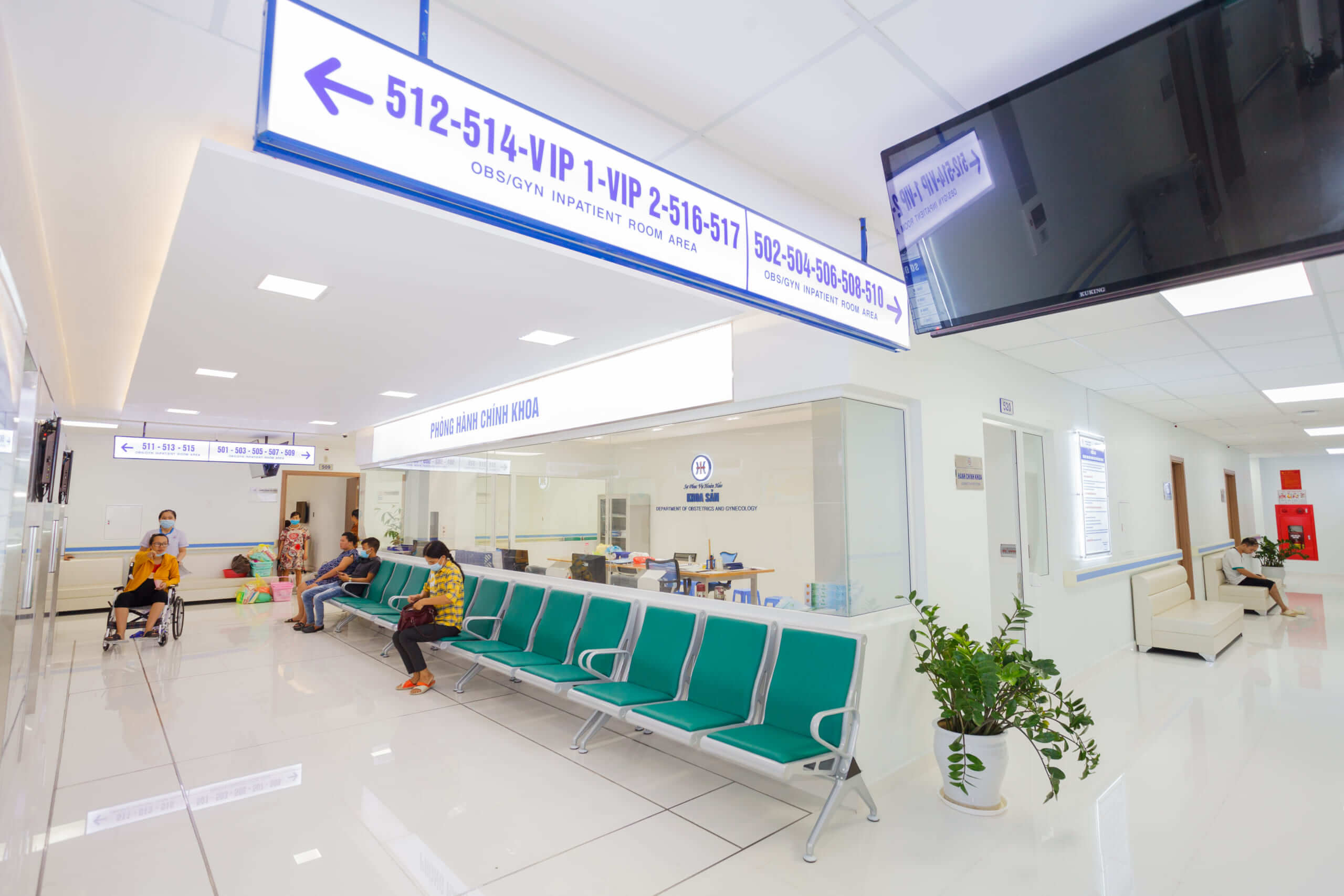 A clinic signboard in Vietnamese and English listing medical departments in Da Nang
Picture the public system as a ladder, from local and basic up to large and specialised:
In a fully public-insurance journey, a Vietnamese patient is meant to start low on the ladder and be referred upward. But that referral logic is tied to the state insurance scheme — and as a foreigner, you're outside it (more on that next), so you're not bound by the ladder. In practice, foreigners go straight to a city general hospital or a specialty hospital, and skip the commune and often the district rungs entirely.
Then there's the private side, which runs parallel to all of this:
For most foreigners in Da Nang, the real-world choice is between a private/international clinic (fast, English-friendly, pricier) and a city general or specialty hospital (cheaper, busier, more do-it-yourself).
Here's the piece that explains why you skip the gatekeeper entirely.
Vietnam has a state health insurance scheme called BHYT (Bảo hiểm y tế). It works on a registered-hospital plus referral logic: a BHYT member is assigned an initial place of care, starts there, and needs a referral letter to move up the ladder and still get reimbursed. That's the Vietnamese version of the gatekeeper model — and it's exactly where the "you need a referral" idea comes from.
But as a foreigner you almost always don't have BHYT. Instead you pay out of pocket, on what's called khám dịch vụ — the paid "service" examination. (Your travel or international health insurance then reimburses you, or in some cases pays the clinic directly.) Because you're self-paying rather than claiming through BHYT, the registered-hospital and referral rules simply don't apply to you. You're a paying customer, and a paying customer can walk up to whichever department they like.
So the rule of thumb is clean: BHYT comes with gatekeeping; self-pay (khám dịch vụ) doesn't — and you're on self-pay.
If there's no family doctor to ring, where do you actually start? You've got two reasonable routes, and the right one depends on whether you know what's wrong.
Route 1 — a family-medicine / GP-style doctor at an international clinic. This is the closest thing to your GP back home. International and many private clinics have general / family-medicine doctors who see undifferentiated problems ("I just feel unwell"), do a first assessment, treat the simple things themselves, and point you to a specialist if needed. If you want that familiar "see a generalist first" experience — in English — this is it. It just isn't compulsory, and you choose it rather than being assigned it.
Route 2 — go straight to the relevant specialty yourself. If you already know roughly what the issue is — a skin rash, an ear problem, a tooth, an eye — you can skip the generalist and book or register directly with that department at a hospital or specialty clinic. No referral required. You become your own triage.
Most foreigners mix the two: generalist when they're unsure, straight-to-specialist when they're not.
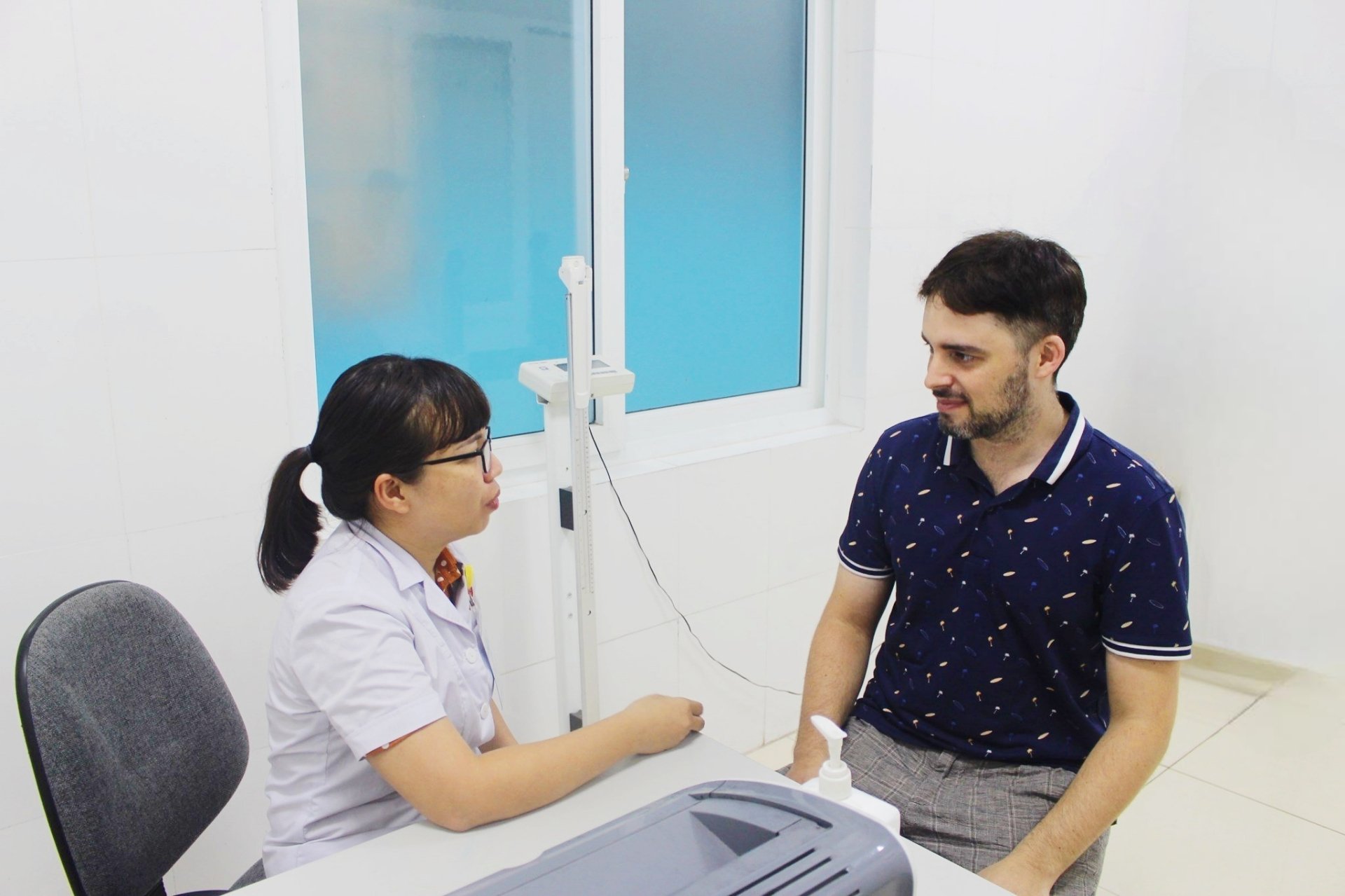 A doctor consulting with a patient in a bright modern clinic room in Da Nang
Direct access is great, but don't over-correct into "I never need a generalist." A family-medicine doctor still earns their keep in a few situations:
The honest takeaway: you don't need a GP to access care here, but a family-medicine doctor at a good international clinic is still genuinely useful — especially if you're living in Da Nang long-term rather than just passing through.
To be explicit, because this is the bit that trips people up: yes, you can approach a specialist directly. Dermatology, ENT, ophthalmology, orthopaedics, gastroenterology — on the self-pay route you can book or register with that department yourself, at both private clinics and the on-demand "service" line of public hospitals.
The referral letter you might be picturing — giấy chuyển viện — is a real document, but it exists to keep BHYT reimbursement valid as a patient moves up the public ladder. It is not a permission slip you need in order to be seen. Since BHYT doesn't apply to you, the referral letter doesn't either. You can walk in and ask for the specialist.
(That said: a specialist will sometimes still want recent test results or a generalist's notes to work from — that's clinical good sense, not a bureaucratic gate. It won't stop you being seen.)
Pull it all together and the system's character becomes clear. Compared to a gatekeeper country, healthcare in Da Nang is:
For a short trip, this usually means: got a clear problem, go straight to the right clinic or department. For long-stayers, it's worth picking a family-medicine doctor at an international clinic as your informal "home base" — your self-appointed GP — so you've got continuity and someone who knows your history.
This whole article is the system explainer — the "why it works like this." When you actually need to be seen, the step-by-step (find a clinic, book or walk in, what to bring, how the pay-first counter flow works) lives in our companion guide: how to see a doctor in Da Nang as a foreigner. Both pieces sit under our Healthcare in Da Nang for Foreigners guide (coming soon).
| Western "gatekeeper" system | Da Nang (self-pay) | |
|---|---|---|
| First point of contact | Your registered GP | A family-medicine doctor (your choice) — or go straight to a specialty |
| Referral to see a specialist | Required (GP writes it) | Not required on self-pay |
| Register with one doctor | Usually yes | No — no compulsory registration |
| Who pays | State/insurance via your GP system | You self-pay (khám dịch vụ); travel/health insurance reimburses |
| Speed to be seen | Often days/weeks for the GP, longer for a specialist | Frequently same-day |
| Who directs your care | Your GP | Mostly you (with a generalist's help if you want it) |
Do I need a GP in Da Nang? No. There's no compulsory family doctor and no requirement to register with one. You can access care directly. A family-medicine doctor is still useful for ongoing conditions or when you're unsure what's wrong — but it's optional, not a gateway.
Can I see a specialist without a referral? Yes, on the self-pay route. You can book or register with a specialty department directly. The referral letter (giấy chuyển viện) only matters for Vietnamese state-insurance (BHYT) reimbursement, which doesn't apply to you as a foreigner paying out of pocket.
Is there such a thing as a family doctor here? Yes — general / family-medicine doctors exist, mainly at private and international clinics. They play the GP-style "see a generalist first" role. The difference from home is that you choose one rather than being assigned one, and seeing them isn't compulsory.
Do I need to register with a clinic? No. There's no registration requirement to be treated. Long-stayers often informally pick one clinic or doctor for continuity, but that's a personal choice, not a system rule.
What's BHYT, and does it apply to me? BHYT is Vietnam's state health insurance scheme. It runs on registered-hospital-plus-referral logic. As a foreigner you almost certainly don't have it, so you self-pay (khám dịch vụ) — which is exactly why the referral/gatekeeper rules don't bind you.
Where do I actually go when I'm sick? For the practical step-by-step — finding a clinic, booking or walking in, what to bring, and how the pay-first counter flow works — see our companion guide, how to see a doctor in Da Nang as a foreigner.
Want the practical side? The actual visit is covered step-by-step in how to see a doctor in Da Nang as a foreigner. Related spokes — best hospitals and clinics, travel insurance, and using pharmacies in Da Nang — are coming soon, all under our Healthcare in Da Nang for Foreigners guide (coming soon). For everyday budgeting while you're here, see our cost of living in Da Nang guide, and if you're wondering what's safe to drink, our guide on drinking tap water in Vietnam.

One local roundup a month — new guides, festival dates and where to eat. No spam.