Walk-in Clinics in Da Nang: No Appointment Needed
Need care now and didn't book? Yes — you can almost always see a doctor without an appointment in Da Nang. Here's where to go, including after-hours.


Woke up with a fever, a stomach bug, or a small injury and didn't book anything? Here's the reassuring bit: in Da Nang you can almost always see a doctor without an appointment — same day, no referral, no week-long wait. Walk into the right place and you'll be in front of a doctor within an hour or two. This guide is for that exact situation: you need care now, you didn't plan ahead, and you just want to know where to go — including late at night, on a Sunday, or over a holiday. (Why don't you need an appointment in the first place? That's the system in a nutshell — see our explainer on whether you need a GP in Da Nang.)
By the Go Da Nang team — Last updated June 2026.
The short answer
Yes — you can almost always see a doctor in Da Nang without an appointment. Walk-ins are completely normal here. Private and international clinics take same-day visitors, and at public hospitals you simply turn up and register on the spot. As a foreigner you self-pay (so there's no insurance gatekeeping and no referral needed), which is exactly why the door is open. The only real question is which door — a regular walk-in clinic, a booked appointment, or the emergency room. Let's sort that out first.
Walk-in, appointment, or the ER — which do you actually need?
Three different doors, three different situations. Picking the right one saves you time, money, and a lot of stress.
- A walk-in / same-day clinic is for something that's minor but can't comfortably wait until you've "found a doctor" tomorrow: a fever, a throat or ear infection, a stomach bug, a urinary infection, a small cut, a sprain, a flare-up of something you already know about. This is the sweet spot for most "I feel rough today" problems.
- A booked appointment is a nice-to-have, not a requirement. You'd book ahead mainly to wait less and to guarantee an English-speaking doctor at a specific clinic, or to see a particular specialist. If you can wait a few hours, calling ahead often beats just showing up.
- The emergency room (or calling 115) is for genuine emergencies only — chest pain, difficulty breathing, severe bleeding, a serious head injury, stroke signs, a bad accident, anything where waiting is dangerous. Don't use the ER for a cold or a mild stomach bug; you'll wait a long time behind serious cases, and it's the wrong tool for the job.
Here's the quick version:
| Your situation | Where to go | Appointment? |
|---|---|---|
| Minor but can't wait (fever, infection, bug, small injury) | Walk-in / same-day clinic | No |
| Want less waiting or a guaranteed English-speaking doctor | Book ahead at a private/international clinic | Yes (optional) |
| A specific specialist or planned procedure | Book ahead with that department | Yes (recommended) |
| Genuine emergency (chest pain, severe bleeding, breathing trouble, bad accident) | ER / call 115 (free ambulance) | No — go now |
115 is Vietnam's national ambulance number, free to call from any phone. For the genuine-emergency playbook — what to do, which hospitals run trauma-ready ERs — see our emergency care in Da Nang guide (coming soon). And for the full counter-by-counter walk-through of a single visit, we've got a dedicated step-by-step (more on that below).
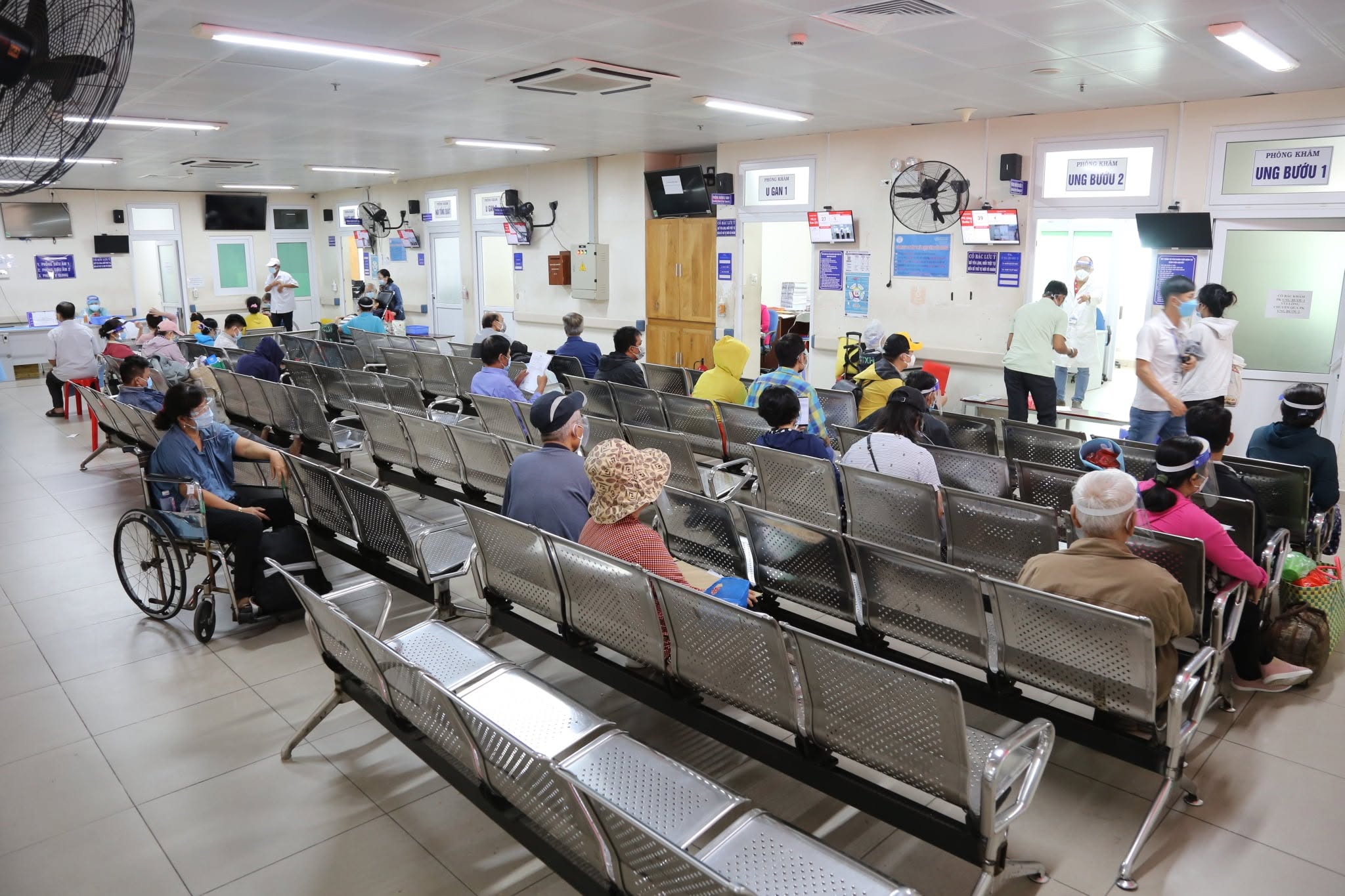 Patients waiting on benches in a busy hospital outpatient area in Da Nang
Which places reliably take walk-ins
You're not short of options. Broadly, three types of place will see you without an appointment, each with a slightly different walk-in experience. (This is the types overview — for a ranked rundown of specific named hospitals and clinics, our best hospitals in Da Nang spoke is coming soon.)
International and private clinics. These are the easiest walk-in experience for a foreigner: English-speaking, comfortable, and used to travellers turning up. You can often just walk in, or call/Zalo ahead for a same-day slot. You'll pay more than at a public hospital, but it's fast and stress-free. Family-medicine and general doctors here handle exactly the everyday "I feel unwell" problems a walk-in is for.
Public hospital outpatient departments. The big city general hospitals run an outpatient service you can walk into and register for on the spot — no appointment culture the way private clinics have it; you just turn up. It's cheaper, but busier and more do-it-yourself, and English is hit-and-miss (some have a foreigner service desk; many don't). Best for when you're comfortable navigating a busier, more local setting.
Private general clinics (phòng khám). Smaller neighbourhood clinics sit between the two: quicker and calmer than a public hospital, cheaper than an international clinic, and they take walk-ins. English varies clinic to clinic, so a quick check of recent Google reviews helps.
The practical takeaway: if you want easy and English, aim for an international/private clinic; if you want cheap and don't mind a queue, a public hospital outpatient department works; a private general clinic is the middle ground.
After-hours, weekends and public holidays (the part most guides skip)
This is where a normal "find a clinic" plan falls apart — it's 10pm, or a Sunday, or the middle of Tet, and most clinics are shut. Here's the honest picture.
Most regular clinics keep daytime hours. A typical private or international clinic runs roughly weekday daytime hours with a shorter Saturday, and many close or run a half-day on Sunday. So for a routine walk-in, go during business hours if you possibly can.
For nights, weekends and holidays, head to a hospital emergency department — they don't close. Hospital ERs run around the clock, and at the foreigner-friendly hospitals that's your reliable after-hours option even for an urgent-but-not-life-threatening problem:
- Vinmec Da Nang runs a 24-hour emergency department, including weekends and holidays.
- Hoan My Da Nang also offers 24/7 emergency cover.
- Family Medical Practice Da Nang, the best-known international clinic for foreigners, runs 24/7 emergency support alongside its daytime clinic hours — useful when you want an English-speaking option after hours.
- Hospital 199 (a public, foreigner-friendly hospital) keeps 24/7 emergency services even though its regular outpatient clinic is daytime-only on weekdays.
A few honest caveats:
- After-hours generally means "via the ER," not "the normal clinic is open." Even at a 24/7 hospital, at 2am you're going through emergency, not a routine walk-in queue. That's fine for something genuinely urgent — just know it's the emergency entrance you're heading for.
- Public holidays — especially Tet (Lunar New Year) — thin everything out. Around Tet, many clinics, pharmacies and even some hospital departments run skeleton staffing or close for days. ERs stay open, but expect longer waits and fewer English-speaking staff. If you take regular medication, stock up before a long holiday rather than counting on a pharmacy being open.
- A 24-hour pharmacy can be the fallback for the truly minor stuff. For something a pharmacist can handle (rehydration salts, basic pain relief, a refill of a medication you already know), a late-night pharmacy may be all you need — though this is no substitute for a doctor when you're actually unwell. (Our using pharmacies in Da Nang spoke is coming soon.)
Always phone ahead at night or on a holiday to confirm someone's open and can see you before you make the trip — posted hours change, and Google's listed hours are often wrong.
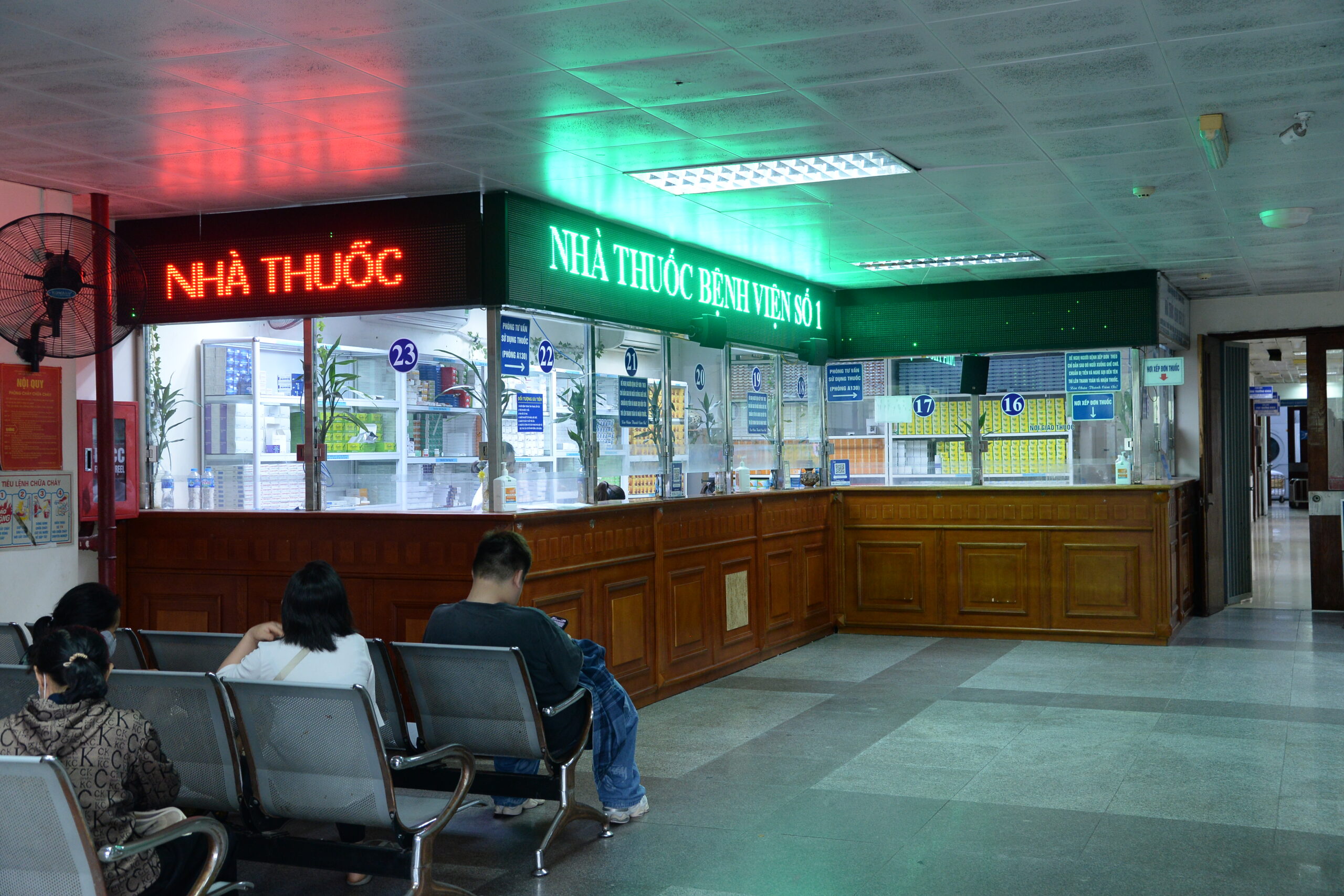 An in-hospital pharmacy counter in Da Nang, lit up in the evening
What to expect as a walk-in (briefly)
Walking in without a booking usually works — but set your expectations on the wait.
- At a public hospital, mornings are busiest. Locals queue early, so the first couple of hours after opening are the most crowded. If your problem isn't urgent, arriving later in the morning or in the afternoon often means a shorter wait.
- At a private/international clinic, you may wait behind booked patients. Walk-ins get fitted in around the appointments, so you might sit a while at a busy time — still usually faster than a packed public hospital.
- Budget more time than a visit at home. A straightforward private-clinic walk-in can be well under an hour; a busy public hospital, with registration, paying and any tests, can run a couple of hours or more.
We won't reproduce the full check-in process here — the pay-first cashier flow at public hospitals genuinely surprises first-timers. For the complete counter-by-counter walk-through (register, pay, queue number, see the doctor, get your medicine and paperwork), follow our step-by-step on how to see a doctor in Da Nang as a foreigner.
What a walk-in is good for — and what it isn't
Walk-in care is the right tool for a clear band of problems, and the wrong one for others.
A walk-in is great for:
- Acute, minor illness — fever, cold or flu, a throat/ear/sinus infection, a stomach bug, a urinary infection.
- Minor injuries — small cuts, sprains, minor burns, an insect bite gone angry.
- Same-day needs — a sudden flare-up, a rash you want looked at today, a quick "is this infected?" check.
A walk-in is not the right call for:
- Complex or chronic care. Ongoing conditions (diabetes, blood pressure, thyroid, mental health) are better served by a doctor who'll see you regularly and know your history — book that, don't walk in cold each time.
- A specific specialist or planned procedure. If you know you need a particular specialist or a scheduled procedure, book that department directly rather than hoping a walk-in slot covers it.
- Anything that's a genuine emergency. Chest pain, severe bleeding, breathing trouble, a serious accident — that's the ER or 115, not a walk-in clinic. When in doubt about how serious it is, treat it as an emergency.
Quick tips for walking in
A few things make a no-appointment visit go smoothly. (For the full what-to-bring checklist, see the step-by-step doctor guide — here are the essentials.)
- Go early to beat the queue at public hospitals, or call ahead to a private clinic for a near-term slot.
- Bring your passport (or a clear photo) — it's the ID you register with.
- Bring both cash and a card. Public hospitals often expect cash, sometimes paid upfront; private clinics usually take cards.
- Have your medication info ready — a photo of the box plus the generic/active-ingredient name, which is what a Vietnamese doctor or pharmacist will recognise.
- Phone first if it's late or a holiday to confirm they're open and can see you.
FAQ
Do I need an appointment to see a doctor in Da Nang? No. Walk-ins are normal. Public hospitals you register on arrival; private and international clinics take same-day visitors too. An appointment just means less waiting and a guaranteed English-speaking doctor.
Can I see a doctor on a Sunday or at night? Yes — but usually via a hospital emergency department rather than a regular clinic. The foreigner-friendly hospitals (such as Vinmec and Hoan My) run 24/7 emergency cover, and Family Medical Practice offers 24/7 support. Most routine clinics keep daytime hours, so phone ahead to confirm someone can see you.
Are walk-ins more expensive than booked appointments? Not because they're walk-ins. What drives cost is the type of place — international clinics cost more than public hospitals — not whether you booked. The full cost picture lives in our how to see a doctor guide.
How long will I wait as a walk-in? At a private clinic, often under an hour (you may wait behind booked patients). At a busy public hospital, budget a couple of hours or more once you factor in registration, paying and any tests — and mornings are the busiest.
Can I walk into a public hospital, or only private clinics? Both. Public hospital outpatient departments are essentially walk-in — you turn up and register. Private and international clinics also take walk-ins, with calling ahead getting you a faster, English-speaking slot.
Where do I go for an emergency versus a walk-in? A walk-in clinic is for minor-but-urgent illness or injury. A genuine emergency — chest pain, severe bleeding, breathing trouble, a serious accident — goes to a hospital emergency department, or call 115 for an ambulance. If you're unsure how serious it is, treat it as an emergency.
This is the "I need care now and didn't book" guide. For the actual visit step-by-step — finding a clinic, what to bring, and the pay-first counter flow — see how to see a doctor in Da Nang as a foreigner. For why no appointment or referral is needed in the first place, see do you need a GP in Da Nang. More spokes — best hospitals and clinics, emergency care, and using pharmacies — are coming soon, all under our Healthcare in Da Nang for Foreigners guide (coming soon). For everyday budgeting while you're here, see our cost of living in Da Nang guide, and on what's safe to drink, our guide on drinking tap water in Vietnam.