A foreigner's guide to a medical emergency in Da Nang — the number to call, which ER to choose, how transport works, and how you pay.
A medical emergency is frightening anywhere — worse in a city where you don't speak the language or know which hospital to trust. This guide to emergency care in Da Nang cuts it down to a few fast decisions: if a life is at risk, dial 115 for an ambulance; if the patient is stable, a Grab to the nearest ER is usually quicker. Here's who to call, where to go, and how to pay — so you can act, not panic.
By the Go Da Nang team — Last updated June 2026.
In an emergency, dial 115 (ambulance), 113 (police), or 114 (fire). Calls are free with no area code. Operators answer in Vietnamese only, so ask your hotel or a local to make the call, or use the ready-made script near the end of this guide.
Work through these steps in order.
One exception: if a spinal or head injury is possible (a fall, a bad motorbike crash, neck pain), do not move the patient. Call 115 and wait for trained responders.
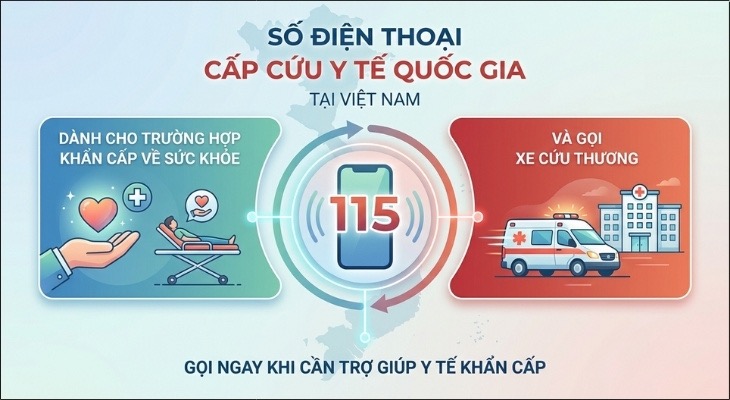 Infographic of Vietnam's national medical emergency number 115, the number to call for an ambulance in Da Nang
All three are free from any phone, even a foreign SIM with no credit, and need no area code. The catch is that operators answer in Vietnamese only. The fastest fix is to have your hotel front desk call since they know the local address format. On your own, use a translation app and the script at the end of this guide.
One change to watch: Vietnam has proposed merging 113, 114, and 115 into a single 113 line. Treat this as upcoming, not yet in force. For now, 115 is the number to memorise for a medical emergency.
Family Medical Practice (FMP) runs a 24/7 international emergency line with its own private ambulance. Dial *1616 or *9999 from a Vietnamese phone to reach English-speaking staff who can send help and advise which hospital fits your situation. It is a private service where you pay and claim back, but in a crisis, clear communication is often worth the cost.
Here is the call locals actually make:
Know your nearest 24/7 ER before you need it. For major trauma, a large public hospital has the heavy equipment and specialist teams. For urgent but smaller problems where speed and English matter, a private ER is the easier ride. For a full comparison, see public vs private hospitals in Da Nang for foreigners.
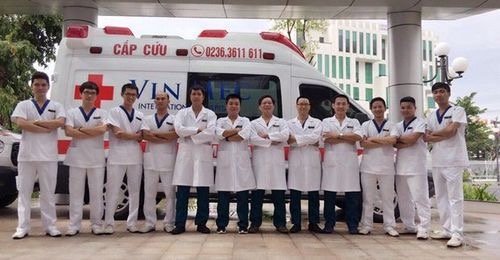 A Da Nang emergency medical team in front of a cấp cứu ambulance, illustrating the city's 24/7 emergency services
This is Central Vietnam's top trauma centre and the city's main public hospital, with a large 24/7 emergency department. It's where you want to be for major accidents and the most serious cases. English is limited.
A well-regarded Ministry of Health hospital right next to Da Nang Hospital with a 24/7 emergency department (cấp cứu). A solid central option for serious cases. English is limited.
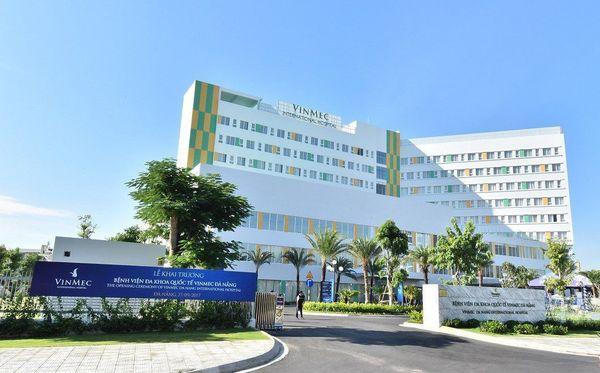
A large private hospital popular with expats. It offers a 24/7 emergency room, shorter waits, and better English than the public hospitals. A good middle ground for urgent issues short of full trauma.
A premium private international hospital. Expect modern facilities, strong English, and the most comfortable option at the highest price.
The English-first expat clinic with a 24/7 emergency line and private ambulance. Best for clear communication and coordinating with your insurer. For the most severe trauma, they stabilise and refer you on.
Coming from Hội An? Since 1 July 2025, it has been a ward of Đà Nẵng. Local clinics handle minor issues, but for a serious emergency, head into the city (about 45 minutes by car). Call 115 first if a life is at risk.
This is the part foreigners least expect. In Vietnam, you usually pay before treatment, and emergencies are no exception.
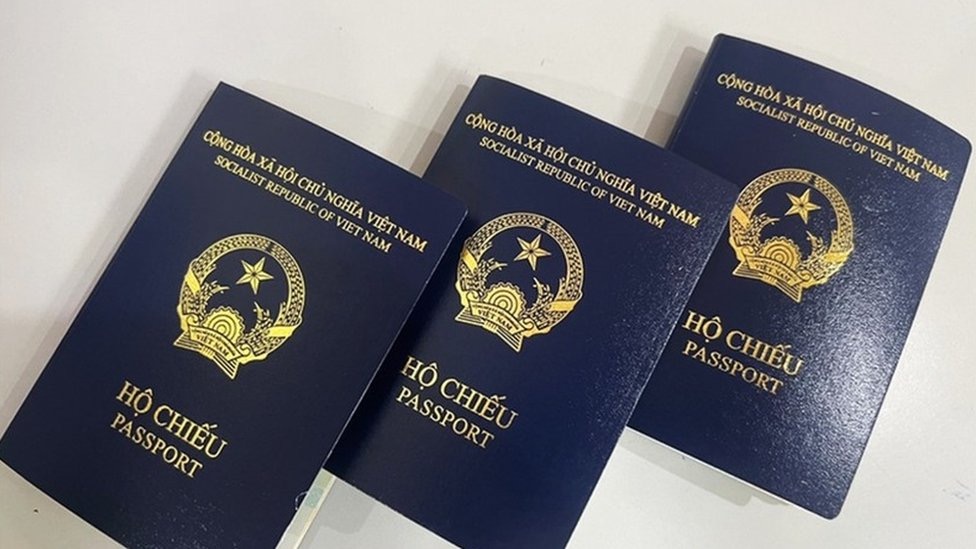 Vietnamese passports, illustrating how some Da Nang hospitals hold a passport as collateral until the bill is paid
Da Nang handles the vast majority of emergencies well. For the most complex cases like major surgery or specialised intensive care, the regional norm is to stabilise locally, then transfer to a top-tier hospital in Ho Chi Minh City, Hanoi, Bangkok, or Singapore.
That can mean an air-ambulance evacuation, usually arranged by an assistance company such as International SOS on your insurer's instructions. It is expensive, roughly US$15,000–50,000 or more, and almost always needs pre-authorisation. Check your policy for evacuation cover before you travel. If a doctor raises a transfer, get your insurer's assistance line on the phone straight away. They arrange it, not you.
You do not need to be fluent. Read these lines, give an exact address with a landmark and a callback number, then let a translation app handle the rest.
Cấp cứu! Có người bị thương nặng / bị bệnh nặng. (Emergency! Someone is seriously injured / seriously ill.)Địa chỉ: ______________________________ (Address: ______ )
Gần: ______________________________ (Near / landmark: ______ )
Số điện thoại của tôi: ______________ (My phone number: ______ )
Làm ơn gửi xe cấp cứu. (Please send an ambulance.)
Your single most useful move is providing a precise address plus a nearby landmark like a hotel, a bridge, or a well-known restaurant. If you are staying somewhere, save its full Vietnamese address in your phone now, before anything goes wrong.
Once the patient is stable, two things matter. First, collect the paperwork. An itemised bill and a medical report are what your insurer needs to pay out. Second, plan the follow-up. This might be a return visit, a prescription from a nhà thuốc (pharmacy), or a conversation with your insurer about repatriation for ongoing care.
For everyday medical needs once the crisis passes, see our guides to seeing a doctor in Da Nang, walk-in clinics with no appointment, and whether you need a GP. For the full picture, see our directory of top hospitals for foreigners.
Dial 115 for an ambulance, 113 for police, and 114 for fire & rescue. They are free with no area code. Operators speak Vietnamese, so have a local call or use a translation app.
For a stable, movable patient, a Grab or taxi is usually faster. Public ambulances can be slow and rarely have English-speaking crews. If the patient cannot be moved (spinal injury, unconscious, needing life support), call 115 and wait. FMP's private ambulance (*1616 / *9999) is an English-speaking middle option.
For major trauma, a large public hospital like Da Nang Hospital has the region's top trauma teams. For urgent issues where you want speed and English, a private ER like Hoan My or Vinmec is easier.
Private hospitals and international clinics (Hoan My, Vinmec, FMP) do. Public ER English is very limited, so bring a Vietnamese speaker or a translation app. FMP's 24/7 line (*1616 / *9999) is English-first.
Usually, yes. Pay-before-treatment is the norm, and some hospitals hold a passport as collateral until the bill is settled. Carry cash and a card, and call your insurer's hotline early.
Hội An is now a ward of Đà Nẵng (since 1 July 2025). Its clinics handle minor problems, but for a serious emergency, head into Da Nang city (about 45 minutes) or call 115 first if a life is at risk.
One local roundup a month — new guides, festival dates and where to eat. No spam.