How healthcare in Da Nang works for foreigners: where to go when sick, hospitals, pharmacies, dental, emergencies, insurance and costs.

Getting sick far from home is stressful, but healthcare in Da Nang is better set up for foreigners than most visitors expect, and the system is actually more direct than what you are used to in the West. There is no gatekeeping GP and no weeks-long referral wait — when you have a problem, you usually go straight to the relevant hospital or clinic and see someone the same day. This guide walks you through exactly where to go when you are sick, which hospitals and clinics handle foreigners well, how emergencies, pharmacies, dental care and kids fit in, and what to expect with insurance and costs.
By the Go-Da-Nang local team · Last updated June 2026
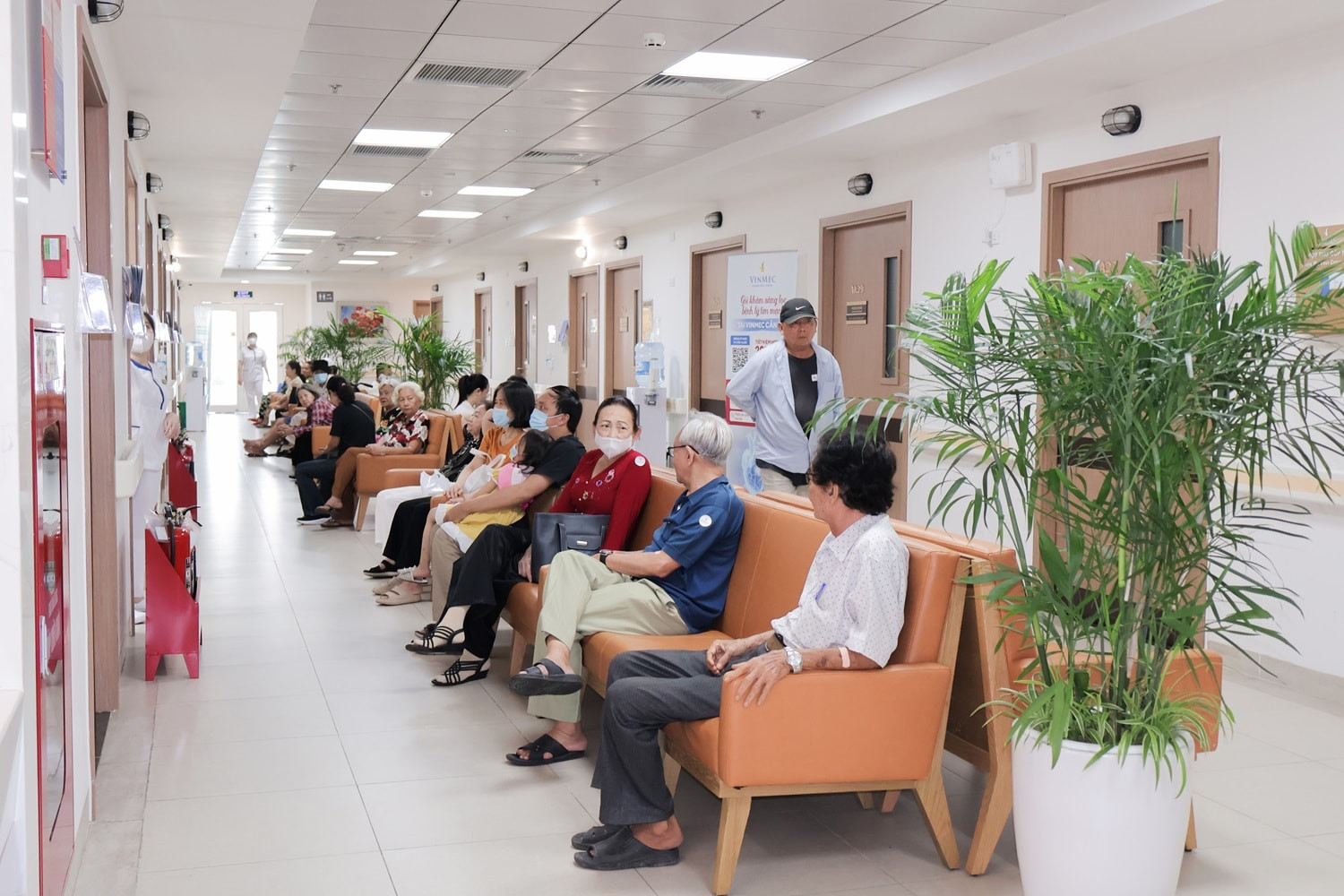 Outpatient waiting area at Vinmec Da Nang International Hospital
If you are coming from Australia, the UK, Canada or a similar system, your instinct is to book a GP (general practitioner), describe the problem, get a referral, then wait days or weeks for a specialist, then come back for a follow-up. Put that whole sequence out of your mind here.
In Vietnam, and in Da Nang specifically, healthcare is far more direct. There is no compulsory "family doctor" you must pass through. For most issues you simply go to a hospital or clinic and head to the relevant department, or pick the specialty yourself. Hospitals here run outpatient departments organized by specialty, and you register at a counter for the one you need:
Private hospitals and international clinics let you book an appointment ahead, which saves time and usually gets you an English-speaking doctor. But even many of them, and almost all public hospitals, still take walk-ins for outpatient care. So the honest short answer is: no, you do not need a GP first. You decide where the problem fits and go.
Read more: How to See a Doctor in Da Nang as a Foreigner and Walk-in Clinics in Da Nang: No Appointment Needed.
Here is the fast version. Skim the table, find your situation, go.
| Situation | Where to go |
|---|---|
| Emergency — accident, chest pain, trouble breathing, severe injury | Call 115 for an ambulance, or go straight to a hospital Emergency / Cấp cứu department |
| Mild illness — fever, upset stomach, cold, minor infection | An international or private clinic (faster, English-speaking) |
| General check-up | A private hospital or family clinic |
| Sick child | A pediatric hospital or a private hospital with a pediatrics department |
| Toothache | A dental clinic |
| Basic medicine (painkillers, rehydration salts, cold remedies) | A pharmacy (nhà thuốc) — they are everywhere |
| Health certificate / work-permit medical | A hospital qualified to examine foreigners (call ahead to confirm) |
The rest of this guide expands each of these.
Da Nang has two parallel worlds of healthcare, and knowing the difference saves you a lot of confusion.
Public hospitals are run under the Da Nang Department of Health. They are where serious cases and deep specialties are handled, often by very experienced doctors, and they are much cheaper. The trade-offs: they are crowded, the process is bureaucratic, signage and forms are in Vietnamese, and English support is limited at the counter. For a major medical event they are excellent and well-resourced; for a routine sore throat they can be slow-going if you do not speak Vietnamese or bring someone who does.
The major public facilities include:
Private hospitals and international clinics are built around an easier experience for foreigners: English (and often Japanese, Korean or other) support, faster booking, a calmer environment, and a process that feels familiar. The trade-off is cost — sometimes several times the public price for the same visit. For most visitors and short-stay nomads, this is the sensible default for anything non-critical. For a true emergency, the nearest capable hospital wins, public or private.
Read more: Public vs Private Hospitals in Da Nang for Foreigners.
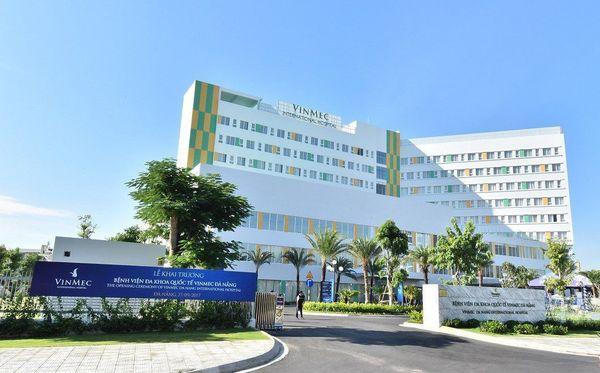
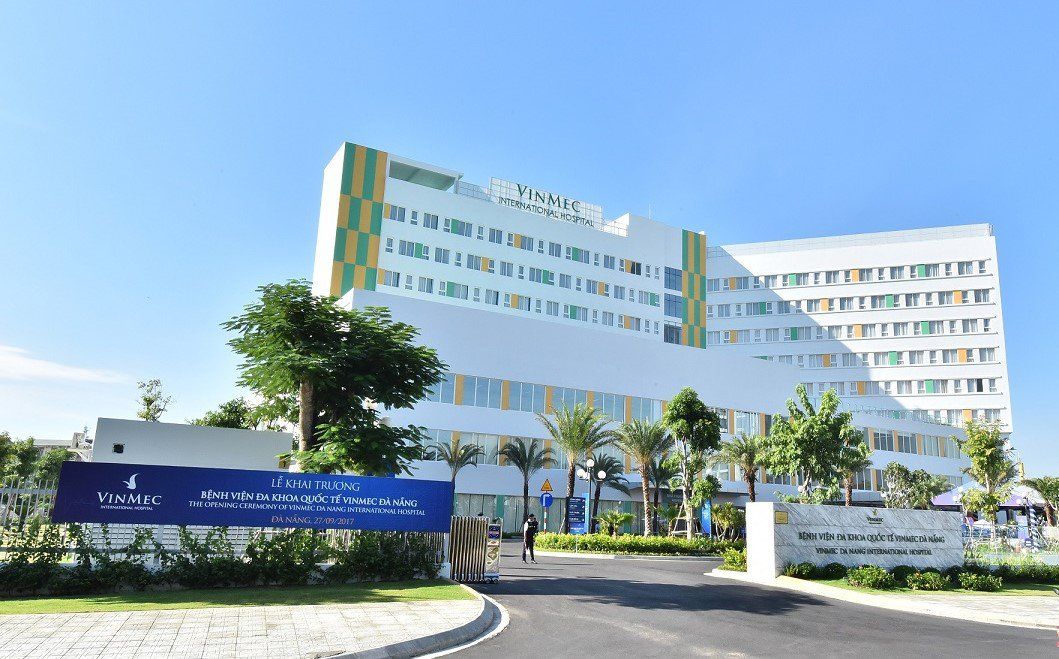 Exterior of Vinmec Da Nang International Hospital on a sunny day
This is a quick-orientation list, not a full review of each place. Use it to know your options; confirm current hours, departments and pricing by phone before you go.
Part of Vietnam's well-known private Vinmec network and JCI-accredited, in Hải Châu, with international-patient services, interpreters (English, Japanese, Korean, Russian and French), and 24/7 emergency care. A common first choice for foreigners wanting a familiar, high-standard private experience.
A long-established private hospital (part of Vietnam's largest private hospital group) at 291 Nguyễn Văn Linh St (Thanh Khê), with an International Clinic, English-speaking staff and 24/7 emergency care. Strong reputation in cardiology and complex care for the region, and used to treating foreign patients.
The Da Nang branch of Vietnam's leading international clinic group, at 96–98 Nguyễn Văn Linh St, with international doctors, an in-house pharmacy and lab, a 24/7 medical hotline and ambulance service, and direct billing with many international insurers. Popular with expats and travelers; expect higher prices than a local hospital.
A Da Nang hospital at 73 Nguyễn Hữu Thọ St with a dedicated International Clinic and medical secretaries fluent in English, Chinese, Korean and Japanese, aimed at international patients.
The big public general hospital (124 Hải Phòng St) — the place for serious or complex cases and major trauma, at public prices. Bring a Vietnamese speaker if you can.
The public specialty hospital for women's health, pregnancy and children, at 402 Lê Văn Hiến St. The default public option for pediatric and obstetric care in the city.
In a real emergency — a serious accident, chest pain, difficulty breathing, heavy bleeding, a bad fall, signs of a stroke, or any situation where someone is in danger — act fast and do not try to "wait and see."
Call 115 for a medical ambulance. This is Vietnam's number for ambulance and urgent medical help (note: 113 is police and 114 is fire — different numbers, no single 911-style line). Calls to emergency numbers are free from any phone in Vietnam.
The honest practical reality: the 115 operator may not speak much English, and ambulance response times in a busy city are not guaranteed. So have a plan:
A little preparation — saved address, nearest emergency hospital, insurer hotline — turns a frightening moment into a manageable one.
Read more: Emergency Care in Da Nang: What Foreigners Should Do.
Pharmacies (nhà thuốc) are everywhere in Da Nang — you are rarely more than a few minutes from one, and many keep long hours. They handle the everyday stuff: pain relief, rehydration salts for an upset stomach, cold and flu remedies, antiseptics, plasters, and many common medicines. Pharmacists are often genuinely helpful, though English varies from shop to shop.
A few things that make the experience much smoother:
For anything beyond routine over-the-counter relief — or if symptoms are worsening — treat the pharmacy as a stopgap and get to a clinic.
Dental clinics are common in Da Nang, and dental care is one of the things travelers and expats here are most pleasantly surprised by — both for availability and price. You will find clinics offering cleanings, fillings, whitening, crowns, root canals and more, many with modern equipment.
A sudden toothache, a lost filling or a cracked tooth mid-trip is exactly the kind of thing a local dental clinic can sort quickly. Before you commit to anything bigger than a cleaning:
Traveling or living in Da Nang with children adds a layer to plan for, but the city is well set up for it. The key is to know in advance which hospital or clinic you would use for a child — either the public Bệnh viện Phụ sản – Nhi Đà Nẵng (Hospital for Women and Children) or a private hospital with a proper pediatrics department — so you are not searching while a kid is unwell.
Common reasons to take a child in:
When you go, bring the things that help a doctor act fast: your child's vaccination record, their current weight (dosing for kids is weight-based), and a list or photos of any medications they take. If your child has an existing condition, having a short summary of it written down — ideally with the generic medicine names — makes a first visit with an unfamiliar doctor much smoother. As with everything here, for anything urgent you can go straight to a pediatric or emergency department; no referral needed.
This is where a little homework before you arrive saves real money and stress. Two broad types of cover matter here, and they work differently:
The single most important thing to understand: not every hospital or clinic does direct billing with your insurer. At many places — especially public hospitals and smaller clinics — you pay upfront and claim the money back later. That means you may need a credit card or enough cash on hand to cover the bill on the spot, even with good insurance.
So, whatever care you receive, keep every piece of paper: itemized invoices, receipts, prescriptions, and any medical reports or test results. Take photos of everything as backup. Insurers reimburse against documentation, and a missing invoice can mean a denied claim. If you have insurance, call them before or during treatment where you can — they will tell you whether the facility is in-network, whether they can bill it directly, and what they need from you.
For a fuller picture of day-to-day spending here, our cost of living in Da Nang guide puts medical costs in context alongside rent, food and transport.
These are the problems that actually send travelers to a Da Nang doctor. Quick read: what it is, and where to go.
Do I need a GP in Da Nang? Usually no. There is no compulsory family doctor to pass through first. You go directly to a clinic, a hospital, or the relevant specialty department for your problem.
Can I walk into a hospital in Da Nang? Yes. Walk-ins are normal for outpatient care at both public and private hospitals — you register at a counter and wait. At private and international clinics, booking an appointment saves time and usually gets you an English-speaking doctor.
Do I need a referral to see a specialist in Vietnam? Often no, especially at private and international facilities, where you can request a specialty directly. Some hospitals still run an internal registration or triage step first, but it is nothing like a Western GP referral.
Should I book before visiting a doctor in Da Nang? For private and international clinics, yes — booking is recommended and gets you seen faster with English support. For anything urgent, skip the booking and go straight to a walk-in or the emergency department.
Is English spoken at hospitals in Da Nang? At private and international clinics and hospitals (Vinmec, Hoan My's International Clinic, Family Medical Practice, Family Hospital's International Clinic), yes — English support is part of the offering, and some add other languages. At public hospitals, English at the counter is limited; bring a Vietnamese speaker or a translation app.
How much does a doctor's visit cost in Da Nang? It varies a lot. A public-hospital outpatient visit is inexpensive; a consultation at a private or international clinic costs significantly more, and tests or procedures add to it. Always ask for the price before treatment, and confirm whether your insurer can bill directly or you will pay and claim back.
Can I get a health certificate for a work permit in Da Nang? Yes — work-permit and visa medicals are done at hospitals authorized to examine foreigners. The list of approved facilities changes, so call ahead to confirm the hospital does the specific certificate you need and what to bring.
Healthcare in Da Nang is more accessible than most foreigners fear. The mindset shift is simple: skip the GP-and-referral routine and go directly to the place that fits your problem — a private clinic for everyday illness, the right specialty department for something specific, a pharmacy for minor stuff, and a hospital emergency department or 115 for anything serious. Do three things before you ever need them: save your address in Vietnamese, note the nearest emergency-capable hospital, and keep your insurer's hotline handy. With that in your back pocket, getting sick here is an inconvenience, not a crisis.
For more on settling in, see our guides to the cost of living in Da Nang, tipping culture in Vietnam, and the best time to visit Da Nang.

One local roundup a month — new guides, festival dates and where to eat. No spam.