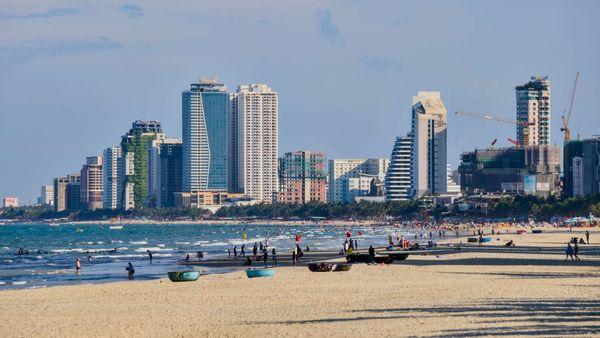
A local's day-by-day 7-day Da Nang itinerary — beaches, Marble Mountains, Ba Na Hills, a Hoi An day trip, with prices, pacing and what to skip.
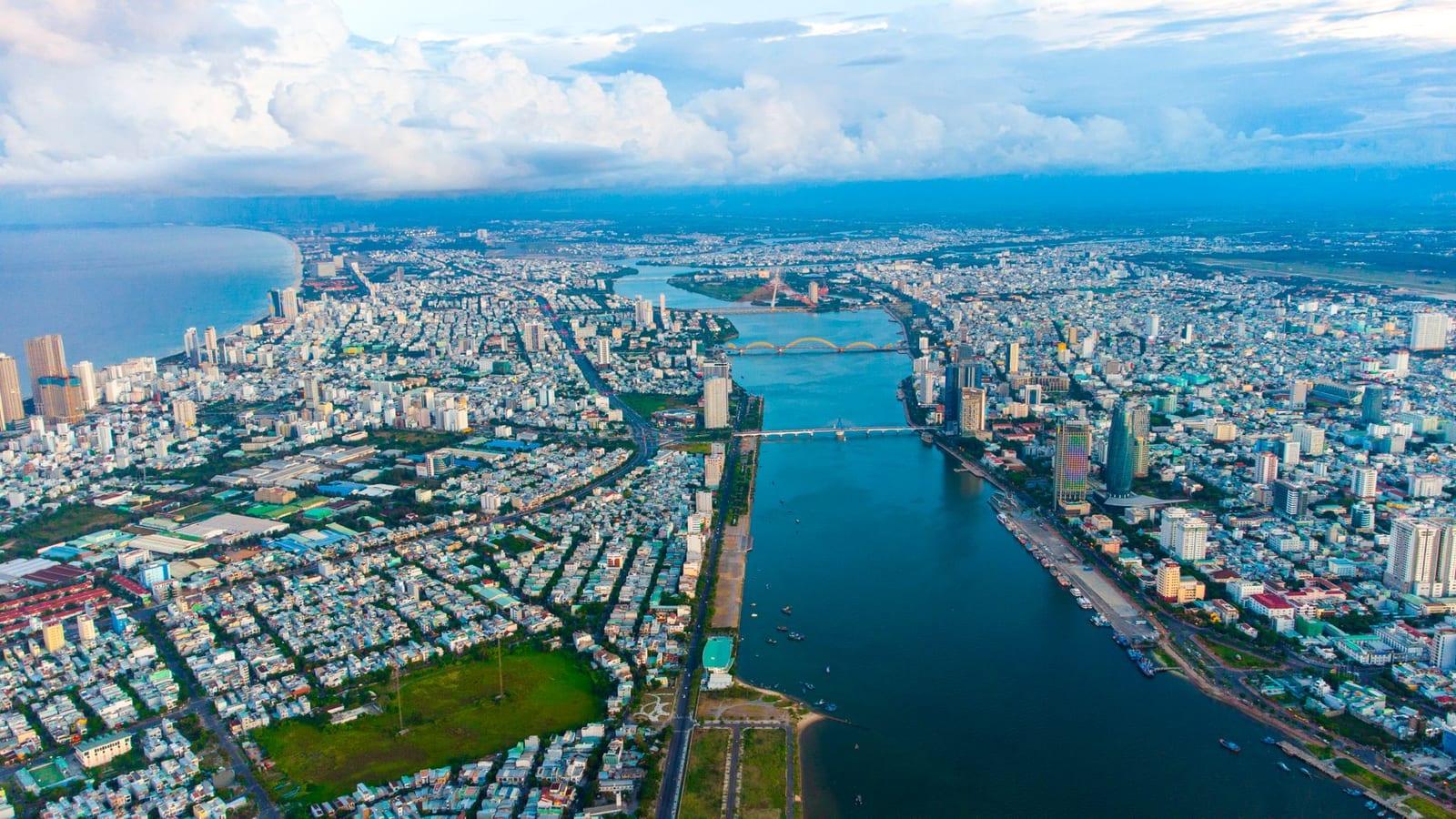
By the Go-Da-Nang local team · Last updated June 2026
By five in the morning, My Khe Beach is already wide awake with locals swimming and drinking their first coffees of the day. This unhurried, lived-in rhythm is the best argument for giving Da Nang a full week. Base yourself in one spot, pace your days like a local, and take a single well-planned day trip to Hoi An to experience the region at its best.
A week is only too long if you treat the city like a checklist. You can easily see the main sights like the beaches, Marble Mountains, Son Tra Peninsula, Dragon Bridge, and Hoi An in three or four busy days.
A week here is for people who want a proper holiday rhythm. Think a couple of big outings, a slow beach morning, a long lunch, an afternoon nap when it hits 35°C, sunset coffee, and a late dinner. This pace suits first-timers, families, couples, and remote workers. If you only have a long weekend, read our perfect 3-day Da Nang itinerary instead.
You also do not need to overnight in Hue or hotel-hop. Stay in Da Nang the whole week and make Hoi An a single day trip. It takes just 30 to 45 minutes to get there, saving you from packing and unpacking.
You are based in Da Nang all seven nights. The only day you leave the city is Day 5 for Hoi An, and you still sleep in your own bed.
| Day | Theme | Highlights | Pace |
|---|---|---|---|
| 1 | Arrive & settle | Airport → city, My Khe Beach, Dragon Bridge at night | Easy |
| 2 | Ease in | Marble Mountains, Non Nuoc Beach, first local dinner | Moderate |
| 3 | Peninsula | Son Tra, Lady Buddha, sunset coffee | Moderate |
| 4 | Big day trip or skip | Ba Na Hills & Golden Bridge — or a beach/Hai Van alternative | Full / your call |
| 5 | Hoi An | Ancient Town, Cao Lầu, lanterns after dark | Full |
| 6 | Slow food & culture | Cham Museum, Han Market, food crawl, coffee | Easy–moderate |
| 7 | Flex | Beach + spa, or Hai Van/Lang Co, or shopping & last meals | Your call |
If you want more options for any given day, our things to do in Da Nang guide is the full menu to mix and match from.
Da Nang International Airport sits almost right in the city. A Grab car or metered taxi to the beach hotels or the riverside costs roughly 70,000 to 120,000đ (about $3 to $5) and takes 10 to 20 minutes depending on traffic.
Drop your bags and walk straight to My Khe Beach. It is a long, clean stretch of soft sand with great swimming during the calm season. Get your bearings, get in the water, and grab a relaxed lunch nearby. Check our best beaches in Da Nang guide to find the quietest spots to lay your towel.
Set one habit for the rest of the week: an early-morning sea swim. From tomorrow on, get in the water before 6 or 7am while it is cool and calm. The sea is gentle, the sand is empty, and you start the day refreshed instead of sluggish in the heat. Because it happens so early, it never eats into your plans, so you can swim every morning or just when you feel like it. Then refuel like a local with a proper Vietnamese breakfast: a savoury plate of xôi (sticky rice), a steaming bowl of bún chả cá (fish-cake noodle soup), or a classic bowl of phở.
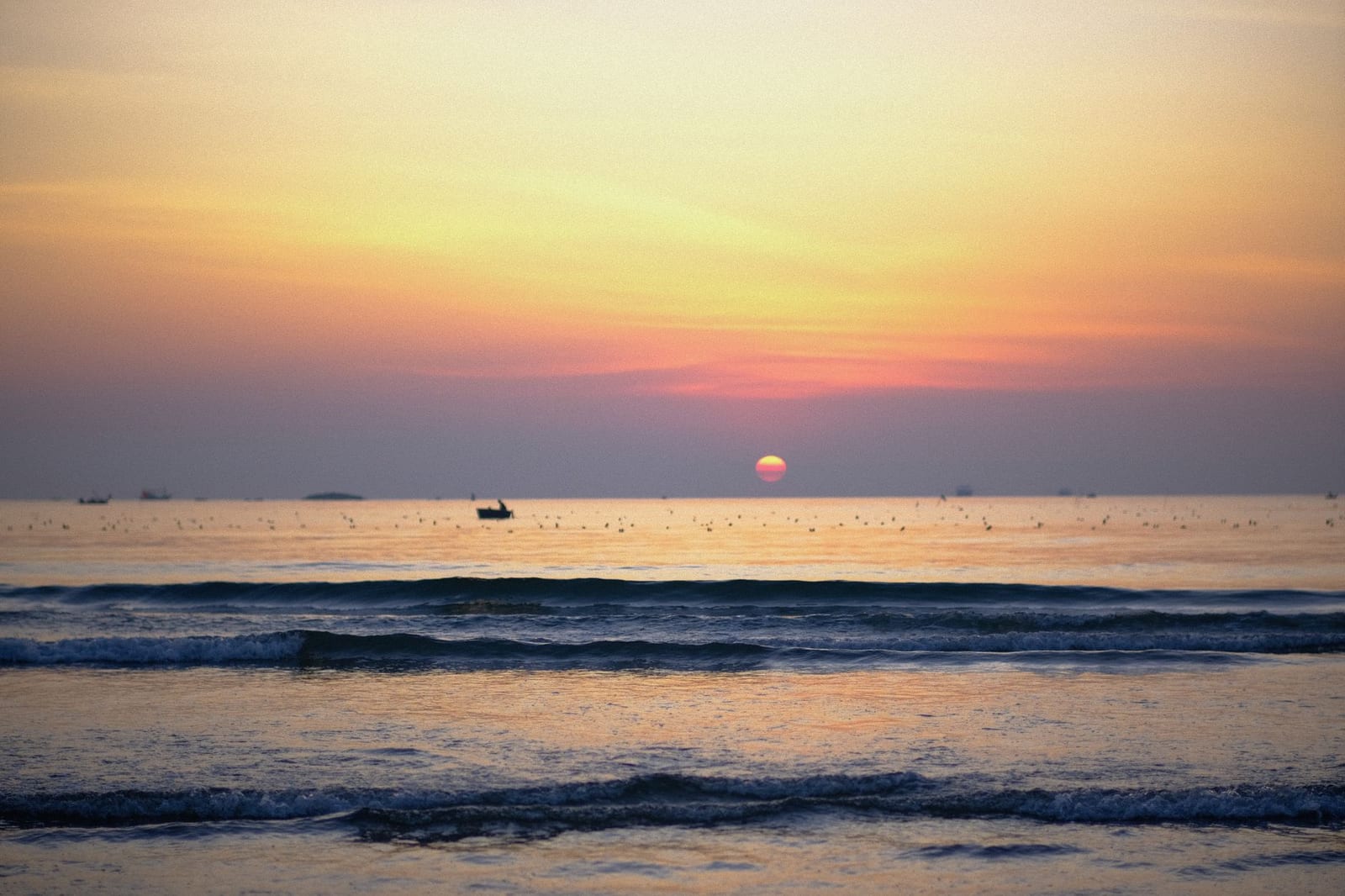 Locals swimming at sunrise on My Khe Beach, Da Nang
After dark, head to the Dragon Bridge (Cầu Rồng). On Friday, Saturday, and Sunday nights at 9pm, the dragon's head breathes real fire and water for about 15 minutes. Stand on the east bank near the head for the best view, and stay back from the water jets at the end. For a fun, hands-on first dinner, track down bánh xèo and nem lụi. These are crispy sizzling pancakes and grilled pork skewers you wrap in rice paper and herbs yourself. Finish with a riverside stroll and an early night.
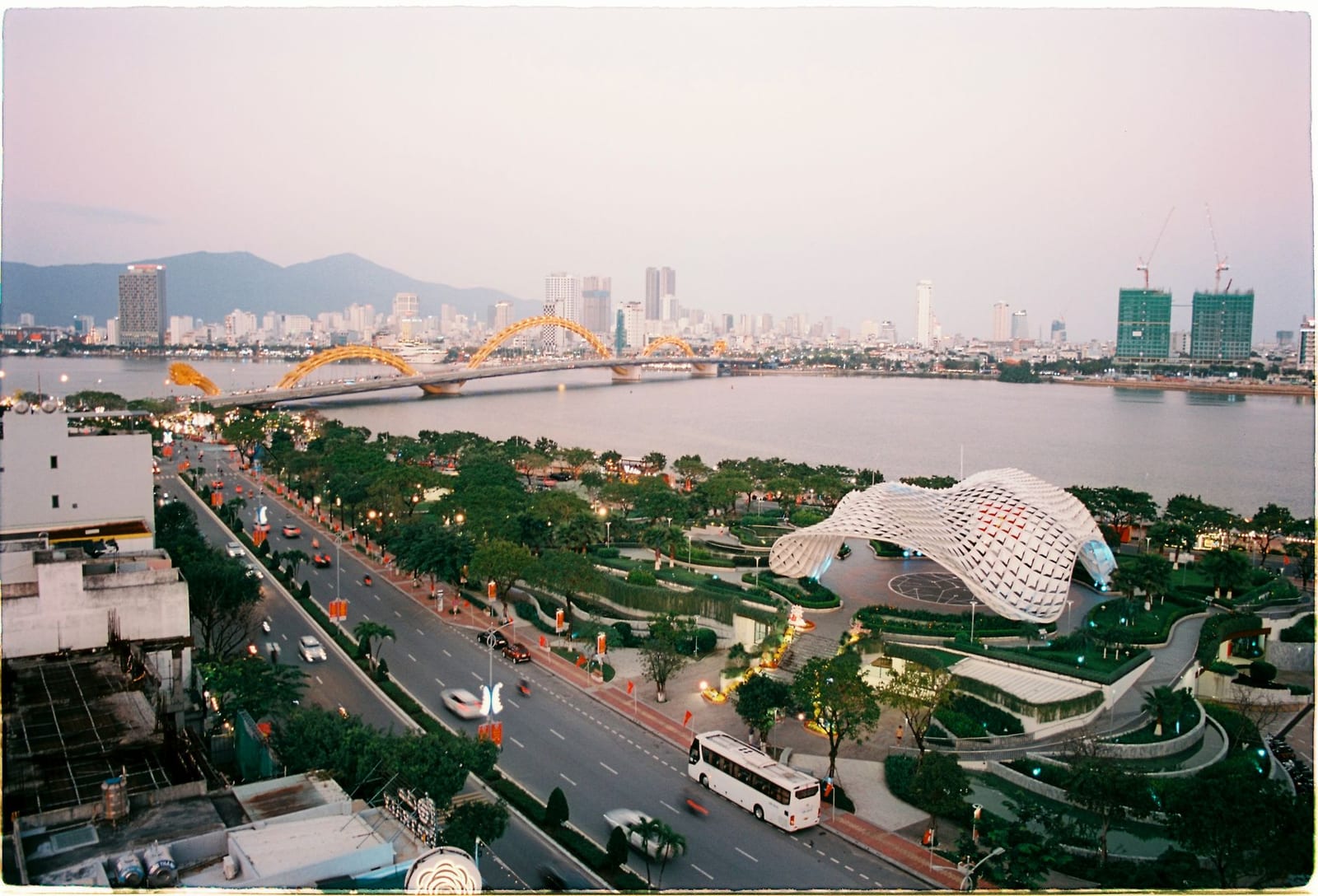 The Dragon Bridge lit up over the Han River at night
Start with a gentle sightseeing day just ten minutes from the southern beaches. The Marble Mountains (Ngũ Hành Sơn) are five limestone hills filled with caves, pagodas, and shrines. Entry is 40,000đ, plus 15,000đ each way for the elevator that skips the first climb. It is open daily from about 7am to 5:30pm. Go early. The cave temples are cooler and much quieter before the tour buses arrive mid-morning. Wear real shoes because the stone steps are uneven.
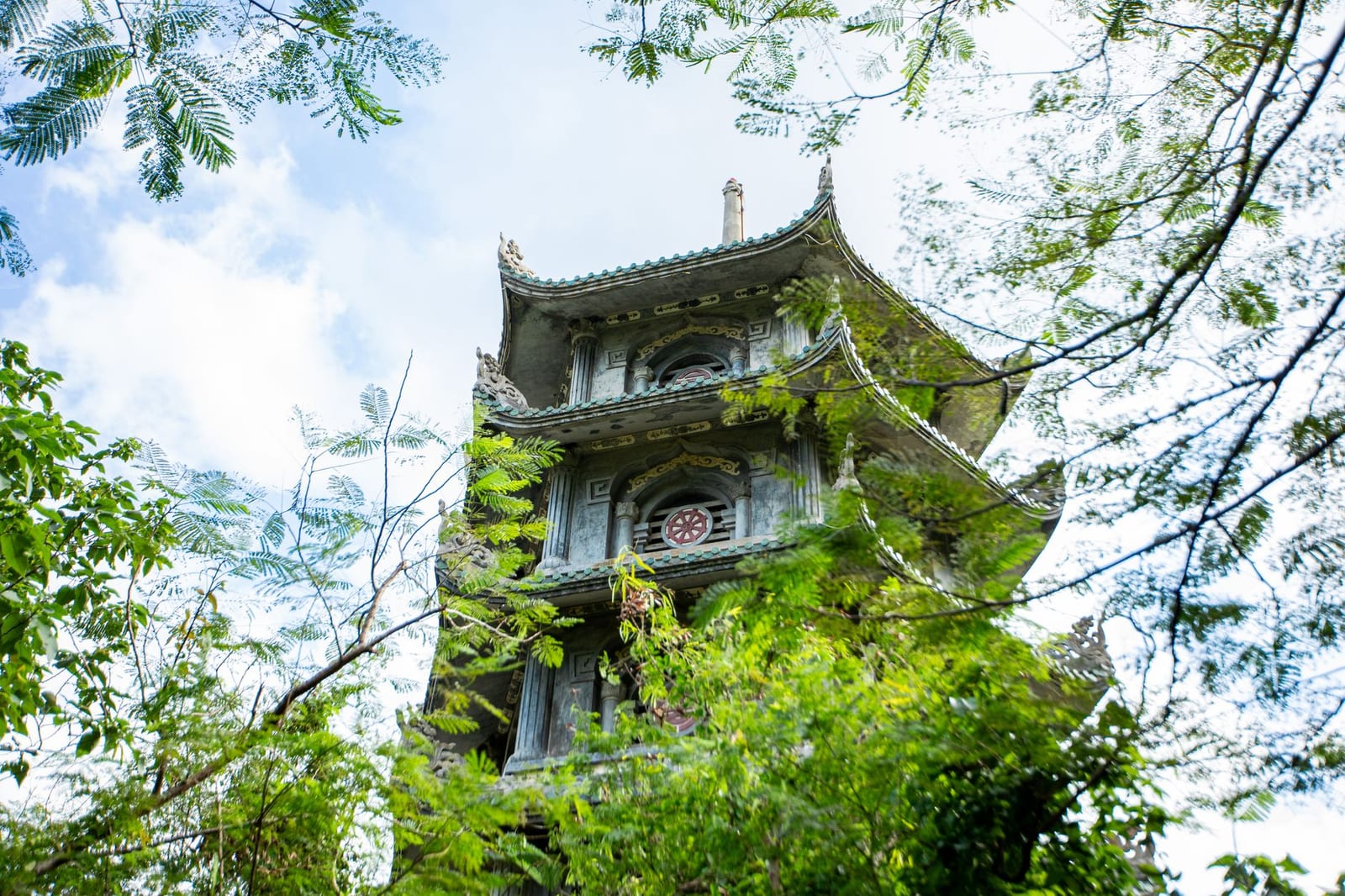 A pagoda and cave shrine at the Marble Mountains, Da Nang
The mountains sit right behind Non Nuoc Beach. Reward your climb with an afternoon on a quieter stretch of sand than My Khe. Make tonight a proper sit-down local dinner. Try mì Quảng, the turmeric-yellow noodle dish that serves as Da Nang's hometown plate, or order some just-caught seafood. Our mì Quảng guide shows you where locals actually eat it, and our Da Nang seafood guide covers what to order so you avoid getting overcharged. If you want another local soup, a bowl of thick, comforting bánh canh is a great alternative. For a bigger picture of the local table, read our honest food guide.
The Son Tra Peninsula is the green headland north of the beaches. It makes for a fantastic half-day trip. The main stop is Linh Ung Pagoda and its 67-metre Lady Buddha statue gazing out over the sea. Entry is free. It is an active temple, so keep your shoulders and knees covered.
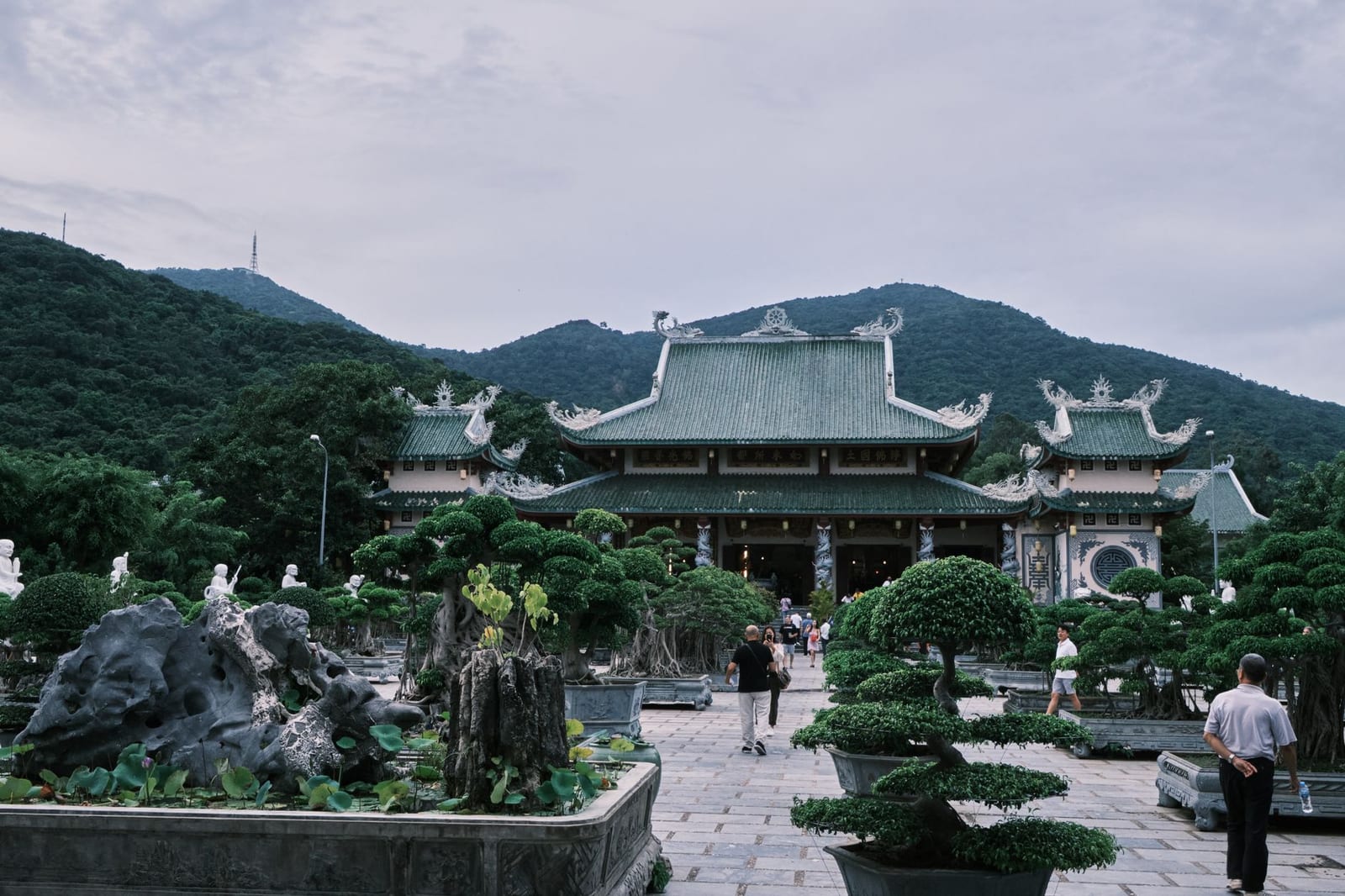 Linh Ung Pagoda on the Son Tra Peninsula, Da Nang, home of the 67-metre Lady Buddha statue
From the pagoda, the peninsula road climbs to viewpoints overlooking the entire coastline. You can explore by rented motorbike if you are a highly confident rider, or join a half-day car tour if you are not. Son Tra's mountain road is steep, narrow, and dangerous for inexperienced riders. If it is raining, skip the high loop entirely and just visit the pagoda.
Time your trip so you are back down near the beach for sunset. Settle into a café for a traditional phin coffee. Our Da Nang coffee guide lists the salt-coffee and coconut-coffee spots worth tracking down. As the evening cools, graze on street snacks like a local. Try a plate of ốc hút, spicy stir-fried snails you slurp straight from the shell, or bánh tráng kẹp, Da Nang's grilled rice-paper pizza.
Ba Na Hills is a mountaintop resort featuring the famous Golden Bridge held up by two giant stone hands. It is the most photographed spot near Da Nang and also the most divisive. You take a long cable-car ride up to a slightly surreal French-village theme park with gardens and fairground rides. A ticket costs around 1,000,000đ (about $39) per adult, which is expensive by Vietnam standards. The upside: from 2026 a single ticket is valid for up to three consecutive days, with unlimited cable-car rides for 72 hours from first use. So you do not have to cram it into one visit — if your first morning is misty, you can ride back up on a clearer day at no extra cost.
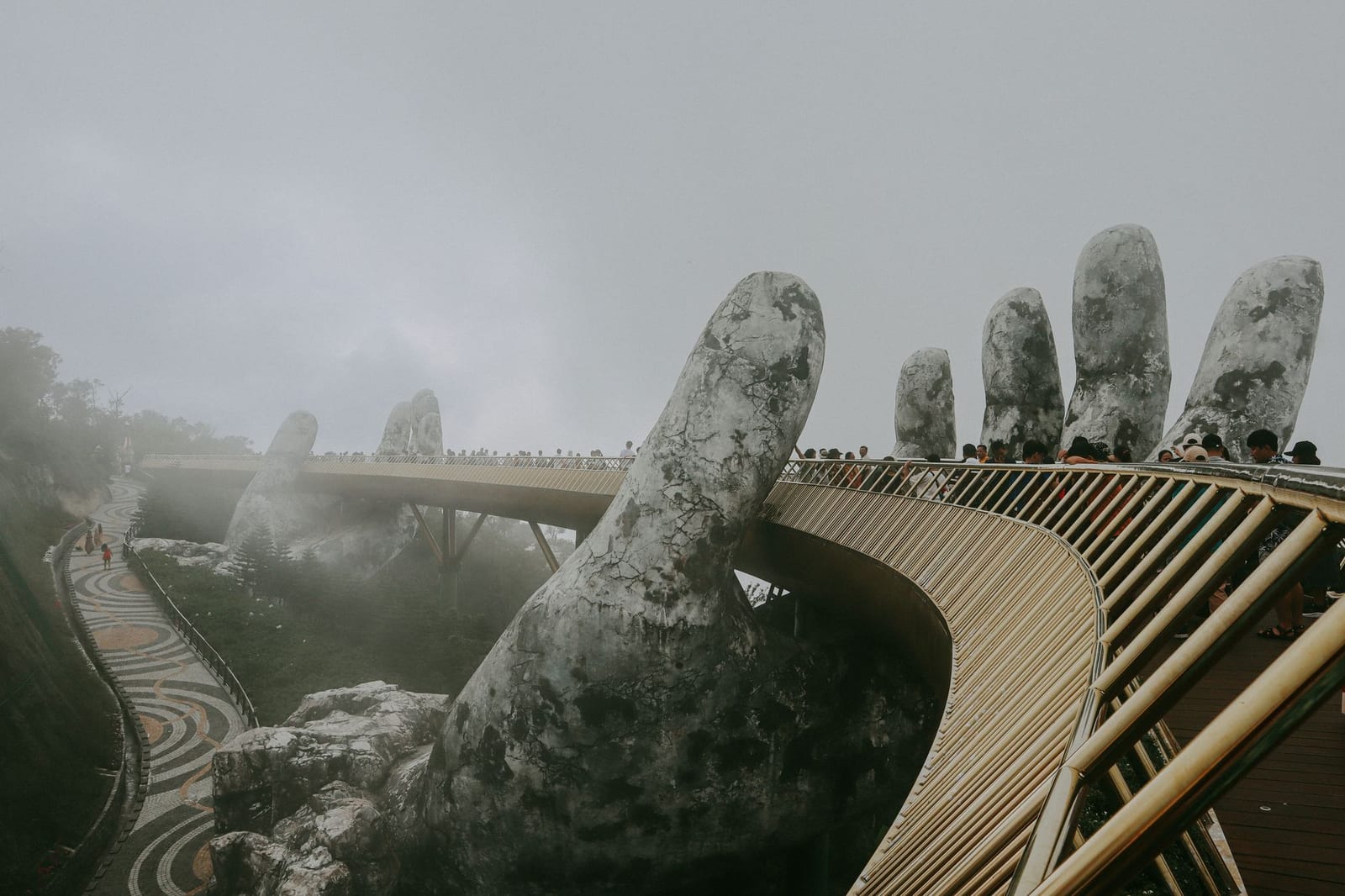 The Golden Bridge held by giant stone hands at Ba Na Hills
Book it if you love a spectacle, you are travelling with kids who want rides, and the weather is clear. Skip it if you prefer authentic historic sites, dislike crowds, or see a misty forecast. The mountain clouds over frequently, and on a grey day you pay full price to look at fog. If you do go, buy your tickets ahead of time, leave the city by 7 or 8am, and ride the first cable cars up. This gets you to the Golden Bridge before the tour groups and the midday haze. Bring a light layer because it is noticeably cooler at the top.
If you skip it, spend the day driving the Hai Van Pass instead, or simply enjoy a second slow beach day.
Hoi An is a lantern-lit old trading port that absolutely earns a spot on your itinerary. It is only 30 to 45 minutes from Da Nang, making it an easy day trip — leave mid-morning so you get a full day there. A one-way Grab or private car costs roughly 300,000 to 450,000đ (about $12 to $18). Hiring a private driver for the day with waiting time costs more, while the public bus is the cheapest option at around 30,000đ but takes 75 to 90 minutes.
Start out in the countryside while it is still daytime, since the basket-boat operators wind down by late afternoon. Just 5km southeast of the Ancient Town in Cẩm Thanh lies the Bảy Mẫu Coconut Forest (Rừng Dừa Bảy Mẫu), a water-coconut wetland where you ride a traditional round basket boat (thúng chai) through the palms and watch the famous spinning-boat performance. Entry is around 30,000đ, with the basket-boat rides running roughly 150,000 to 200,000đ per person. The surrounding craft villages also let you try hands-on trades like mat-weaving and coconut-leaf weaving — a refreshing change of pace from the tourist crowds. If you would rather take it slow, skip straight to town.
 A round basket boat gliding through the Bay Mau Coconut Forest in Cam Thanh, Hoi An
By mid-afternoon, head into the Ancient Town. It runs on a ticket system: a single ticket costs 120,000đ for foreign visitors and lets you into five of the town's 22 heritage sites — your pick of the old houses, assembly halls, and museums. Wandering the lanes themselves is free. Catch the town in daylight first; the real magic comes after dark, when the silk lanterns turn on and the river fills with floating candles.
 Glowing silk lanterns over Hoi An Ancient Town at night
For dinner, eat the two dishes Hoi An invented: Cao Lầu (chewy noodles, pork, and crackers) and white rose dumplings. Our Cao Lầu guide points you to the authentic bowls. If your trip lands near a full moon, the town hosts a lantern festival where the electric lights are switched off. It is beautiful but very crowded. Check our Hoi An festivals 2026 guide for the dates. If you want to see the late-night lanterns at their quietest, book a Hoi An hotel for this single night. Otherwise, head back to Da Nang after dinner for an easy ride home.
A week-long base also unlocks Hoi An's most famous craft: tailoring. It is Vietnam's tailoring capital, but a good suit needs two or three days and a couple of fittings, so a single day trip rarely does it justice. Get measured and choose your fabric on this Hoi An day — roughly $150 to $400 for a suit, less for an áo dài or a simple dress, usually with a 30 to 50% deposit — then come back later in the week to collect, or have the finished pieces delivered to your Da Nang hotel, which many shops offer. Pick a tailor with strong recent reviews and skip the 24-hour rush jobs, which cut corners. If you would rather not travel back and forth, Da Nang has its own tailors — see our best tailors in Da Nang guide.
Slow your pace down after yesterday's big outing. Start at the Museum of Cham Sculpture. It holds the world's best collection of Champa-era stone art. Entry is 60,000đ and it is open daily from about 7:30am to 5pm. The museum is compact, air-conditioned, and takes about an hour to see.
If you want to understand the city itself, add the Museum of Da Nang (Bảo tàng Đà Nẵng). It reopened in 2025 in a beautifully restored French-colonial building right on the riverfront at 42–44 Bạch Đằng. Entry is 50,000đ (about $2) and it walks you through the region's history and culture. Note it is closed Sundays and Mondays, opening Tuesday to Saturday (roughly 8–11:30am and 2–5pm). From there, take a short walk to Han Market (Chợ Hàn) to browse snacks, pick up dried local specialities, and people-watch. The market runs daily from about 6am to 7pm.
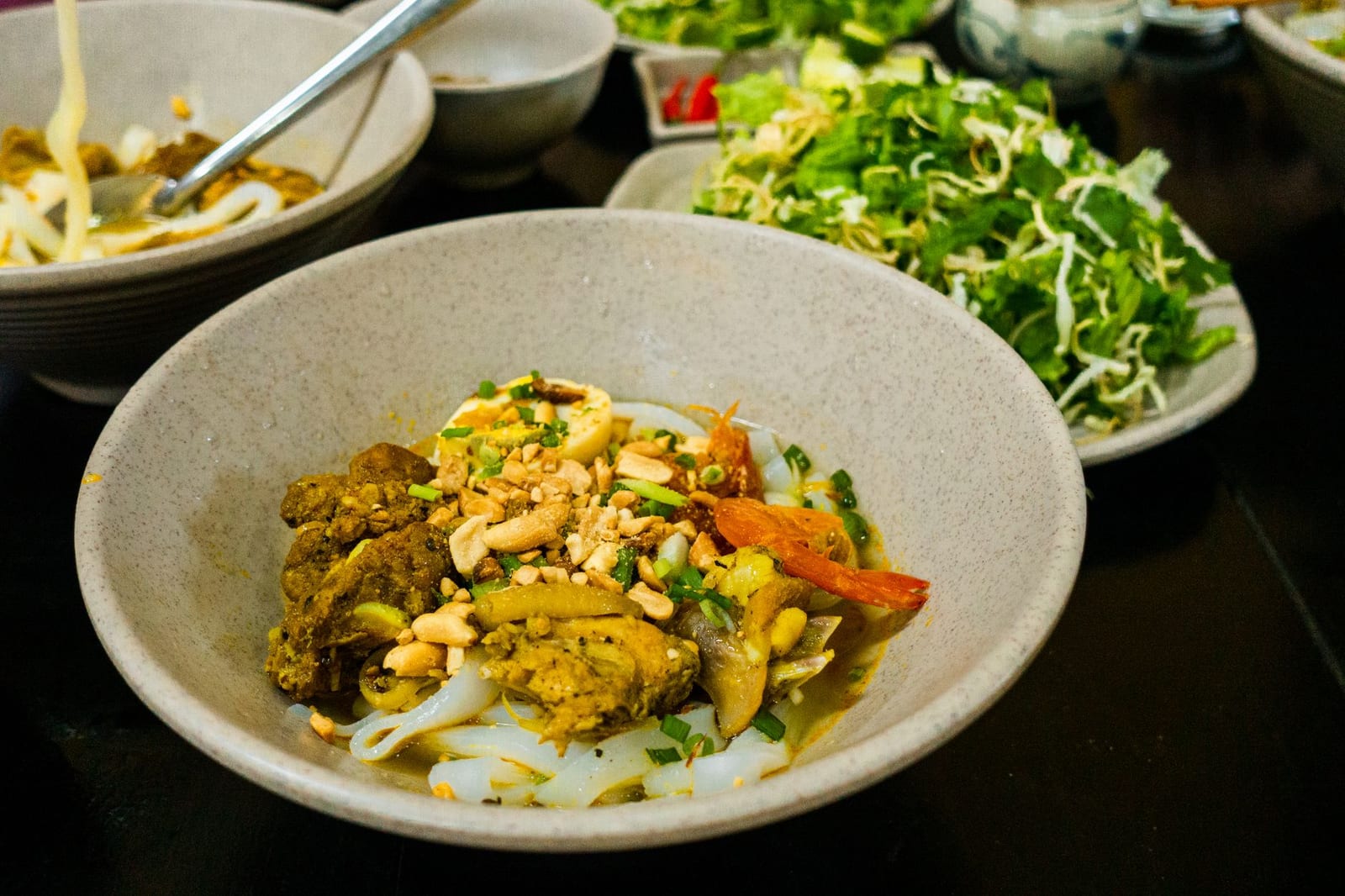 A bowl of mì Quảng on a local table in Da Nang
Dedicate the rest of the day to a food crawl. Graze across a few small dishes rather than sitting down for one big meal, and take breaks to enjoy the city's coffee culture. Work through the local greatest hits. Try dainty steamed rice cakes like bánh bèo, bánh bột lọc, and bánh ướt. Order bánh tráng cuốn thịt heo, the famous pork rolls you assemble yourself. Grab a bold bowl of bún mắm nêm if you are ready to try the city's pungent fermented-anchovy sauce. Finish on something sweet with a cup of chè (sweet soup), ideally the iconic chè xoa xoa hạt lựu. Lean on our honest food guide for a dish-by-dish plan and the coffee guide for places to rest between bites — or trade the crawl for a cooking class that pairs a market tour with a few hours at the stove.
Shape your last full day around how you are feeling.
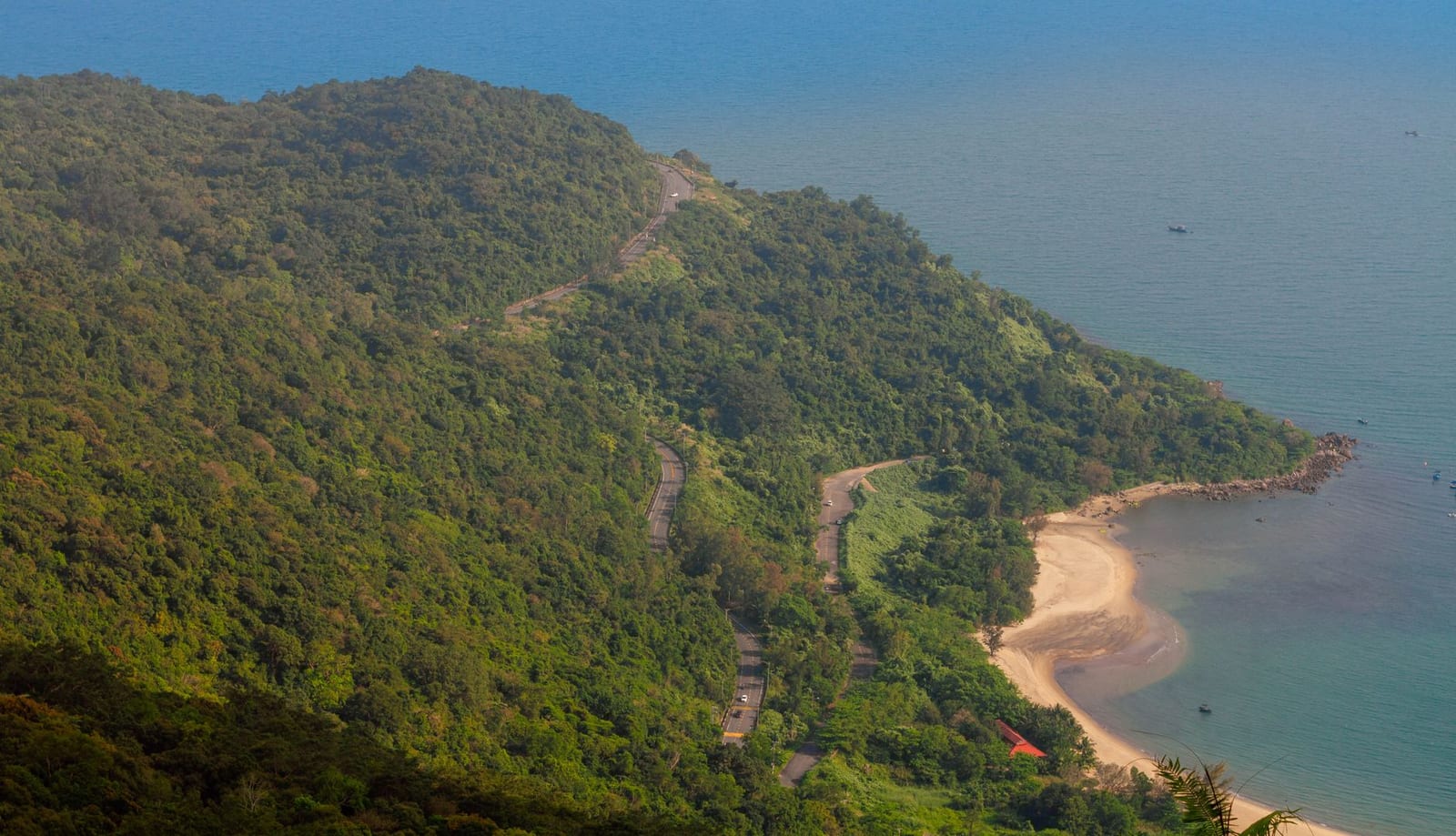 The winding Hai Van Pass coastal mountain road north of Da Nang
Vietnamese hotels usually require checkout around noon. If your flight leaves in the evening, ask about a late checkout or luggage storage. Many hotels will hold your bags for free. Leave 30 to 45 minutes for the ride back to the airport plus a buffer for traffic.
Pick a single base for the whole week. Three main areas cover most travellers.
Nightly prices run roughly 250,000 to 500,000đ ($10 to $20) for budget hostels and guesthouses. Comfortable mid-range hotels cost around 600,000 to 1,200,000đ ($25 to $50). Beachfront resorts start from 1,500,000đ ($60) and go up.
You can easily complete this entire week with zero motorbike driving. Grab and a couple of day tours will cover everything, including Ba Na, Son Tra, and the Hai Van Pass.
Here is a rough daily budget per person, excluding flights and the expensive Ba Na Hills ticket.
Budget separately for big one-off items. These include the Ba Na Hills ticket (around $36 to $40), the Hoi An day trip transport and entry ticket, and any cooking classes or spa treatments. Tipping is not expected the way it is in the West, but locals appreciate it for good service. Our tipping in Vietnam guide explains the norms. Check our Da Nang cost-of-living guide for a fuller picture of local prices.
Da Nang has a clear weather split. The dry season runs roughly from February to August and is the sweet spot for a week-long trip. You get sunny skies, a swimmable sea, and low rain. The trade-off is intense heat from May to August, meaning you will want to finish outdoor plans by late morning. The wet season runs roughly from September to December. It brings heavier rain and a small risk of storms, especially in October and November. The upside is fewer crowds and lower prices.
Over a full week, you will likely catch at least one grey or rainy day regardless of the season. This is exactly why our plan has flexibility built in. A rainy day just means reshuffling your schedule. Swap the beach for the air-conditioned Cham Museum, a long café session, or a covered food crawl. Move your outdoor plans to the next clear morning. For a month-by-month breakdown of weather, crowds, and prices, see our guide to the best time to visit Da Nang.
Should I split my stay or do Hoi An as a day trip? Do it as a day trip. Hoi An is just 30 to 45 minutes away, so there is little reason to pack up and switch hotels for a single visit. Only split your stay if you specifically want to see the lantern-lit town late at night without the day-tripper crowds.
Do I need to add Hue? Not for a first week focused on Da Nang. Hue is a fantastic historic city, but it sits further away and deserves its own overnight stay. Leave it for a longer trip rather than hotel-hopping mid-week.
Can I do the week without a motorbike? Yes. Grab covers your city hops, and day tours handle Ba Na, Son Tra, the Hai Van Pass, and Hoi An. Only rent a motorbike if you are an experienced rider with the correct legal licence.
Pick one base, plan a few big outings, and keep your remaining days slow. A week in Da Nang feels like a proper holiday when you match the local rhythm instead of rushing from sight to sight.
One local roundup a month — new guides, festival dates and where to eat. No spam.